EUROPEAN AVIATION AT CROSSROADS:
EUROPE AND MEMBER STATES MUST ACT NOW!
Being the sole representative of all categories of European aviation workers across the whole industry, the ETF Civil Aviation Section reiterates its urgent call to the decision-makers at EU and national level to safeguard the future of European aviation. Our industry is at a crossroads: either the current COVID-19 crisis completely decimates it or we turn the current events into an opportunity to rebuild the sector and learn lessons from the past.
As we already said in our previous statements, urgent measures are needed in the short, medium and long term. They should concentrate on the following areas:
Protection of the health and safety of workers and the travelling public
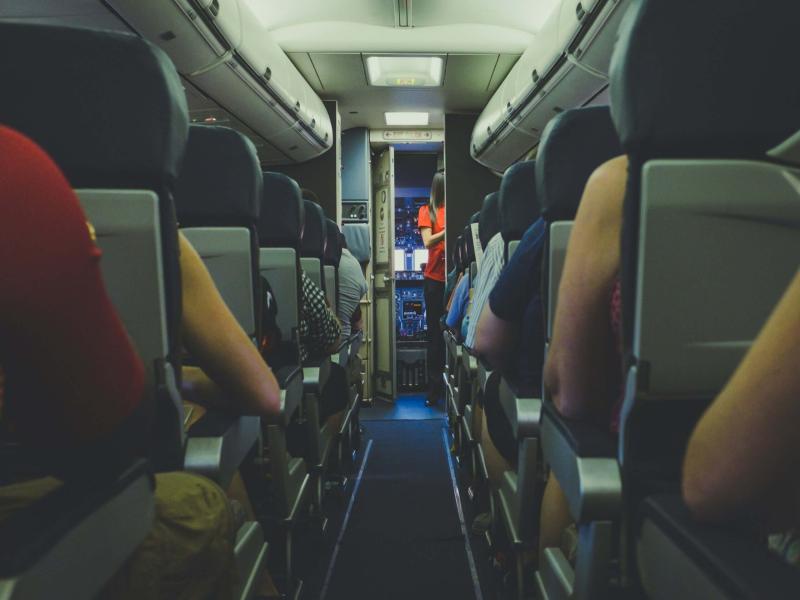
Even if air operations have dramatically diminished, they are not at a complete halt due to the need to ensure repatriation, humanitarian and cargo flights. Despite our previous calls, the European institutions failed to put in place measures to protect the health and safety of workers and the travelling public. While social distancing is enforced in most of the EU countries, physical proximity is the unavoidable fact inside airports and aircraft. Our affiliates still report densely populated aircraft and overcrowded airports. Alarmingly, it is also being reported that aircrew and ground staff are still not being given sufficient personal protection equipment and procedures. These measures should also be accompanied by a ban on inflight service to minimise the unnecessary risks associated with close contact.
The recommendations and safety directives of EASA have not produced the necessary results, and we call upon the EU Institutions to issue binding rules for flight and airport operations.
Protection of jobs and salaries
In several countries, short-term work, job protection and salary assistance schemes supported by the respective states have been put in place. There are great variances in pay within the aviation sector. Low levels of salaries in some parts of aviation, only guarantee an income that is below the poverty line. At the same time, these schemes often exclude precarious workers such as zero-hour contracts, self-employed or agency workers.
To retain the qualified workforce, we call upon governments and employers to extend the work schemes to all aviation workers – whatever their contractual relationship is – and guarantee a decent level of income.
It is unacceptable that this crisis is used to restructure businesses, and the ETF will fight against permanent lay-off of parts of the aviation workforce.
Not a single aviation job can be lost as a result of the crisis.
Protection of the infrastructure of the industry and ensuring the future viability
If companies go bust and lay-off the workforce, the sector will be unable to restart activity smoothly. This will hinder not only the sector but also the restarting of other closely connected economic sectors and economies.
The three crucial elements of a coherent infrastructure are air traffic management, airlines and airports.
These are the vehicles to restart the aviation eco-system after the crisis. They can if required, integrate the workers and take up the provision of aviation associated services – under the same terms and conditions as before this crisis. This is where state aid, subsidies, governmental investment needs to be focussed and is where there are the scope, scale and capacity to integrate parts of the industry (such as companies and organisations) that are unable to see through the crisis.
We have the unique opportunity to rectify the mistakes of the blind liberalisation that cannot cope with or even survive market failures. The process of opening up aviation was ill-conceived and COVD-19 aggravated the situation and brought the glaring structural weaknesses into the light. The EU can now use the crisis and turn it into a viable opportunity for the industry.
The ETF is ready to engage with other social partners, stakeholders and the European Institutions to save European aviation. In line with our commitment to fair transport and fair aviation for all, we need to develop social and market solutions that benefit the workers, the travelling public and the employers alike.