Road Transport
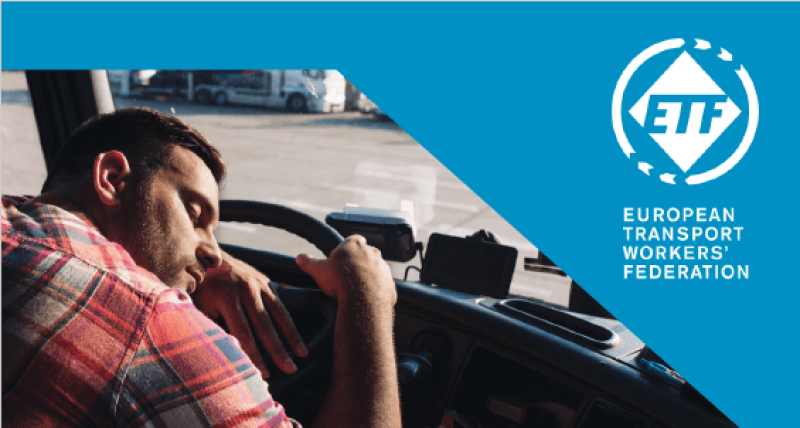
Every day is the longest day for drivers: ETF marks Driver Fatigue Action Day on 21 June
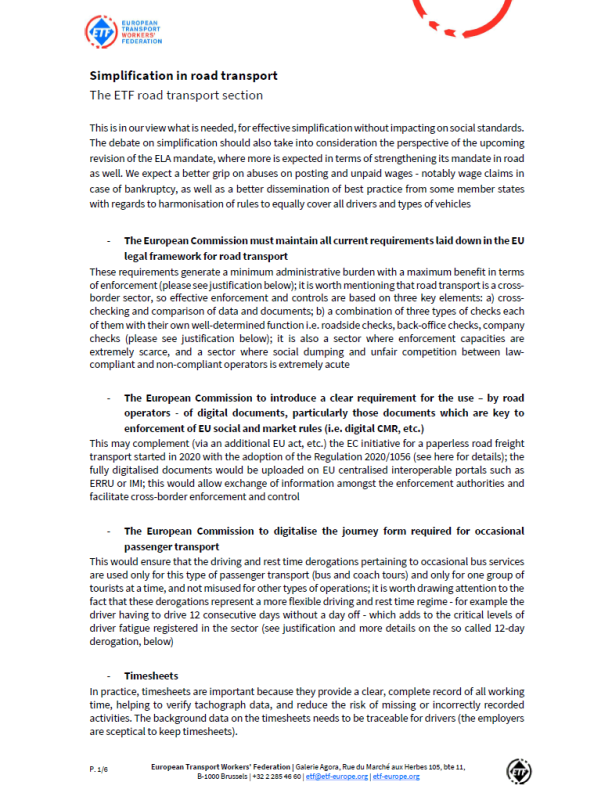
Road Transport’s simplification package must not weaken workers’ rights
ISSUES
Road transport in the EU employs millions of professional bus, coach and freight drivers.
However, the sector struggles with a shortage of labour. Unfriendly work schedules, inadequate rest conditions, weekends away from home and poor levels of pay fail to meet the expectations of today’s job seekers. For all these reasons, young people and women think twice before choosing to work in the sector. At the same time, an increasing number of third-country nationals are recruited to work in Europe, often under poorer conditions and lower pay. In many cases, these drivers spend months on the road and away from their families, raising concerns about exploitation, social dumping, and unequal treatment within the sector.
While the EU road transport sector is covered by a comprehensive regulatory framework, enforcement gaps, weak controls and abusive subcontracting practices continue to undermine drivers’ rights and fair competition. The priority now is to ensure full implementation and effective enforcement of existing rules, so that all transport workers benefit from decent working conditions, equal treatment and fair pay across Europe.
The ETF Road Transport Sector is committed to building a fair future for the road transport industry by campaigning for better enforcement, fairer working conditions and a more sustainable and dynamic sector.
Contact us
The ETF Road Transport Section brings together ETF affiliates from over 30 countries who organise members in road transport. The Section meets at least twice per year to decide on its policies, and discuss actions, projects and campaigns needed to achieve its goals.
We also define positions and actions aimed to influence social and road specific legal proposals open to debate and adoption by the European Institutions.
For the 2022 – 2027 period, the ETF Road Transport Section will:
- Continue to campaign for the improvement of drivers’ working and living conditions among others by pushing for the enforcement of the Mobility package and promoting the ETF driver fatigue work;
- Contribute to the post-pandemic recovery of the road sector, as a sector that puts drivers’ rights and interests at its core;
- Place social sustainability at the core of European and national policies, and connect it to the climate agenda;
- Campaign to push the industry and policymakers take effective measures to redress driver shortage;
- Continue to combat social dumping, with a particular focus on 3rd country drivers.
Social dialogue refers to structured discussion between the organisations which represent workers and employers, known as social partners. The EU supports social dialogue at European level, and the ETF Road Transport Section is a recognised social partner for the road sector.
The ETF Road Section and the International Road Union (the IRU) are recognised as social partners of the European Sectoral Social Dialogue Committee (SSDC) for Road Transport. We meet at least three times per year, including a plenary meeting at the end of the year. We are also actively working to promote fair recruitment and decent employment conditions for third-country national drivers coming to Europe, while supporting measures to make the sector more attractive and accessible. Our work programme focuses on priorities such as automation and the attractiveness of the road transport sector. More details about our Committee can be found on the website of the European Commission.
The ETF Secretariat and the Road Section Steering Committee, elected every five years before the ETF Congress, oversee the Section’s daily operations. The Committee includes the Section President, two Vice-Presidents, the youth and women’s representatives and Co-opted members are approved as needed. The Section President represents the Section on the ETF Executive Committee. Ad-hoc working groups are formed for technical matters, campaigns, and actions, ensuring flexibility and broad member engagement based on expertise.
HEAD OF LAND TRANSPORT Cristina Tilling |
POLICY OFFICER FOR ROAD TRANSPORT Tove Dahlberg |