Inland Waterways
Automation in Danube inland ports: ETF contribution to the debate
ETF addresses key concerns of inland waterway workers in the Danube basin
ISSUES
The inland waterways sector still lacks a strong European legal and social framework. While progress has been made with the Working Time Directive and the Directive on recognising professional qualifications, two major gaps remain: a harmonised European manning regulation and digital controlling capacity.
Workers also face challenges around social security coordination. Boats often cross several countries within days, with crews on different contracts, leaving many without proper protection. For ETF, the principle is clear: all workers on the same vessel should be covered by one social security regime. Without closing these loopholes, fair transport on Europe’s waterways cannot be achieved.
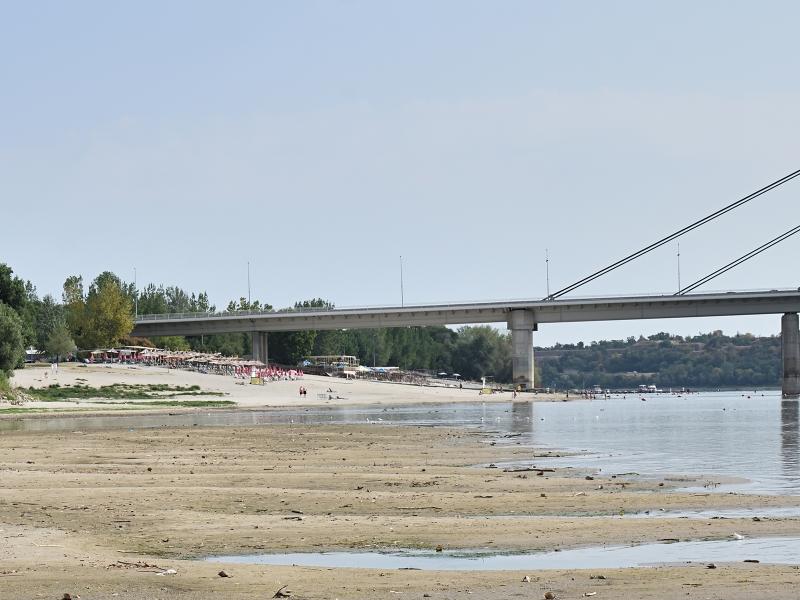
The sector is also vulnerable to climate change, which is reshaping precipitation patterns, water levels, and navigability. A strong climate policy and structural measures are urgently needed to secure inland navigation’s role in sustainable transport.
Contact us
- Advocate for a comprehensive European framework that ensures decent working conditions, fair pay, and social protection for all inland waterway workers.
- Push for climate policies that safeguard inland navigation and secure its place in the green transition.
- Organise annual seminars to strengthen our affiliates, bringing together union officials and front-line members.
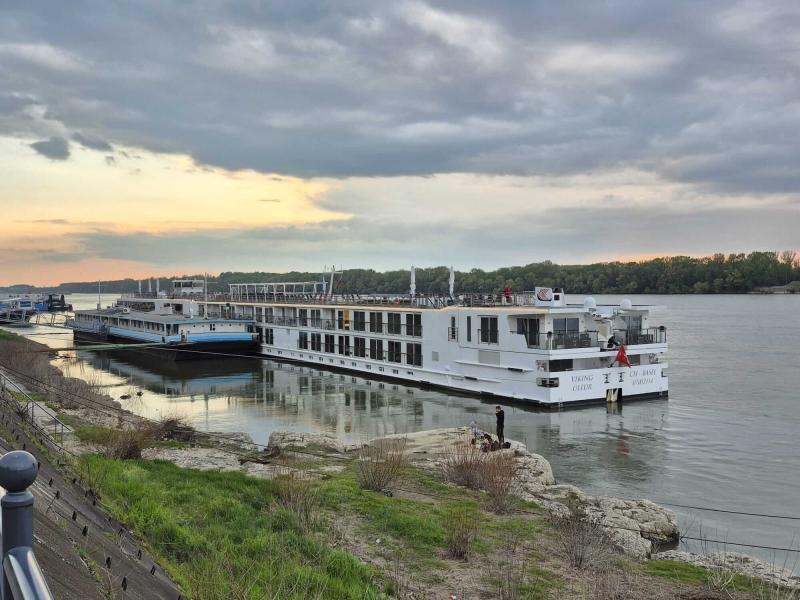
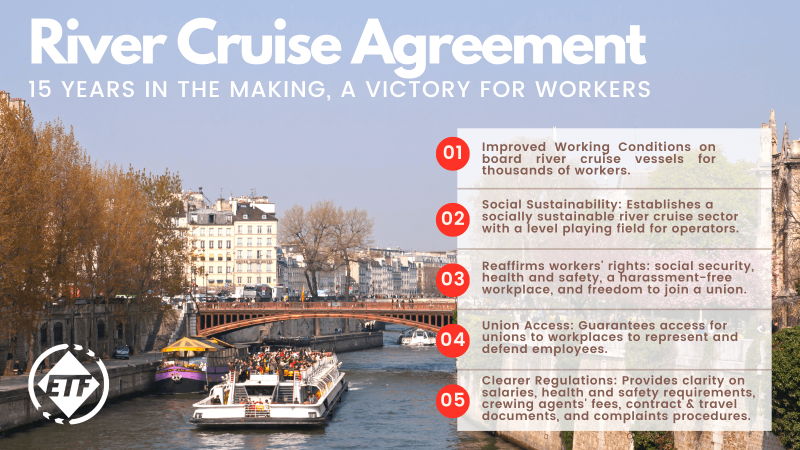
- Run joint campaigns with affiliates, including the long-standing River Cruise campaign, to expose poor conditions and demand real dialogue with employers.
- Coordinate solidarity and joint strategies with ETF Dockers, Maritime and Inland Waterways Sections, and the ITF to protect workers across interconnected subsectors
- Representing workers at the European Committee for drawing up Standards in Inland Navigation (CESNI) and contributing to future EU-wide rules and standards.
- Engaging with the River Commissions, particularly the Rhine Commission, which has major influence over working conditions.
- Strengthening the European Social Dialogue Committee, the only EU platform where unions and employers jointly address sector issues.
- Supporting workers in vulnerable subsectors, such as river cruises—where poor conditions persist—and tugs and towage, which face consolidation pressures.
The European Social Partners, ETF together with its employers’ counterparts EBU (European Barge Union) and ESO (European Skippers’ Organisation) are the representative spokes bodies for the European Inland Waterways sector.
European Social Partners dedicate ample time to monitoring the correct implementation of European legislation such as the Working Time Directive and the Directive on the recognition of professional qualifications, as well as other horizontal European initiatives that might impact on the workers in the sector.
THE ETF Inland Waterways section governing body
2022 – 2027