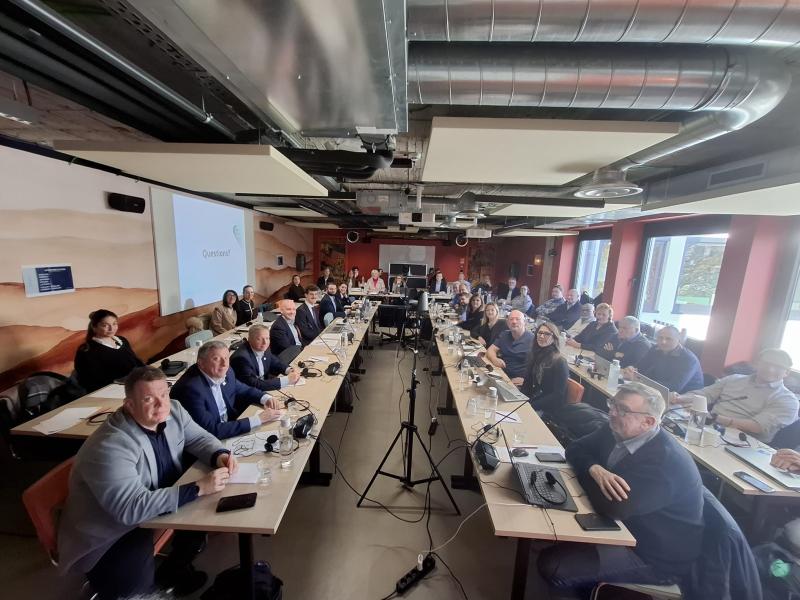


From 2 to 5 November 2026, aviation trade union representatives from across Europe gathered in Brussels for the governance meetings of the ETF Civil Aviation Section. We kicked off the week with the Steering Committee, followed by meetings of the Joint Aircrew (JAC), Air Traffic Management (ATMC) and Ground Staff (GSC) Committees. We continued with the Civil Aviation Section meeting on Wednesday, focusing on horizontal priorities affecting workers across the aviation sector, and concluded the week on Thursday with the annual plenary of the European Sectoral Social Dialogue Committee for Civil Aviation. With several important EU legislative initiatives on the horizon, the meetings gave affiliates the chance to discuss the ETF's priorities, share developments from their countries and agree on the next steps in our work at European level.
Joint Aircrew Committee
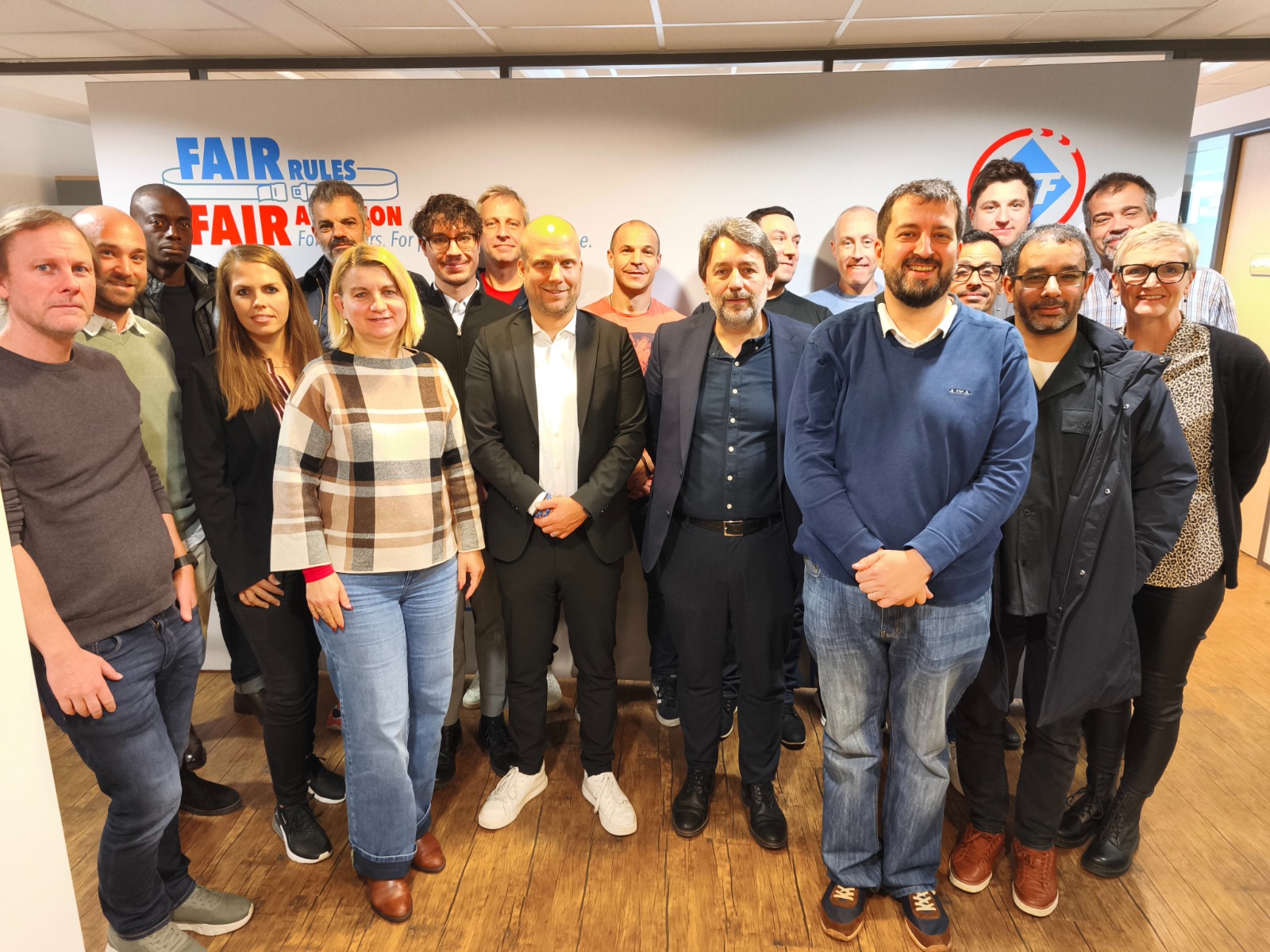
The upcoming revision of the Air Services Regulation – or Regulation (EC) No 1008/2008 - was high on the agenda of the JAC. The ETF is calling for a revision that closes the loopholes allowing airlines to circumvent labour laws and engage in social dumping. Our demands include stricter licensing and oversight rules, with a clear link between an airline's principal place of business and its actual operations, and the recognition of home base as the main criterion for determining applicable labour law and jurisdiction. We also want stronger enforcement by national authorities, safeguards against the misuse of wet leasing, including to undermine strikes, and an end to bogus self-employment of aircrew. We also firmly oppose further liberalisation of EU airline ownership and control rules and any attempt to restrict the right to strike of air traffic controllers.
We also welcomed Zane Rasnača from the European Labour Authority (ELA), who presented the findings of its report, Enforcement of labour mobility and social security coordination rules for air crew members. The report confirms many of the problems that aviation unions have been raising for years, including complex employment structures, difficulties in identifying the competent authorities and insufficient cooperation between Member States. The discussion also looked at what needs to change to make enforcement more effective in practice.
Health and safety featured prominently in the discussions. Alexa Valero from UNPNC-CFDT updated colleagues on the legal victory in the breast cancer case in France. We also exchanged views on cabin air quality, the risks associated with contaminated cabin air and the need for stronger protection of aircrew.
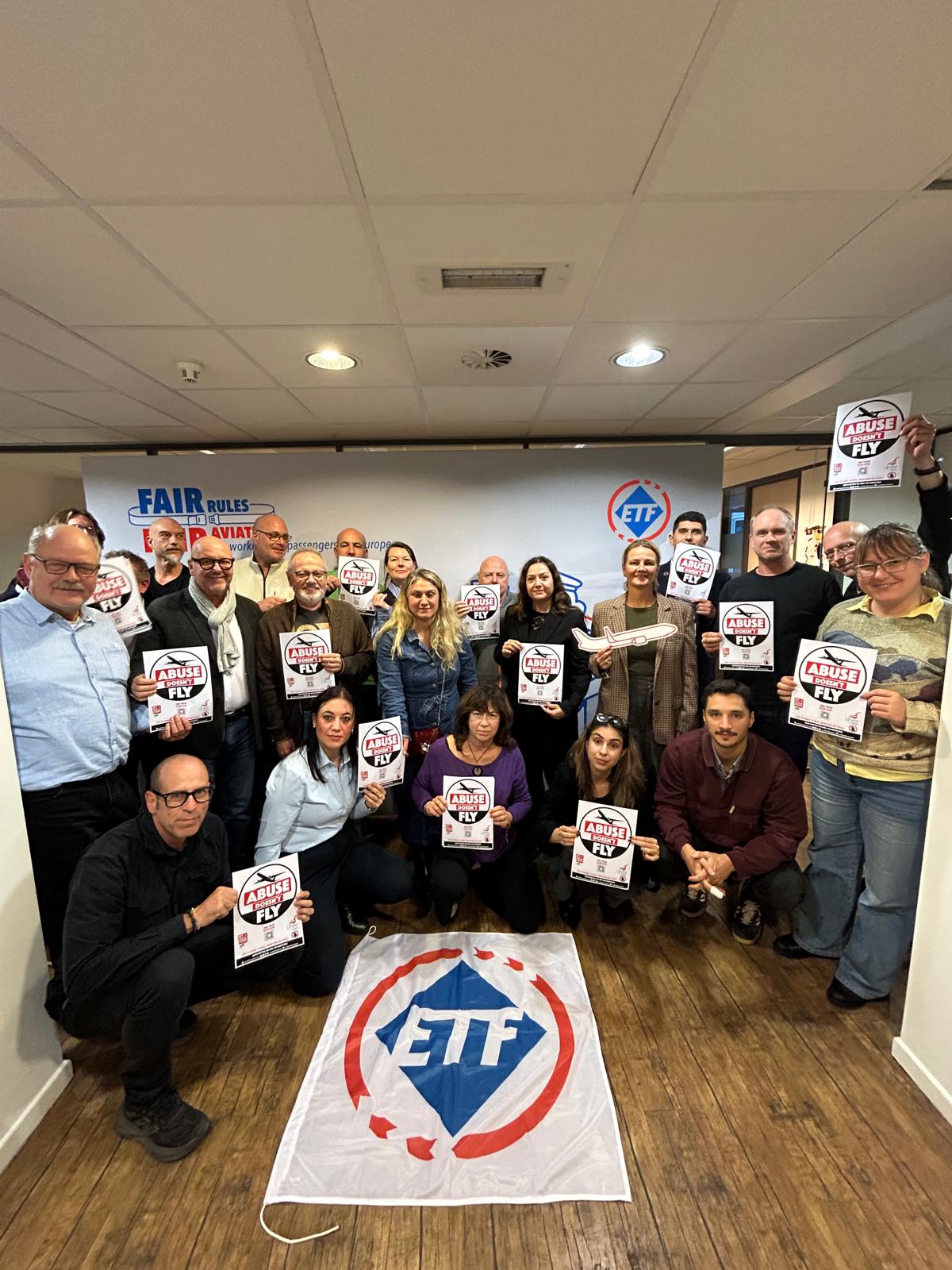
Another important topic was the growing problem of unruly passengers and the violence and abuse faced by cabin crew. The discussion focused in particular on the introduction of a European no-fly list to prevent passengers responsible for serious incidents from simply boarding another airline after being banned by one carrier. The ETF has been calling for a coordinated European approach, with clear rules and effective measures to protect crew and passengers.
As usual, affiliates also shared updates from their countries, including ongoing disputes, collective bargaining and other developments affecting aircrew across Europe.
Air Traffic Management Committee
The ATMC welcomed Koen Milis, Chair of the Performance Review Board (PRB), for an open exchange on preparations for the fifth reference period (RP5) of the Single European Sky performance and charging scheme. The discussion provided an opportunity to raise trade union concerns about the way performance targets are set and their impact on staffing, working conditions and safety, as well as proposals for measuring environmental performance and proper investment into capacity.
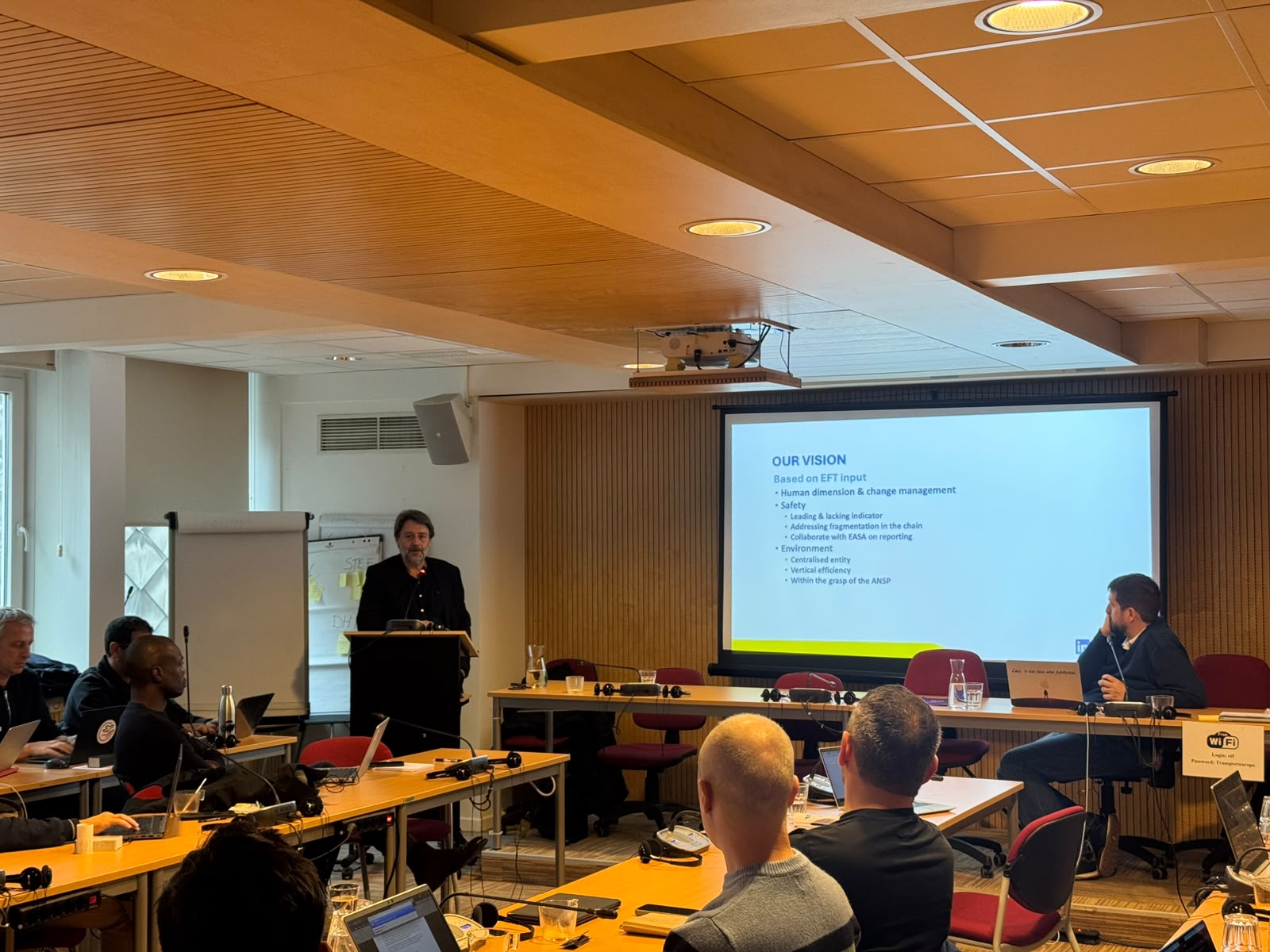
Several studies carried out this year for the European Commission were also discussed, covering ATM performance, the environmental modulation of air navigation service charges, air traffic controller licensing and the flexible use of airspace.
Looking ahead, members exchanged views on technological and regulatory developments, including SESAR, Common Project 2 proposal and the revision of the Network Functions Implementing Regulation, and what these changes could mean for workers and the organisation of air traffic management. We also explored potential areas of cooperation under the forthcoming Memorandum of Understanding between EUROCONTROL and the professional staff organisations.
As in the JAC, the revision of the Air Services Regulation was also discussed, this time focusing on possible restrictions on the right to strike of air traffic controllers, particularly concerning overflights. The ETF firmly opposes such restrictions and calls instead for action to address understaffing and cost pressures in ATM.
Ground Staff Committee
For the GSC, the discussions focused on three issues that are increasingly affecting airport and groundhandling workers: climate change, new EU safety rules and technological developments.
As extreme heat and severe weather become more frequent, protecting workers from climate-related risks is becoming an urgent issue, particularly for those working on airport aprons and in other exposed areas. Members exchanged experiences and discussed practical measures that employers and authorities should take to ensure safe working conditions.
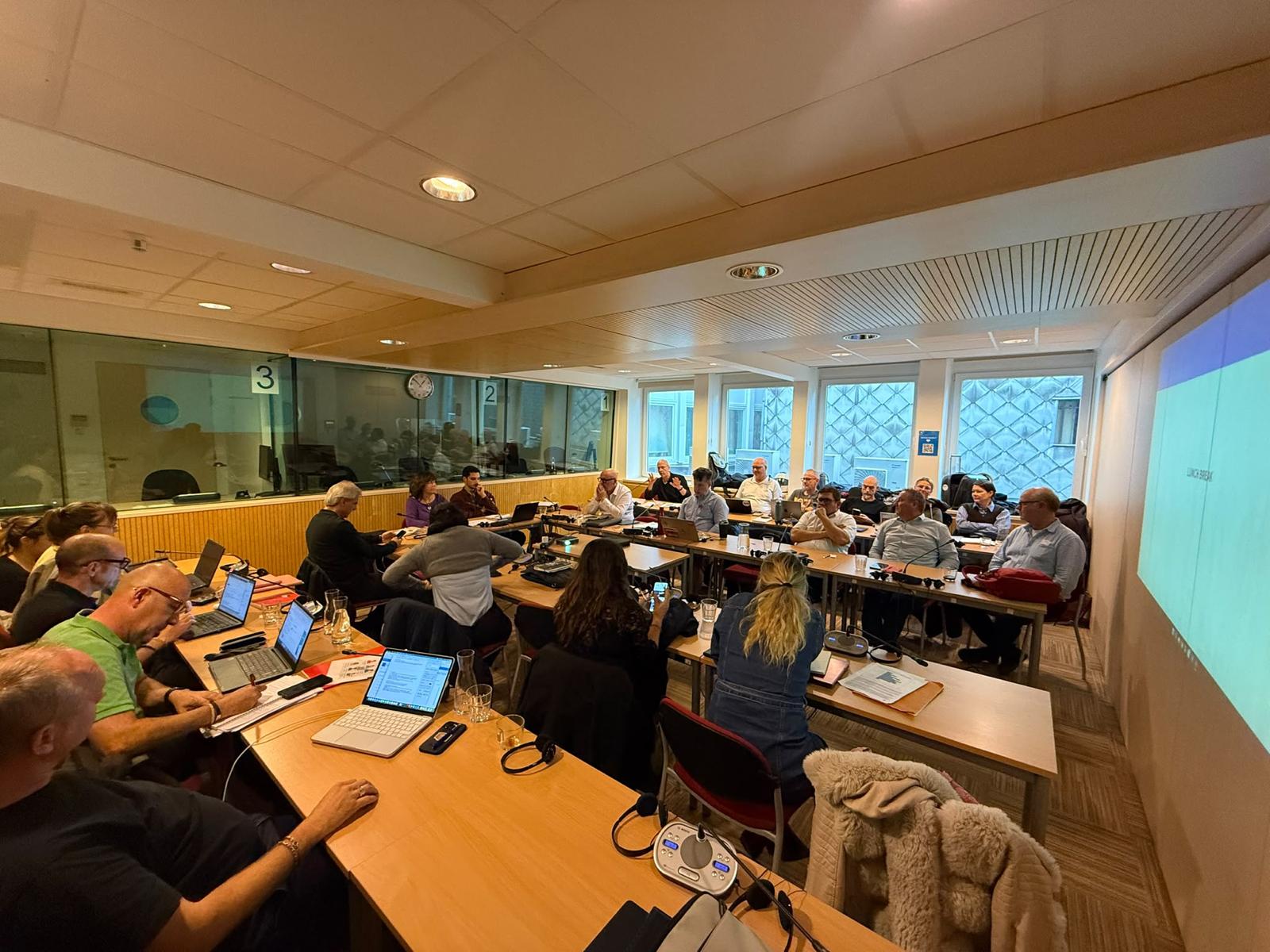
The new EASA Ground Handling Regulation was also on the agenda. With the implementation of the new rules approaching, trade unions want to make sure that workers and their representatives are properly involved and that the regulation brings real improvements to safety on the ground.
The committee also looked at how automation, digitalisation and new technologies are changing jobs at airports. While some developments can make work safer and less physically demanding, others risk increasing workloads, reducing staffing or putting jobs at risk. Members discussed how trade unions can respond to these changes, including through collective bargaining, training and stronger worker involvement in decisions about new technologies.
Civil Aviation Section
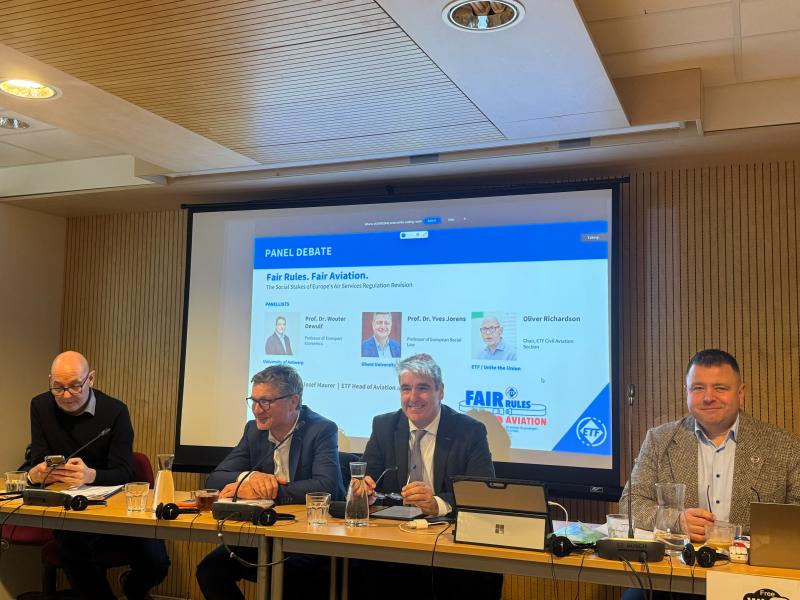
The highlight of the Civil Aviation Section meeting was a panel debate entitled “Fair Rules. Fair Aviation. – The Social Stakes of Europe's Air Services Regulation Revision.” We were joined by Professor Wouter Dewulf from the University of Antwerp, Professor Yves Jorens from Ghent University and Oliver Richardson, Chair of the ETF Civil Aviation Section.
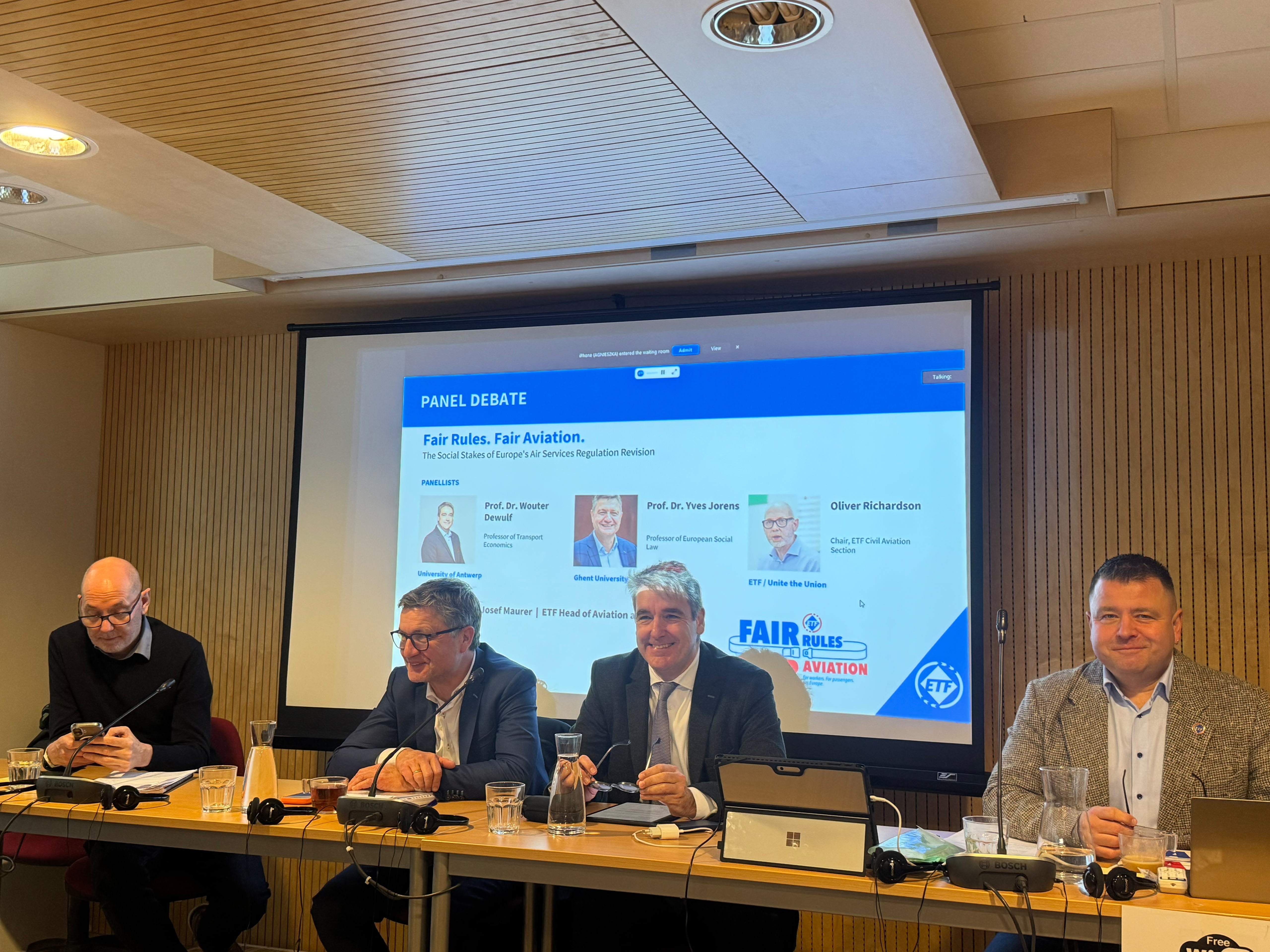
Thirty years after the liberalisation of the EU aviation market, we asked a simple question: who has benefited, and who has paid the price?
The discussion covered some of the most difficult issues in European aviation today: complex corporate structures and the use of different operational bases, the relationship between the right to strike and EU market freedoms, further liberalisation of airline ownership and control, and the growing use of wet leasing.
We also discussed whether the revision of the Air Services Regulation can finally close the loopholes that have allowed airlines to circumvent national labour standards, or whether aviation workers need additional EU legislation specifically protecting their rights.
For the ETF, the problem is clear. Airlines can operate across Europe and organise their businesses across several countries, while labour law and its enforcement remain largely national. This has created opportunities for some airlines to take advantage of differences between national systems, leaving workers and trade unions struggling to defend their rights. The revision of the Air Services Regulation must address these problems rather than create new opportunities for social dumping.
Beyond the panel debate, affiliates discussed the work carried out since the previous meeting and the revision of the ETF position on environmental sustainability. We also exchanged views on EU external aviation policy, developments at EASA and the involvement of women and young workers in aviation. Preparations for the ETF Congress in 2027 and the priorities brought forward by the three professional committees rounded off the discussions.
European Sectoral Social Dialogue
We closed the week with the annual plenary of the European Sectoral Social Dialogue Committee for Civil Aviation, bringing together European trade unions and employers' organisations.
Representatives of the European Commission's DG MOVE and DG EMPL joined the meeting to discuss several important initiatives in preparation, including the revision of the Air Services Regulation, the new European Aviation Strategy and the Fair Labour Mobility Package.
These initiatives will have a direct impact on aviation workers. The ETF used the discussions to underline the need for stronger European rules and better enforcement, particularly when it comes to cross-border employment, applicable labour law and social security. The European aviation market cannot function fairly if employers can take advantage of differences between national systems while workers struggle to have their rights enforced.
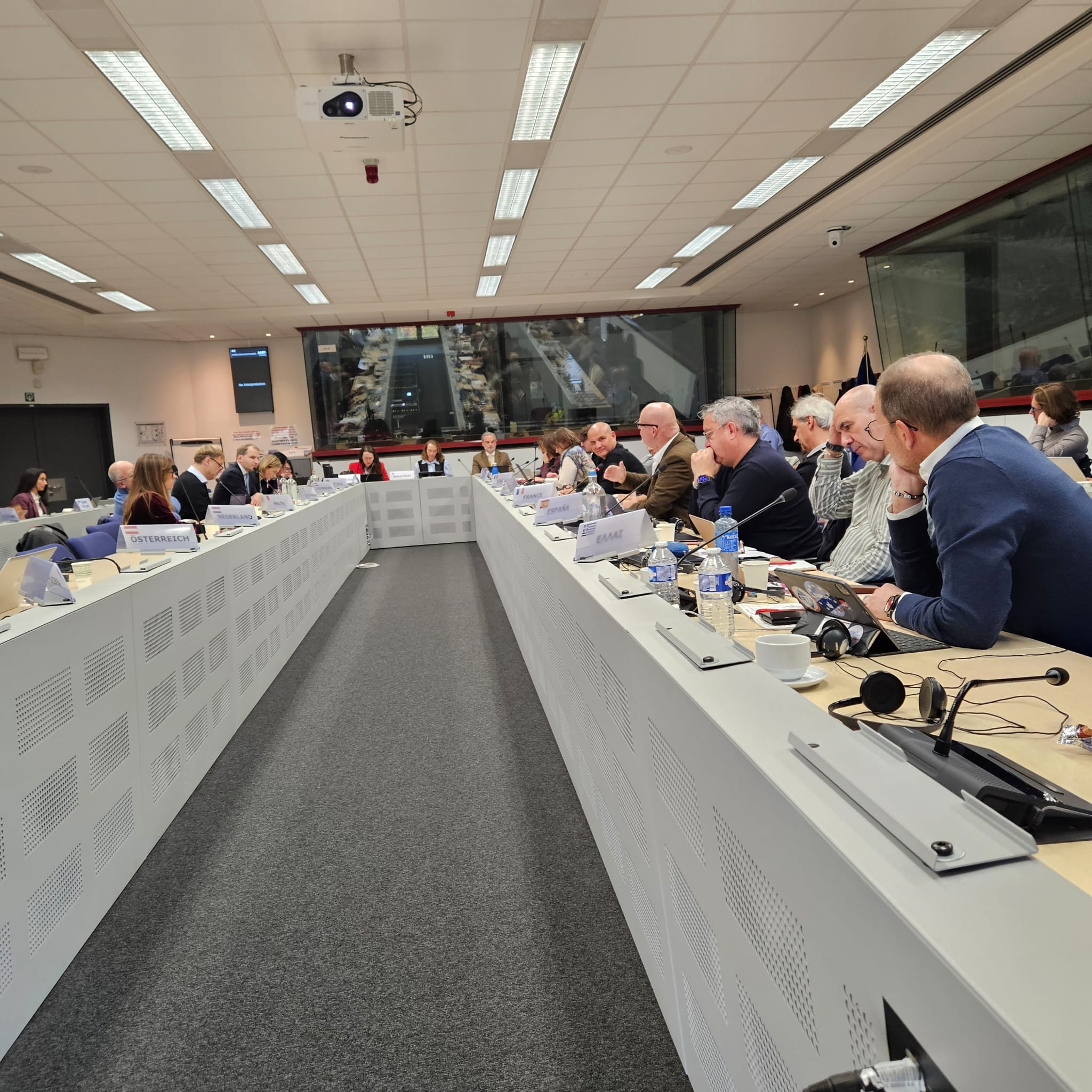
We also discussed the work of the joint social dialogue working groups, gender balance in aviation and the need for a European response to unruly passengers. The question of a European no-fly list was again raised as a possible way to deal with passengers responsible for serious incidents and prevent them from moving between airlines without consequences.
Health and safety was another important part of the meeting, particularly the impact of environmental measures on employment and the need to adapt working conditions to climate change. The social partners also exchanged views on the consequences of geopolitical crises for aviation workers and discussed the priorities and working arrangements for the coming year.
The meetings came at an important moment for European aviation. The Commission is preparing changes to several pieces of legislation that will shape the sector for years to come, from market access and competition to labour mobility, safety and environmental rules. The ETF and its affiliates will be actively involved in these discussions, pushing for stronger protection against social dumping, clear rules on employment and social security, effective enforcement across borders and full respect for trade union rights, including the right to strike. Our priority is to make sure that the forthcoming changes to EU aviation legislation deliver concrete improvements for the people working in the sector, rather than further liberalisation at their expense.