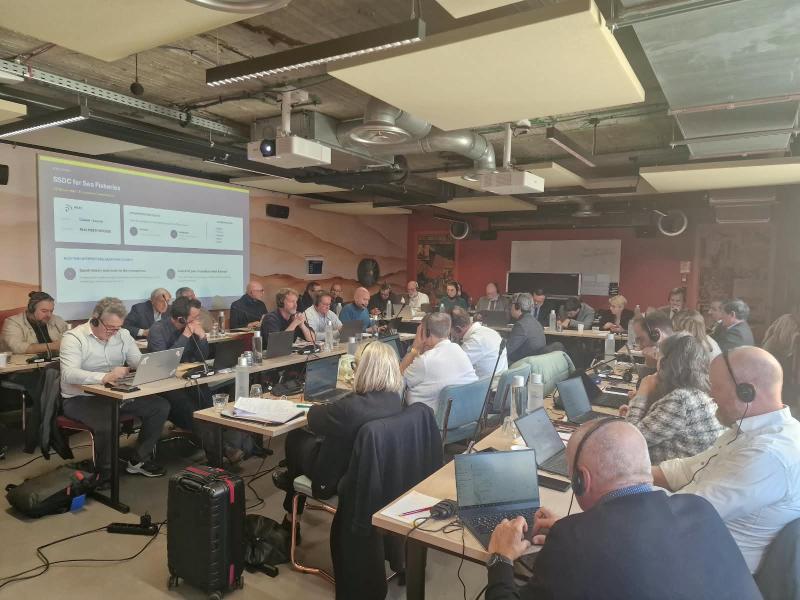


ETF fisheries affiliates gathered on 9 and 10 November to confront the critical state of our sector. During the Fisheries Section meeting and the Social Dialogue Plenary, trade unions from across Europe discussed the state of the sector and the challenged faced by fishers in different European countries. Following the European Commission 2026 evaluation and the alarming STECF Social Data Report, the diagnosis is clear: urgent action to protect EU fishers is required.
The failure of the Common Fisheries Policy. Our affiliates centered their discussions on the recently published Commission document “Vision 2040 for fisheries and aquaculture”. Unfortunately, this document fails to propose a revision of the Common Fisheries Policy (CFP) (here ETF and other stakeholders reaction) . The sector faces a severe decline and historic lows in attractiveness. Yet, the Commission refuses to undertake a targeted revision of a legislative tool that has fundamentally failed to deliver its expected outcomes. The ETF believes that a solid future for the sector is impossible without a CFP that puts working conditions, fair pay, and job security at its core.
Equal treatment for migrant workers The recruitment and treatment of migrant fishers was a major topic during the meetings. The ETF demands that all workers are treated fairly. A very positive example was presented from Denmark, where a new agreement was signed between employers and trade unions. This agreement guarantees equal treatment between third country national workers and local workers. This is exactly the kind of action we need across Europe to protect migrant fishers from exploitation.
Funding challenges and the crisis in the Mediterranean Participants also debated the funding of the fisheries sector. There are big challenges to ensure that EU funding is actually sufficient. We must guarantee that fishers are directly compensated during stops and crises, so they are not left behind.
Mediterranean. There is a persistent and difficult situation in this region, with workers facing restrictions of fishing effort and losing fishing days at sea and income. Despite our warnings, we are still lacking concrete and sufficient responses from the Commission to help Mediterranean fishers.
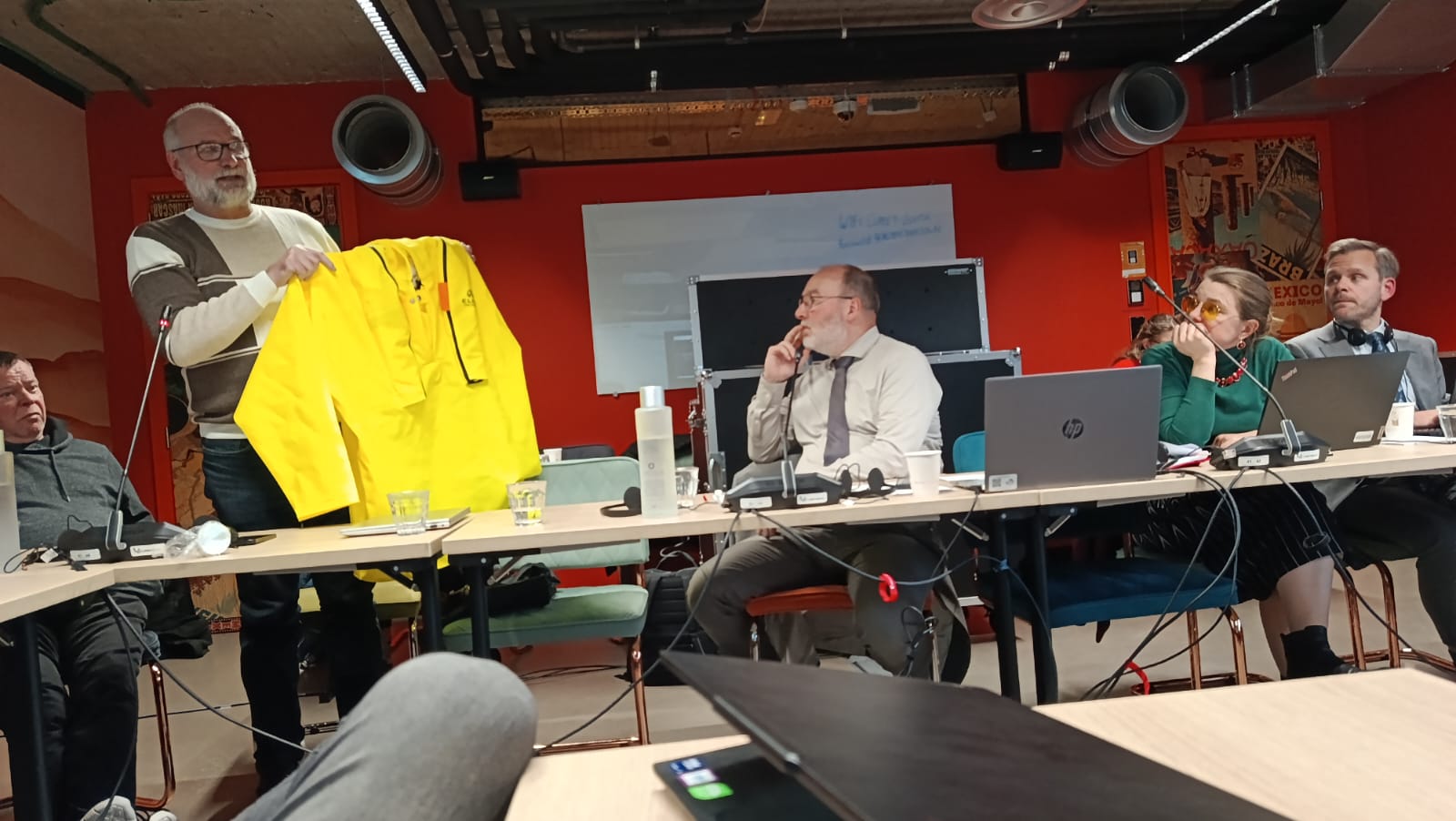
Improving safety on board Health, safety, and comfort on board are always a priority for our affiliates. During the meetings, a new prototype of a fisher oilskin with an integrated inflatable life jacket, which was developed in Denmark, was presented. Practical innovations like this are essential to save lives and make the working environment safer for our crews.
The ETF and its affiliates remain completely committed to protecting fishers and defending the unique role they play in the coastal communities of Europe.