ETF black logo ETF black logo ETF black logo ETF black logo

Google Translate

ETF rings the alarm bell on CETA with Canadian Ambassador to the EU

News


180215_CETA

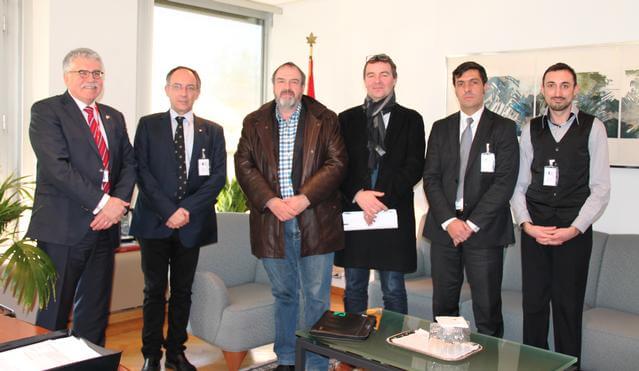
On 18 February 2015, a delegation led by ETF General Secretary Eduardo Chagas met with Mr David Plunkett, the Canadian Ambassador to the European Union to raise concerns about the EU-Canada Comprehensive Economic Trade Agreement (CETA). During a two hour-long discussion, the union delegation, which included representatives from the Belgian affiliated organisations ACV and BTB, drew the Ambassador’s attention on a number of provisions contained in CETA which risks jeopardising jobs and regulations on both sides of the Atlantic.

The meeting gave the ETF the opportunity to cast a critical eye on the ability of the EU-Canada free trade agreement to realise the many expectations raised in terms of job creation. The ETF fears that the business-oriented strategy that guided the negotiations is not only going after the alleged barriers to trade but also after the trade-union and social rights. Proofs of that are the creation of the Investor-State Dispute Settlement (ISDS) or “regulatory mechanisms” which would seriously limit national governments sovereignty and the democratic scrutiny of economic policy.

In addition, ETF asked for the exclusion of a specific chapter on maritime transport services which would threaten domestic cabotage arrangements in Canada. Instead of deconstructing these arrangements, it should be the European lawmakers’ duty of care to look at providing similar measures in Europe to protect EU-based seafaring jobs and the EU maritime know-how, said the ETF.

After Mr Plunkett committed to relay the ETF concerns to the Canadian government authorities, the ETF concluded by reiterating its solidarity towards the Canadian Maritime and Supply Chain Coalition that was formed in response to the detrimental effects that CETA will have on the Canadian maritime industry and the rest of the logistic chain.


ON THE GROUND

News

Keeping a warming Europe moving: how hot temperatures affect transport workers and what can be done about it

As part of the European continent undergoes its fourth heatwave of 2026, it has become abundantly clear that occupational heat exposure is no longer an exceptional or occasional summer hazard. It is an emergent occupational hazard only destined to escalate. Europe is the second fastest-warming region of the globe after the Arctic. According to EU-OSHA 2025 numbers, one in five workers in the EU signaled exposure to extreme heat at work in the previous 12 months, a figure rising to one in three in some countries.
News

Unruly passengers: more than just summer headlines

Summer may be synonymous with relaxation for holidaymakers and every summer seems to produce its share of eye-catching headlines. Just days ago, The Guardian reported on a drunk British holidaymaker who tried to kiss a flight attendant on a plane and was arrested on his way back through Palma airport. A week earlier, headlines were dominated by reports of a flight from Dublin to Ibiza descending into what was described as "sex and booze chaos," leaving fellow passengers shocked.
News

UK public transport unions sound the alarm over lack of toilet access for drivers

Public transport unions in the United Kingdom are raising urgent concerns about the lack of access to toilet facilities for bus and train drivers, a problem that has persisted for years but is now reaching a breaking point. Reports from across the UK show drivers being forced to work entire shifts without guaranteed access to a toilet, leaving them to rely on improvised or unsafe alternatives, including urinating in bottles in their driving cab. Some unions are now considering industrial action to force employers and authorities to act.