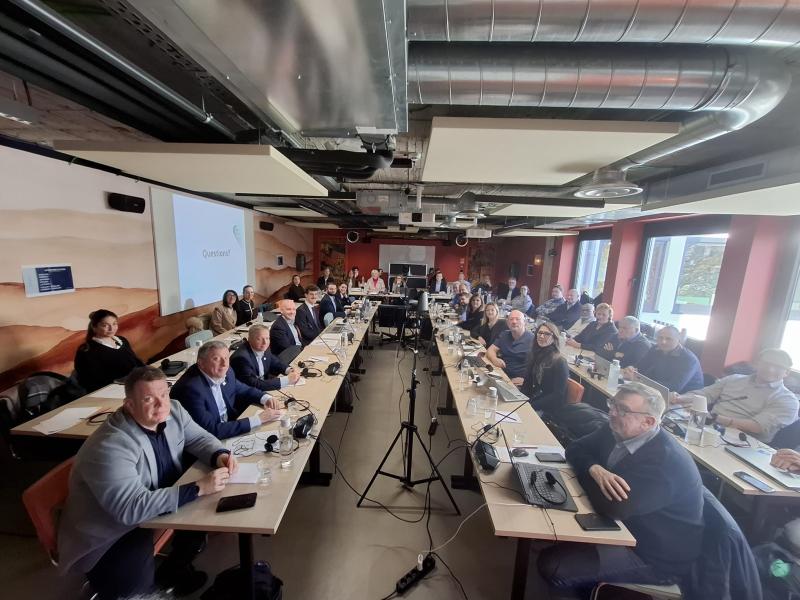


The European Transport Workers’ Federation (ETF), the European Barge Union (EBU) and the European Skippers Organisation (ESO) signed a new joint declaration on preventing and eliminating violence and harassment in inland waterway transport on 21 October 2026 in Brussels at the meeting of the Sectoral Social Dialogue Committee.
The declaration builds on the commitments made by the three social partners in 2018 - Joint-Social-Partners-Declaration-eliminating-Violence-against-Women-ETF-EBU-ESO-23-April-2018.pdf -, when they pledged to raise awareness, combat discrimination and promote zero tolerance towards violence against women and LGBTQI workers. Eight years later, the social partners have agreed to go further, with more specific commitments on prevention, reporting, protection and support for victims.
The need for action is clear. According to ETF's 2026 survey on violence and harassment against women transport workers, 71.1% of respondents experienced violence or harassment in their current job. Although the survey covers the transport sector as a whole and not inland waterways specifically, its findings show how widespread the problem remains.
Working conditions in inland waterways bring particular risks. Vessels are often both a workplace and a home for extended periods. Crews are small, workers can be isolated and access to external support is limited. Reporting harassment or violence can be especially difficult when workers must continue living and working alongside those involved.
The new declaration recognises violence and harassment as an occupational health and safety risk and calls for their inclusion in workplace risk assessments and prevention measures. It also commits the social partners to promoting confidential or anonymous reporting mechanisms, proper investigation of complaints, protection against retaliation and access to psychological, medical and legal support.
Another important element is the commitment to develop sector-specific standards and promote provisions on violence and harassment in collective agreements. The declaration also calls for the ratification of ILO Convention No. 190 by EU Member States that have not yet done so.

Speaking at the signature, ETF General Secretary Livia Spera said:
"Today, we are taking an important step together as European social partners. But our responsibility does not end with signing this declaration. It is to make sure that its commitments become a reality for workers on board vessels throughout Europe. ETF is ready to work with EBU and ESO to achieve that."
ETF welcomes the renewed commitment of EBU and ESO. The next task for the social partners will be to ensure that the declaration is followed up with practical measures that improve working and living conditions on board vessels across Europe.