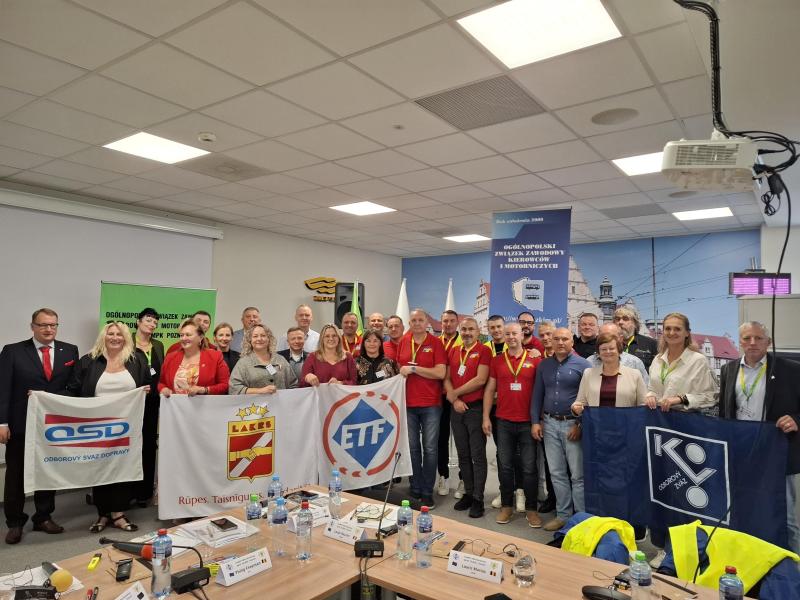
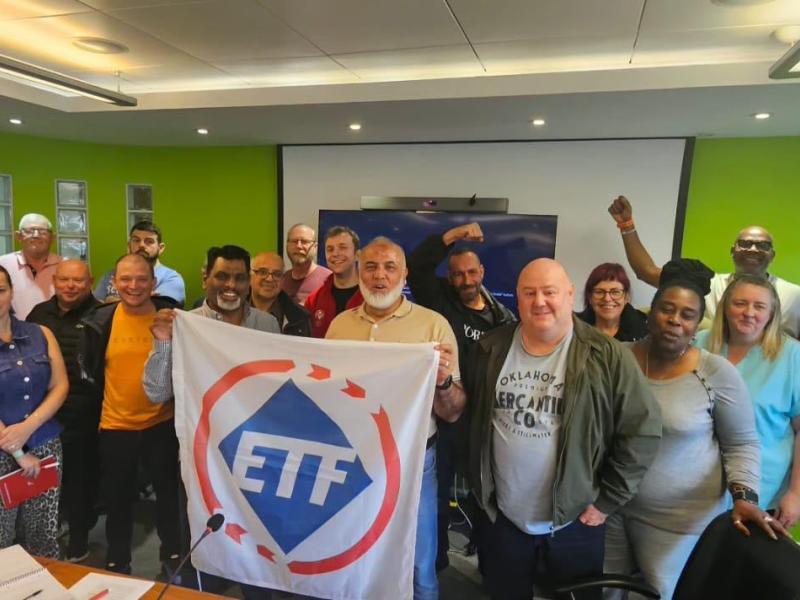
At the 2-day conference for women transport workers ETF gender representatives pointed at workplace violence as one of the key reasons for the low rate of women employed in the industry.
“Workplace violence occurs in all transport sectors, and only few companies take it serious”, said a participant working in the aviation sector.
“Violence is not part of the job. All passenger transport companies need to visibly promote policies to fight workplace violence”, testified another woman representative alluding to those operators instructing their front desk staff to handle aggressive behavior as part of the service.
There is no recent data on violence in transport at European level. An ILO report dated 2003 shows that ‘In the European Union, the hotel, restaurant and entertainment sectors have the highest scores on all forms of violence, including physical violence and intimidation, followed by the transport sector, public services and other services.’ That was 13 years ago, but one wonders whether anything has changed since. The 70 ETF female representatives attending the conference do not believe that is the case.
For the first time, the European Commission directorate for mobility and transport DG MOVE has started looking into the gender representation in the transport industry. Job attractiveness stays at the core of the initiative. “The DG MOVE project is timely. The ETF hopes that it will be based on an honest analysis of all factors currently preventing more women to access jobs in the transport sector. Otherwise, there will be no progress in this matter. A modern industry is one which is capable of attracting women and young workers. We need this for transport as well.” Helga Petersen, ETF Women’s Committee Vice-chair stated.
The ETF Women’s Committee will dedicate the months until the ETF Congress in May 2017 to tackle workplace violence. A training module for rank and file union members, as well as guidelines on a standard agreement for zero-tolerance company policy will stay at the core of the Committee’s work.
Workplace violence will continue to be a priority for the transport workers and their trade unions.
The ETF mid-term Women’s Conference is being organised in Bucharest, Romania, in the context of the EU-funded project called “Inclusive and Fair Transport in Europe”. The project aims to provide ETF members with additional tools for better dealing with the current challenges the transport sector is facing, among which the lack of attractiveness for women and young workers.