

Seafarers' working and living conditions are not only a matter of welfare; they are also fundamental to maritime safety and increasingly relevant to how maritime risk is assessed.
The insurance industry is beginning to examine crew welfare more systematically, and the International Union of Marine Insurance (IUMI) has introduced a Crew Wellbeing Checklist for Hull & Machinery insurers, bringing factors such as fatigue, safety culture, employment conditions, mental health and psychological safety into the assessment of operational risk.
Now, a recent analysis published by SAFETY4SEA, entitled: “Is crew welfare becoming a measurable maritime risk?”, highlights this important development :
https://safety4sea.com/cm-analysis-is-crew-welfare-becoming-a-measurable-maritime-risk/
This is particularly relevant in light of the WMU report (commissioned by the ETF and ITF) findings:
The WMU report “Charting the Distinct Rights of Sea Workers in European Waters: A Focus on Decent Working Time” - A strong evidence of a systemic problem:
Excessive working hours, fatigue and inadequate rest are not only violations of decent working conditions. They also represent serious risks to maritime safety.
These concerns were reinforced by a World Maritime University report, commissioned by the ETF and ITF and are more relevant than ever.
The findings underline a fundamental problem: the maritime industry's current approach to working and rest hours does not adequately reflect scientific evidence on fatigue, sleep and human performance.
Read the ETF's previous article: Landmark report reveals labour and social rights gap for sea workers in Europe.
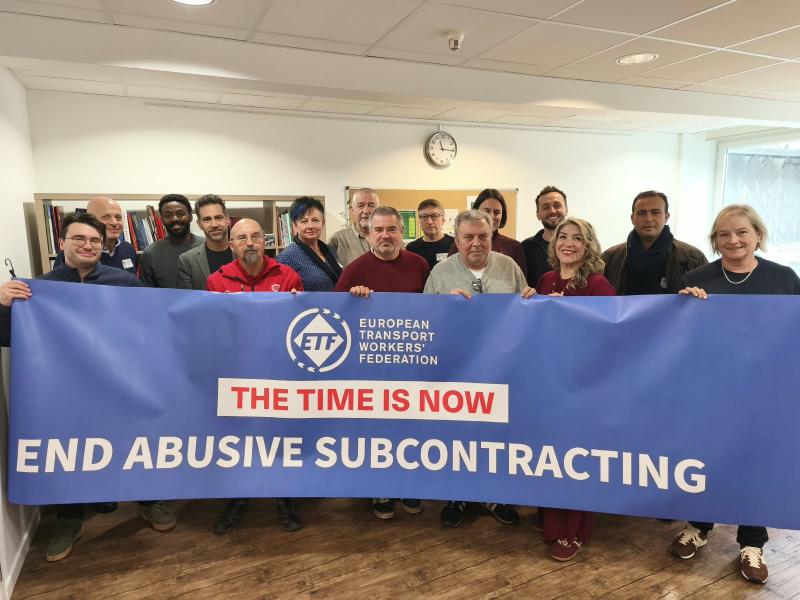
The connection between working conditions and maritime safety was a central theme during the ETF's final event presenting the WMU report on 21 May 2026 in Brussels.
A dedicated panel examined the consequences of excessive working hours, insufficient rest and disrupted sleep for seafarers' health, decision-making and operational performance.
The discussion brought together representatives from the International Labour Organization (ILO), the marine insurance sector and experts in human factors and fatigue risk management.
Their participation reflected the importance of addressing fatigue not simply as an individual health issue, but as a broader challenge involving working conditions, operational practices, safety management and maritime risk.
The involvement of the marine insurance sector was particularly relevant. It highlighted the importance of examining how the wider maritime safety and risk-management framework considers working conditions, fatigue, and human performance.
Safe shipping starts with decent working conditions
The challenge now is to turn this recognition into meaningful improvements.
The maritime sector needs stronger, scientifically supported working-time standards and effective mechanisms to ensure that these standards are respected in practice.
The upcoming discussions within the joint ILO–IMO tripartite framework provide an important opportunity to review the existing rules governing working and rest hours under the Maritime Labour Convention (MLC, 2006) and the Standards of Training, Certification and Watchkeeping for Seafarers (STCW).