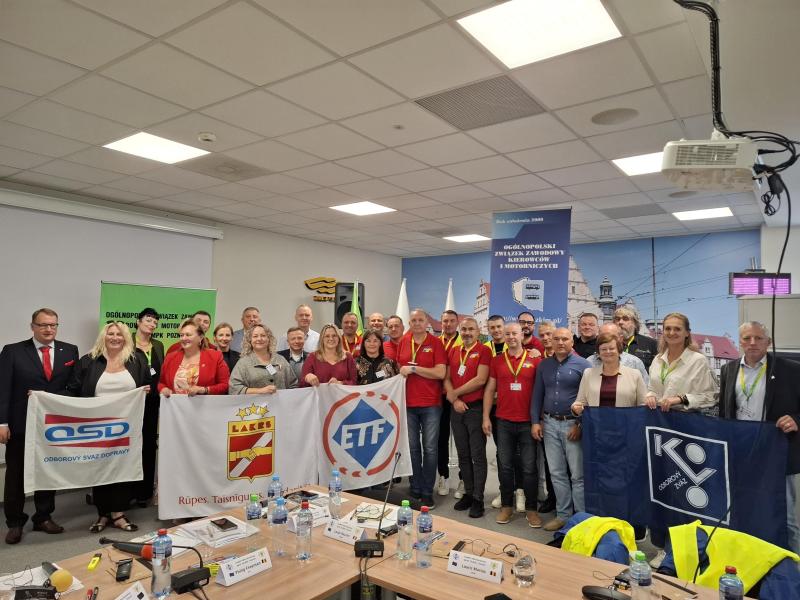
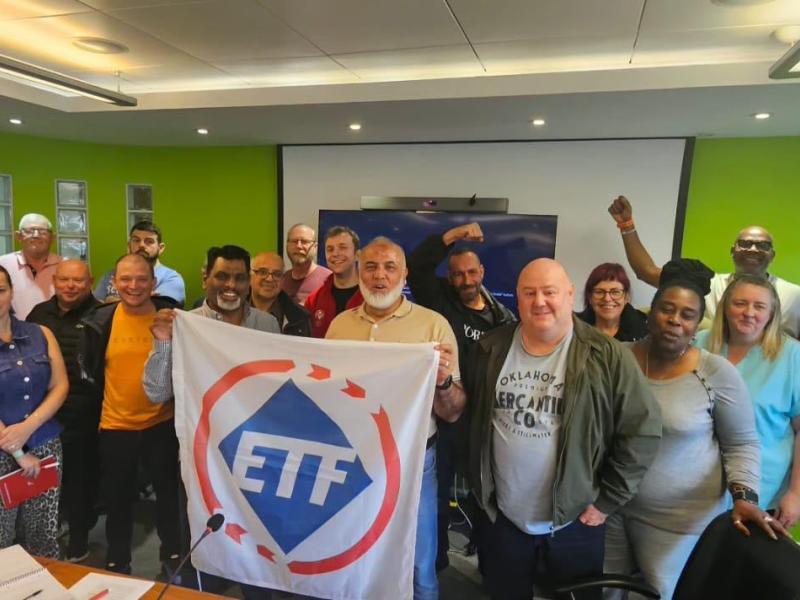
Young trade union shop stewards working in some of the key sectors of Europe’s economy – including transport, public services, food production, retail, metal, and media and the arts – drew a full crowd in the European Parliament on Tuesday 14 October to describe the dire reality facing young workers and jobseekers today.
To further the aims of the youth employment campaign led by six European trade union federations titled “Enough of their crisis – Back to our future”, the young workers from across Europe – many of whom were visiting the European Parliament for the first time – demanded concrete actions, rather than mere good intentions, from their hosting Members of the European Parliament (MEPs)[1] and the new Juncker-led European Commission.
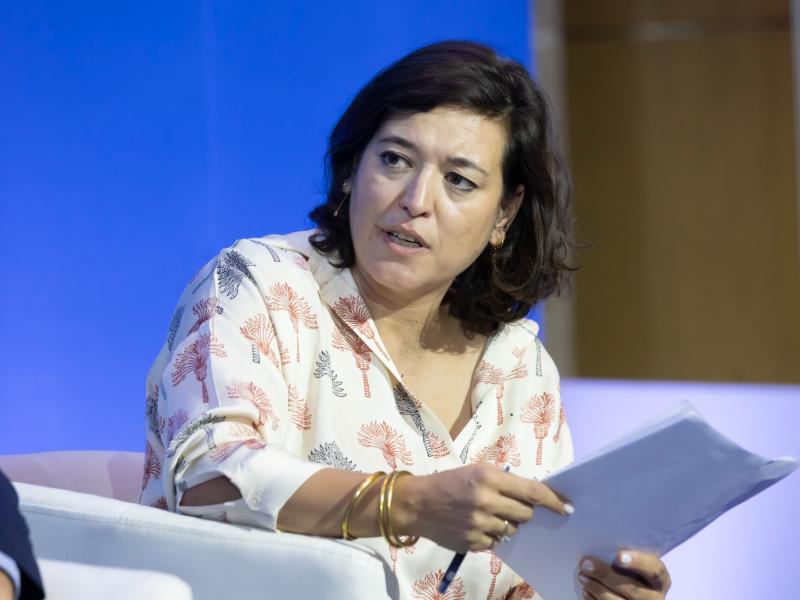
MEPs from five political groups also addressed the hearing, agreeing that alarming rates of youth unemployment were not the fault of young people, but rather the result of structural problems that need to be addressed at both the micro- and macro-economic level, including through a greater presence of social indicators in the so-called European Semester (the European Commission’s yearly cycle of economic policy coordination).
They further agreed that obstacles preventing young people from entering the first rung on the job ladder, combined with the dead-end cycle of low-paid, precarious work, need to be viewed as systemic problems for European economies, that will both endanger social security systems, and marginalise young people from democratic and electoral processes, and in turn, from social participation.
Young workers and MEPs alike criticised the failure of Member States and the Commission to oversee the proper implementation of the Youth Guarantee, which although a good initiative in principle, is leading to an increase in precarious work and being used to justify the exploitation of young labour in some instances.
Solutions are urgently needed for the young workers who are being forced into exile rather than given the chance to exercise mobility as a choice, who continue to be concentrated in temporary work – “a direct form of discrimination against young people,” according to Jonathan Doli, a line operator at the bread and pastry producer Alysse Food, representing FGTB Horval, Belgium – and who are victim to flexicurity and neoliberalism, which “go hand-in-hand as the greatest major transgression against young workers today,” according to Byron McGinley, a dock worker representing Unite the Union, UK.
All MEPs in attendance committed to follow-up on this hearing and continue their dialogue with the European trade union federations to ensure that macroeconomic EU policies meet expectations at the workplace level and to identify better policy responses to this “emergency situation”, so-named by one hosting MEP, Javi Lopez of the Group of the Progressive Alliance of Socialists & Democrats in the European Parliament (S&D).
[1] Hosting MEPs: Ernest Urtasun (Spain), Greens/EFA; Javi López (Spain), S&D; Paloma López (Spain), GUE/NGL; Rina Ronja Kari (Denmark), GUE/NGL; and Terry Reintke (Germany), Greens/EFA. Other MEPS who participated in the panel: Anneliese Dodds (UK), S&D; Eva Paunova (Bulgaria), EPP; and Marian Harkin (Ireland), ALDE.
Media contacts
EFBWW: Werner Buelen +32 (0)475 84 06 48 or wbuelen@efbh.be
EFFAT: Dominique Mitchell +32 (0)490 56 94 05 or d.mitchell@effat.org
EPSU: Pablo Sanchez +32 (0)474 62 66 33 or psanchez@epsu.org
ETF: Koen Reynaerts +32 (0)470 93 05 90 or k.reynaerts@etf-europe.org
industriAll Europe: Mischa Terzyk +32 (0)473 86 58 84 or Mischa.Terzyk@industriall-europe.eu
Uni Europa: Dimitris Theodorakis +32 (0)476 25 71 44 or dimitris.theodorakis@uniglobalunion.org