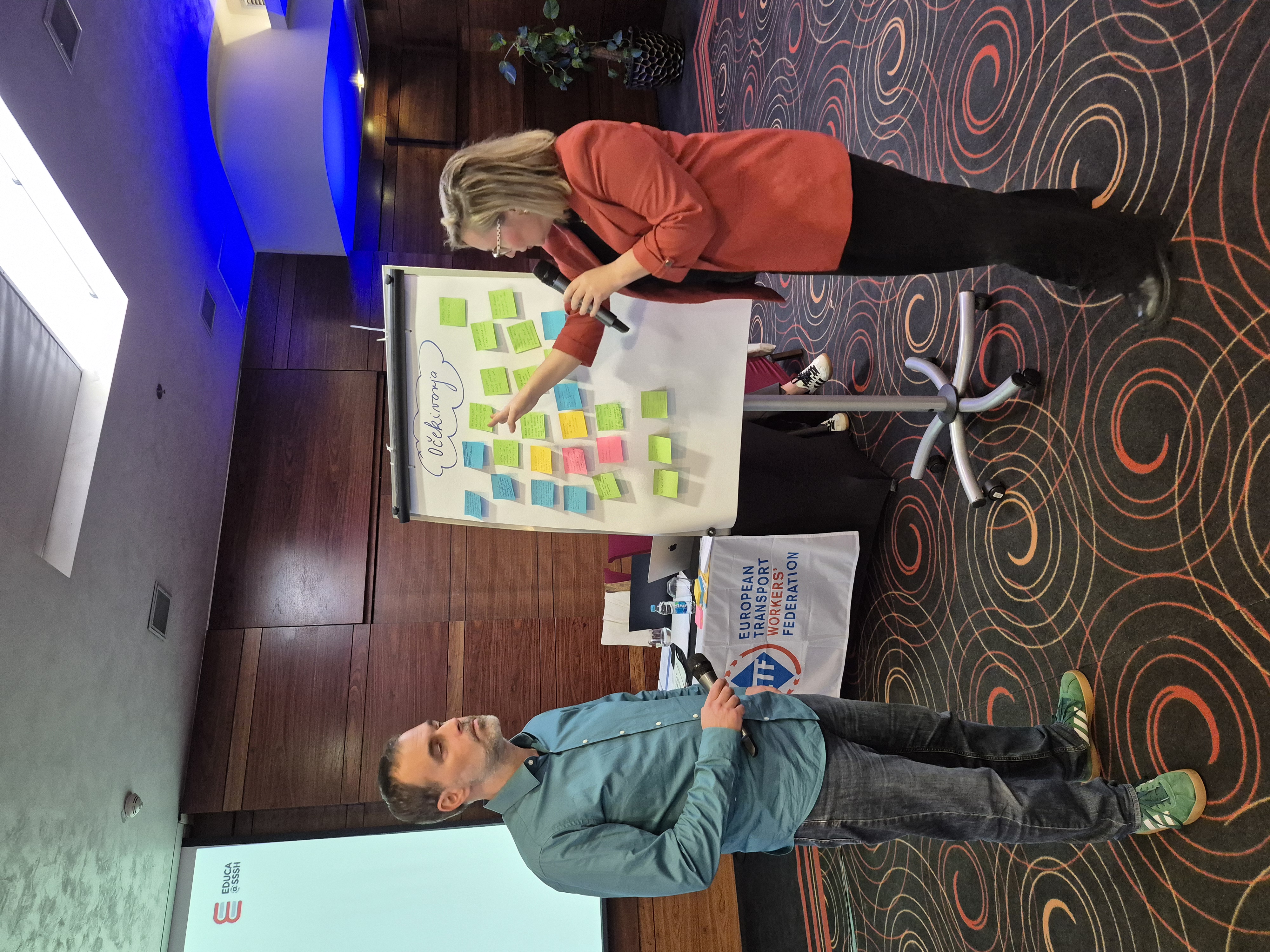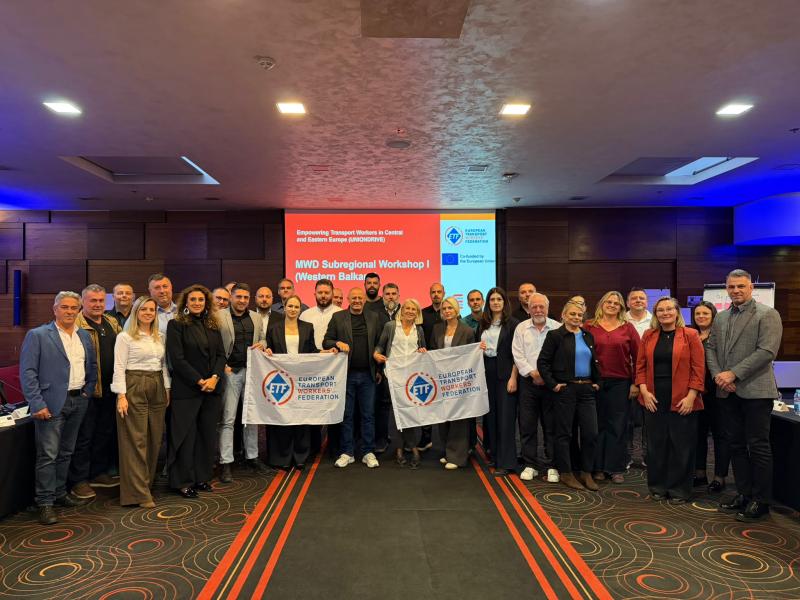


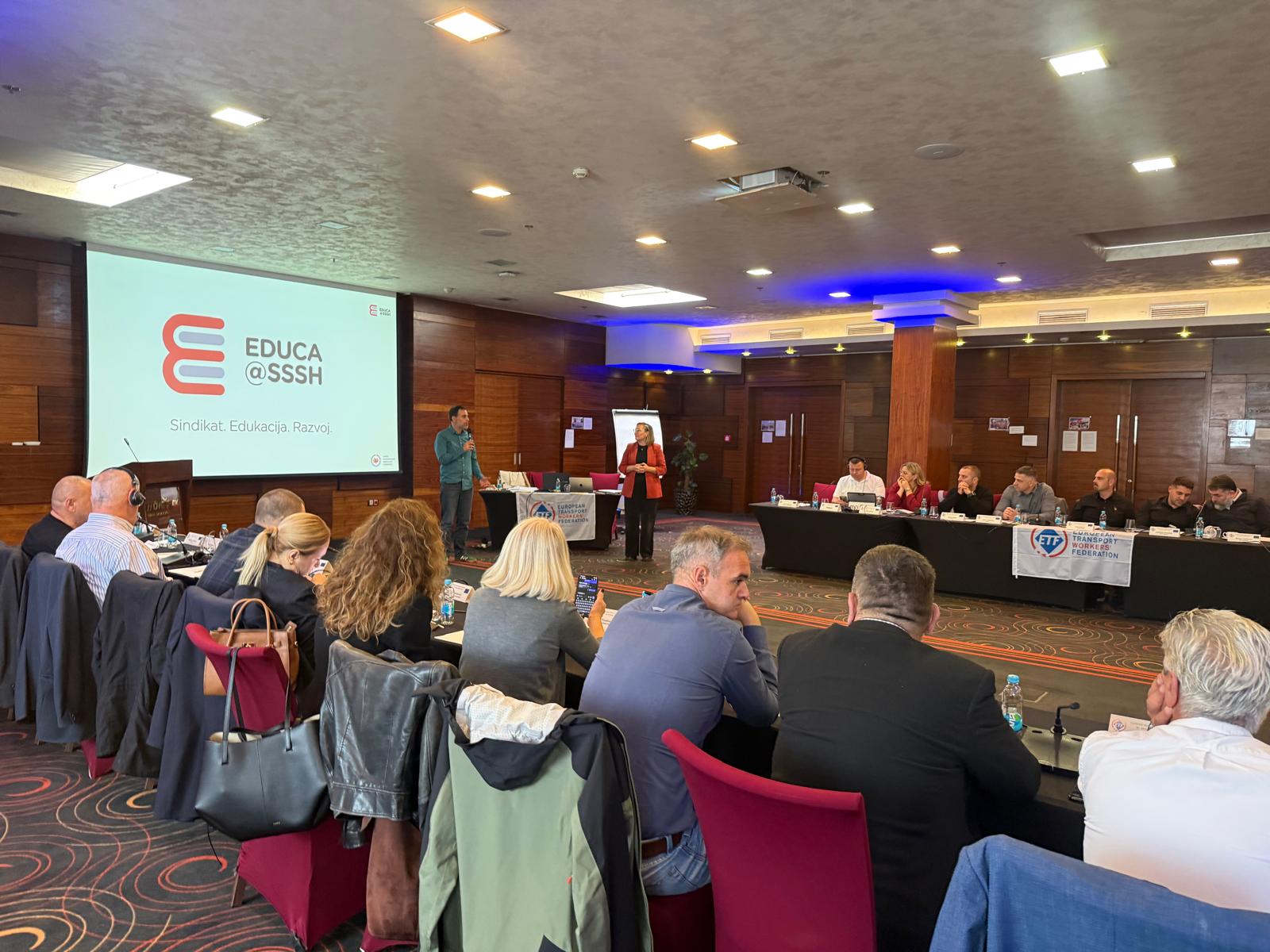
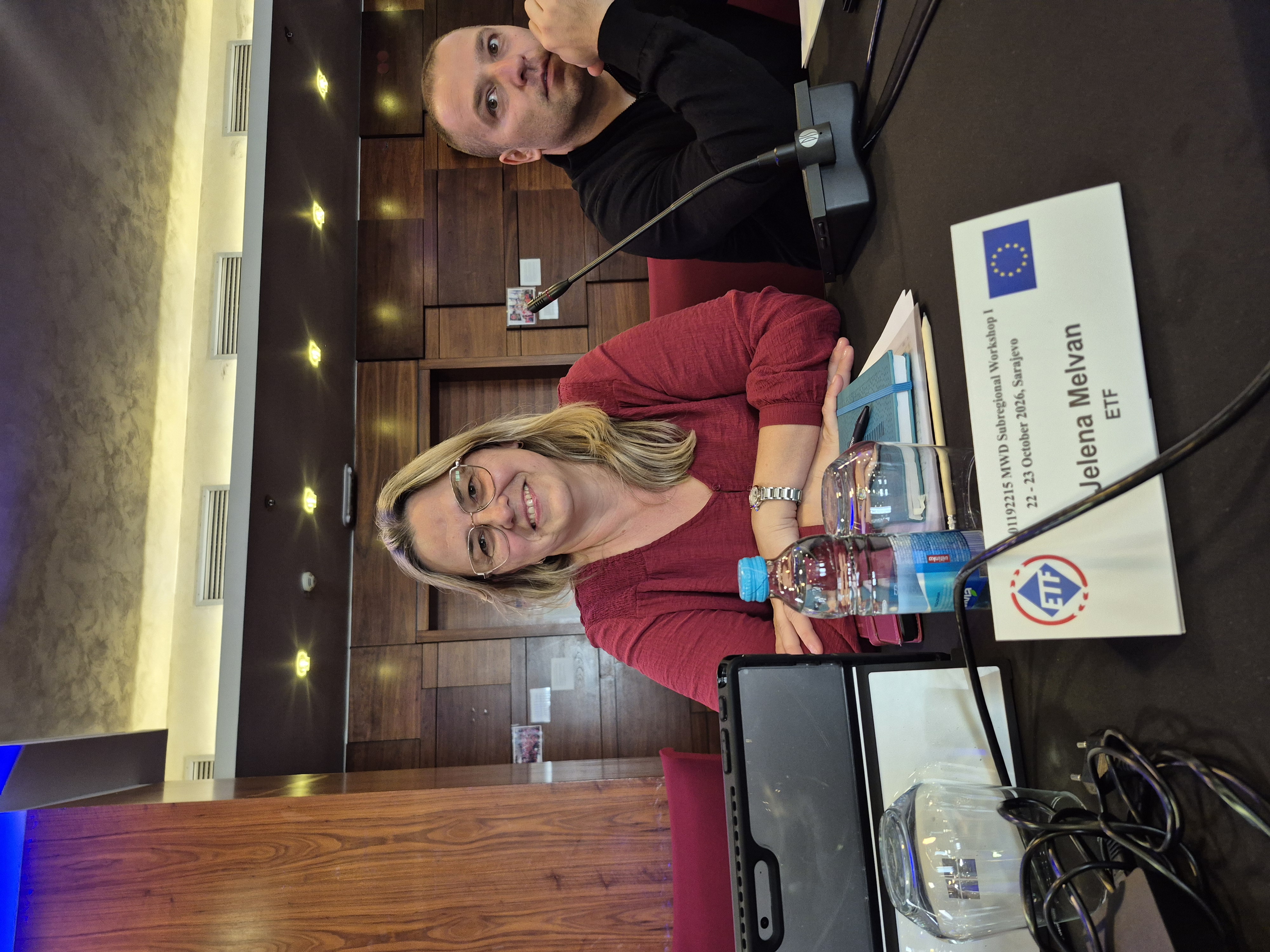
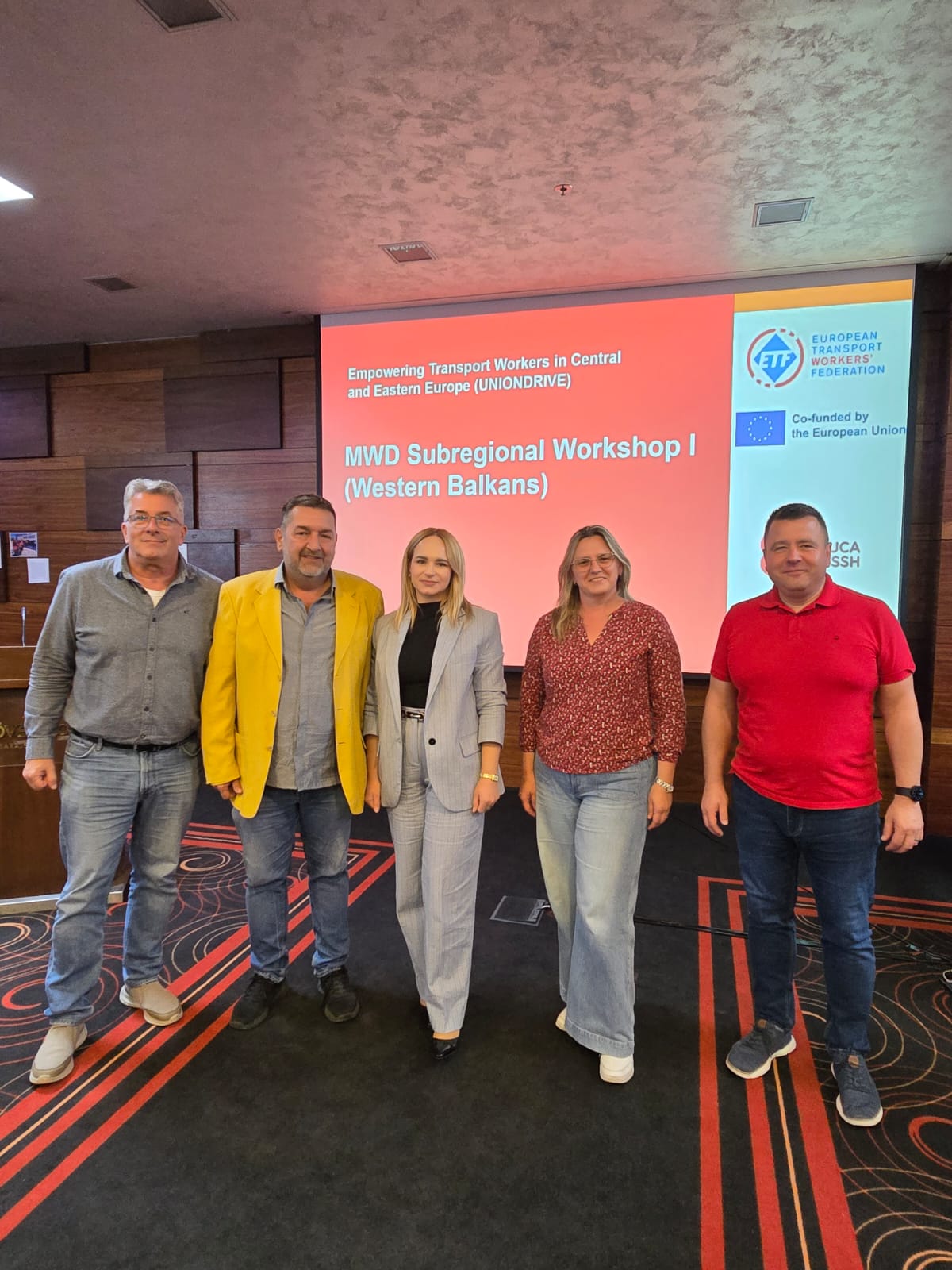
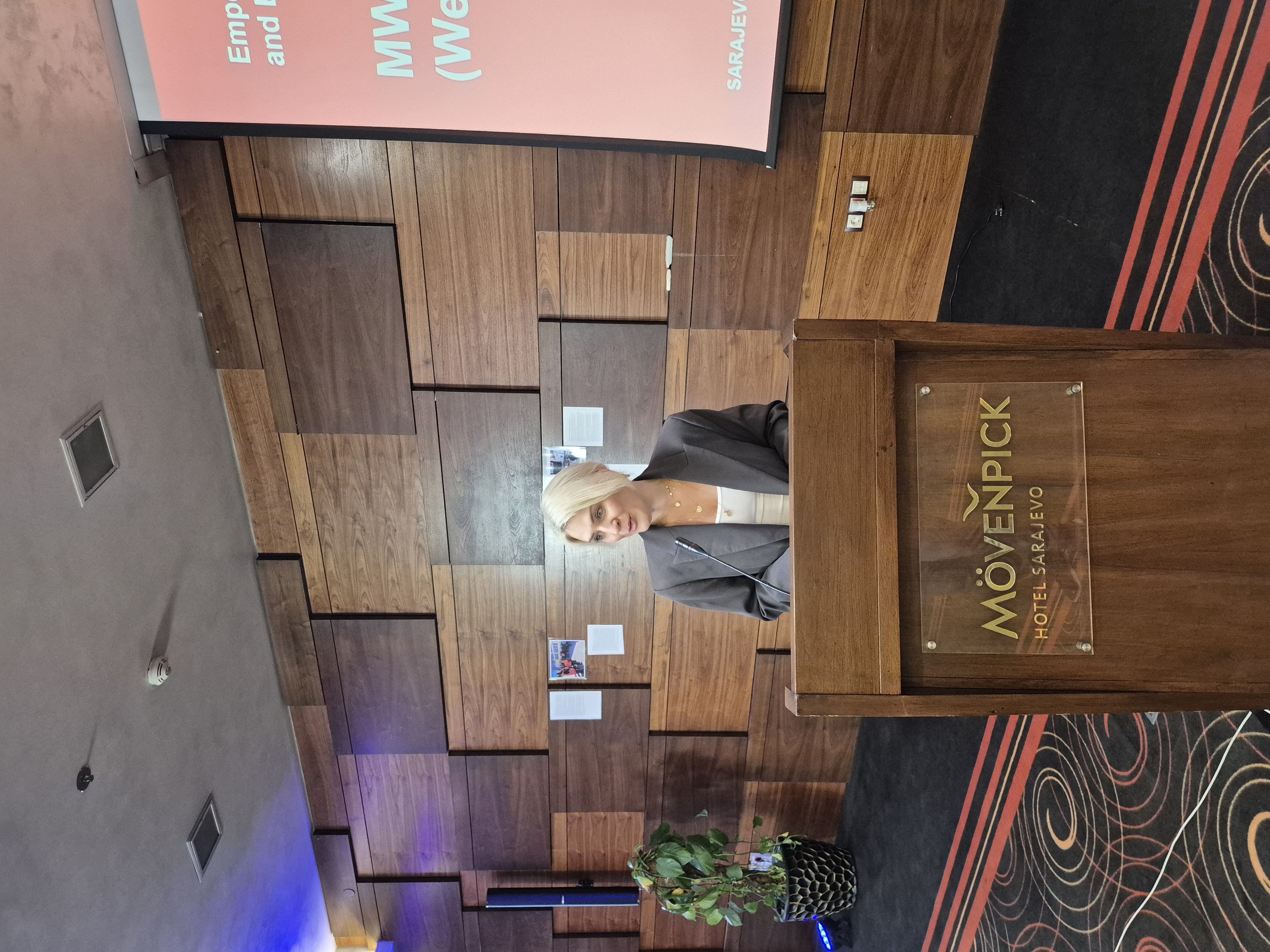
On 22–23 October 2026, the ETF held a regional workshop in Sarajevo, Bosnia and Herzegovina, as part of the EU co-funded project Empowering Transport Workers in Central and Eastern Europe (UNIONDRIVE). Around 35 trade union representatives from Albania, Bosnia and Herzegovina, Croatia, Montenegro and Serbia took part in the two-day programme, which combined exchanges on the situation in the aviation sector with practical training on trade union mobilisation, collective bargaining and European labour legislation.
Aviation workers face similar problems across the region
The workshop opened with a roundtable on developments in the aviation sector in the five participating countries. Trade union representatives reported on wages, working conditions, work-life balance and the difficulties they face in negotiating collective agreements and strengthening their membership.
Several issues were particularly relevant to aviation. Airport privatisation and concessions raised questions about employment conditions and the responsibility of airport operators towards workers. Participants also addressed the pressure on ground staff and aircrew resulting from increasingly tight aircraft turnaround times, where the drive for operational efficiency can come at the expense of working conditions and safety. Although national circumstances differ, the discussions showed that unions across the region are dealing with many of the same problems, often involving companies and business practices that operate across borders.
Trade union strength starts with active members
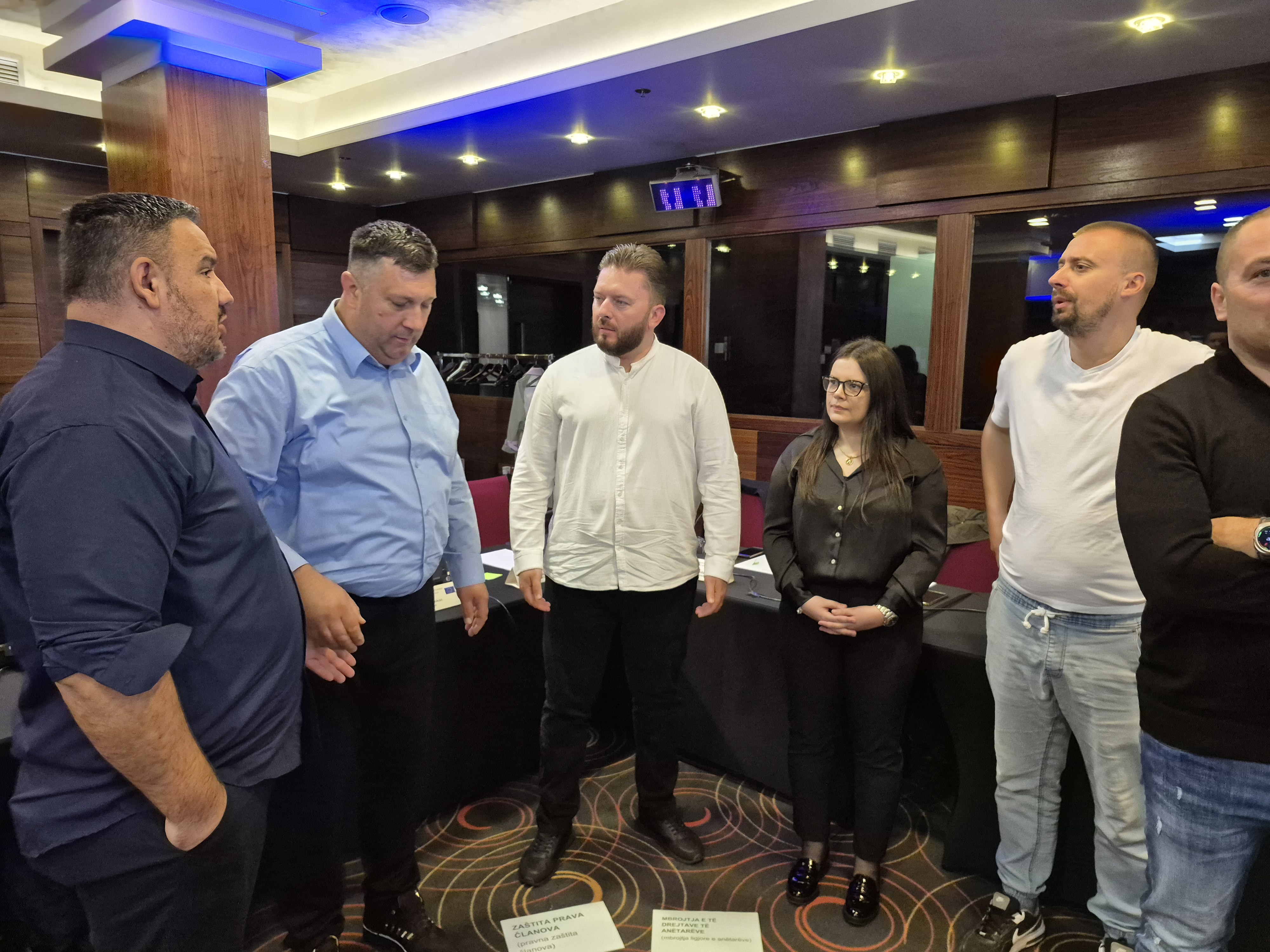
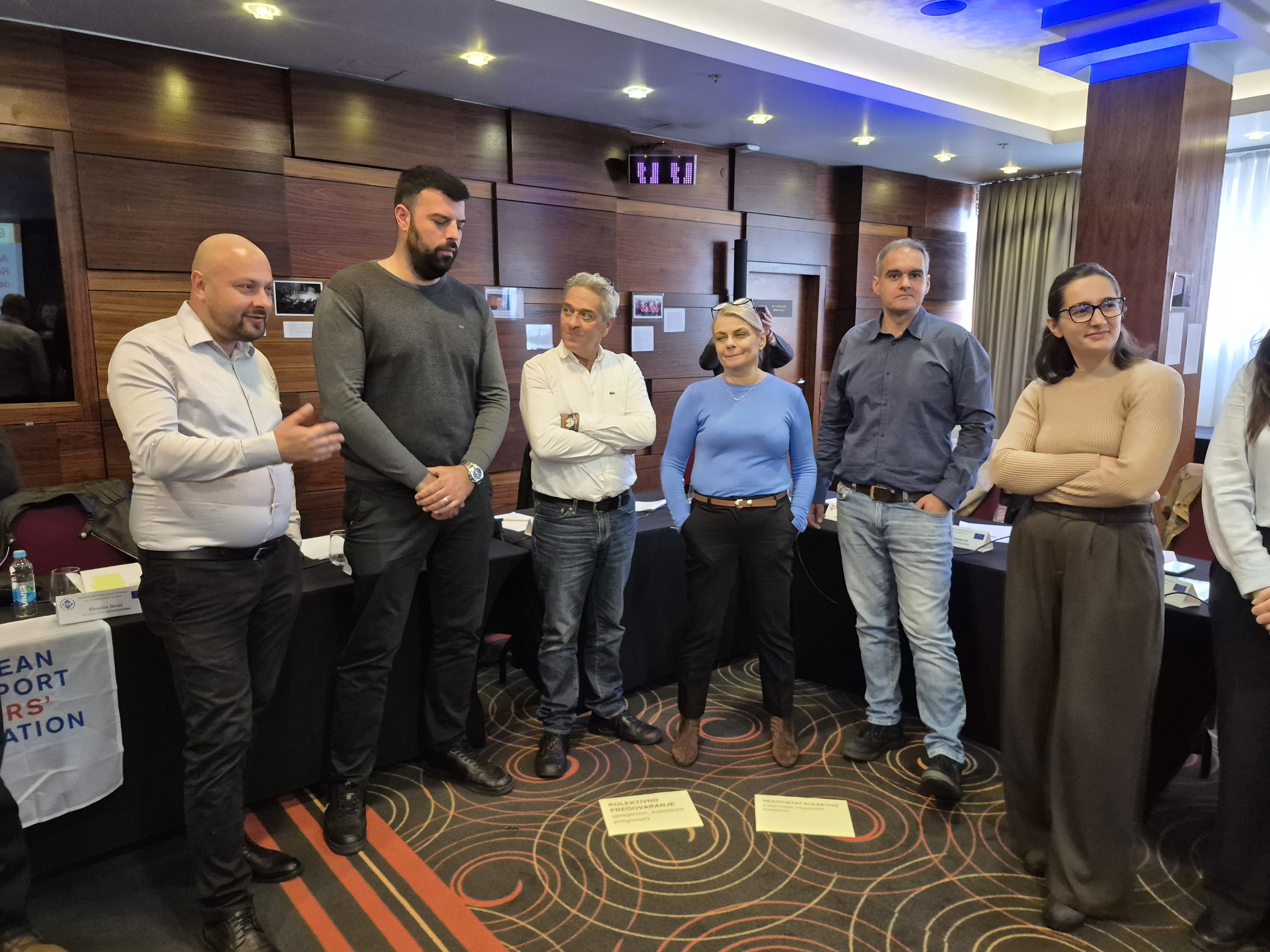
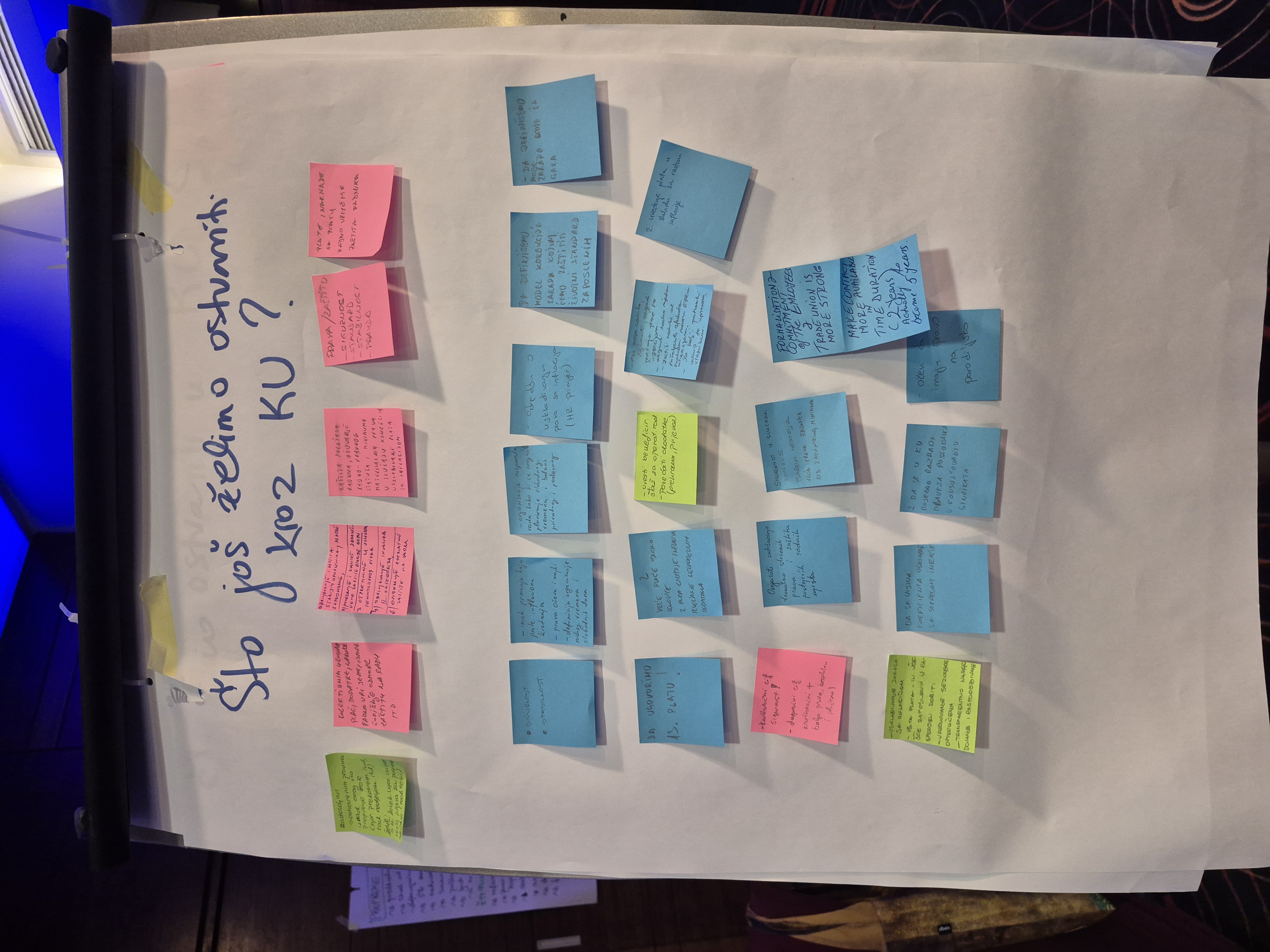
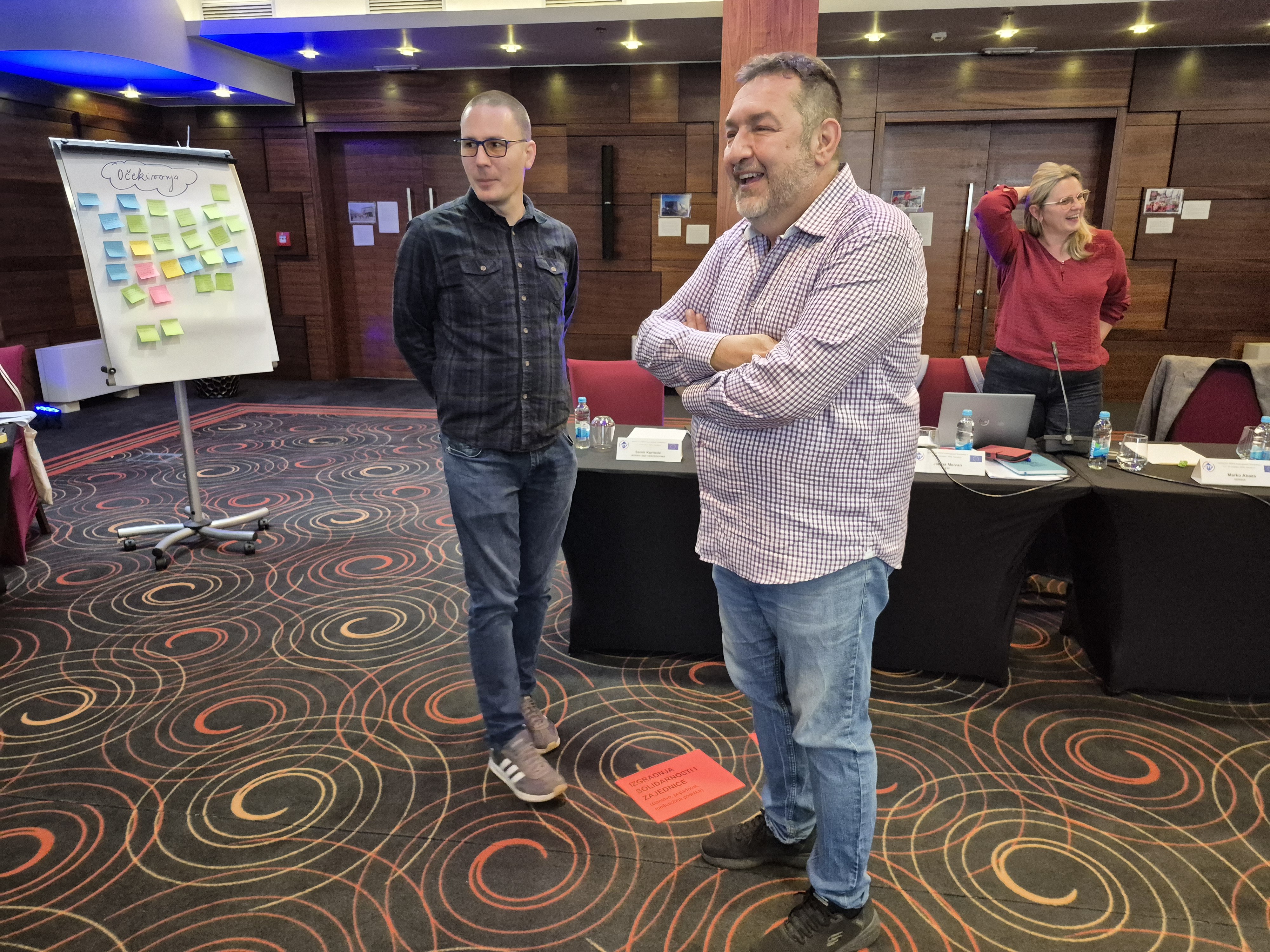
The remainder of the first day was dedicated to trade union capacity building, with sessions on the role of unions in democratic societies, member mobilisation and collective bargaining. Rather than focusing exclusively on theory, the training involved practical exercises in which participants examined the obstacles to involving workers in union activities and exchanged approaches that have proved effective in their own workplaces.
A particular focus was placed on direct contact with workers, listening to their concerns and giving members an active role in union activities. The collective bargaining session then addressed how to translate workers' demands into negotiating priorities, prepare bargaining strategies and maintain members' involvement before, during and after negotiations. It also covered concrete bargaining issues such as basic pay, compensation for overtime and shift work, working time, leave entitlements and the protection of trade union rights.
The EU Minimum Wage Directive: more than minimum wages
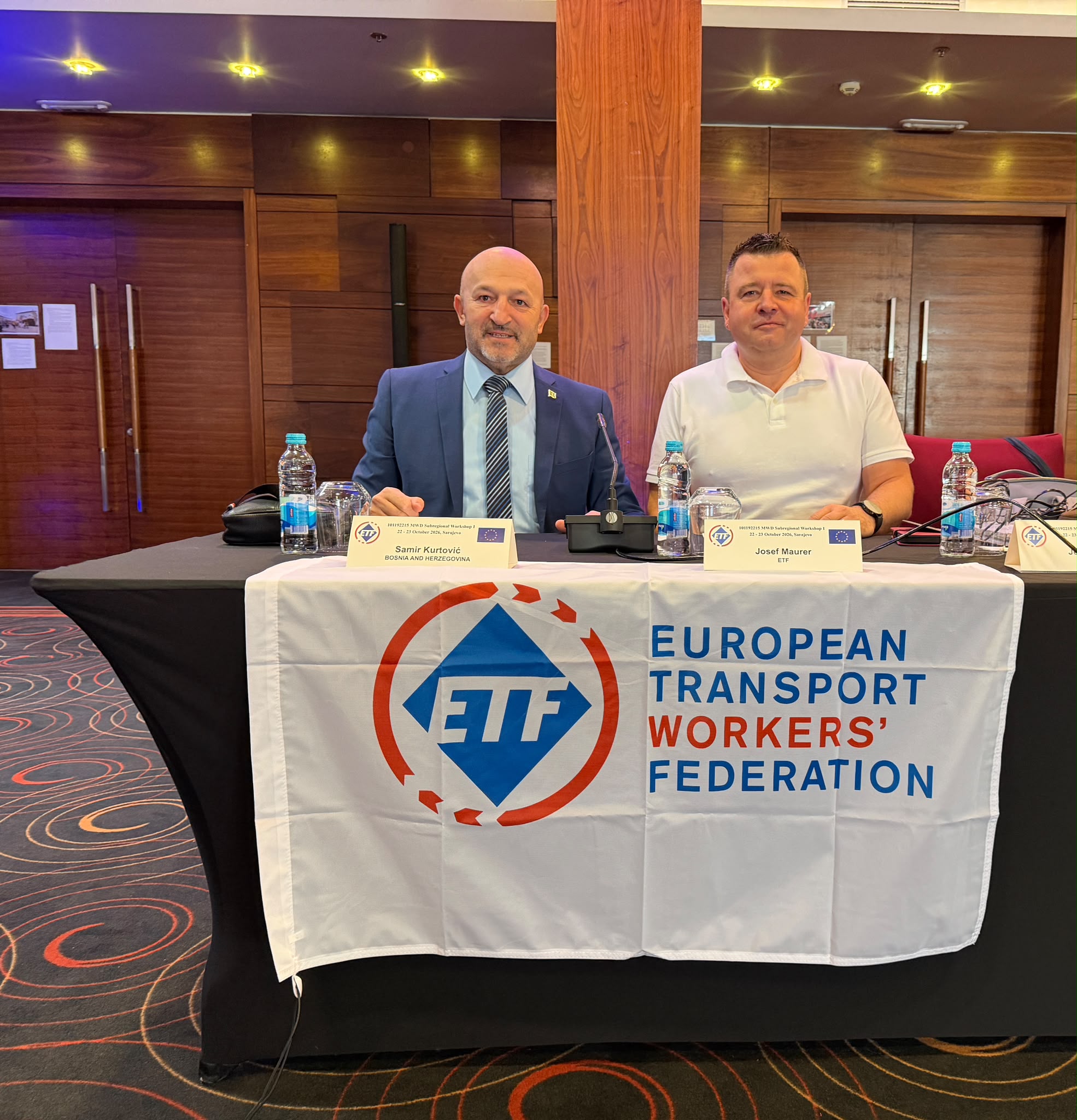
The second day focused on Directive (EU) 2022/2041 on adequate minimum wages in the European Union, with particular attention to its provisions on collective bargaining. Beyond promoting adequate statutory minimum wages, the Directive requires EU Member States to take measures to strengthen collective bargaining. Countries where fewer than 80% of workers are covered by collective agreements must establish national action plans to progressively increase coverage.
The presentation examined how EU Member States have responded to these obligations and what lessons can be drawn for the Western Balkans, including countries preparing for EU accession. Examples included measures to facilitate sectoral collective agreements, strengthen protection against anti-union discrimination and improve trade unions' access to workplaces.
However, the assessment of the national action plans also exposed significant weaknesses. Many focus on collecting data, commissioning studies and raising awareness, while offering few concrete changes to make collective bargaining easier or more effective. The discussion stressed that increasing bargaining coverage requires political commitment, stronger negotiating structures and enforceable measures, rather than action plans that exist only on paper.
European aviation policy and its impact on workers
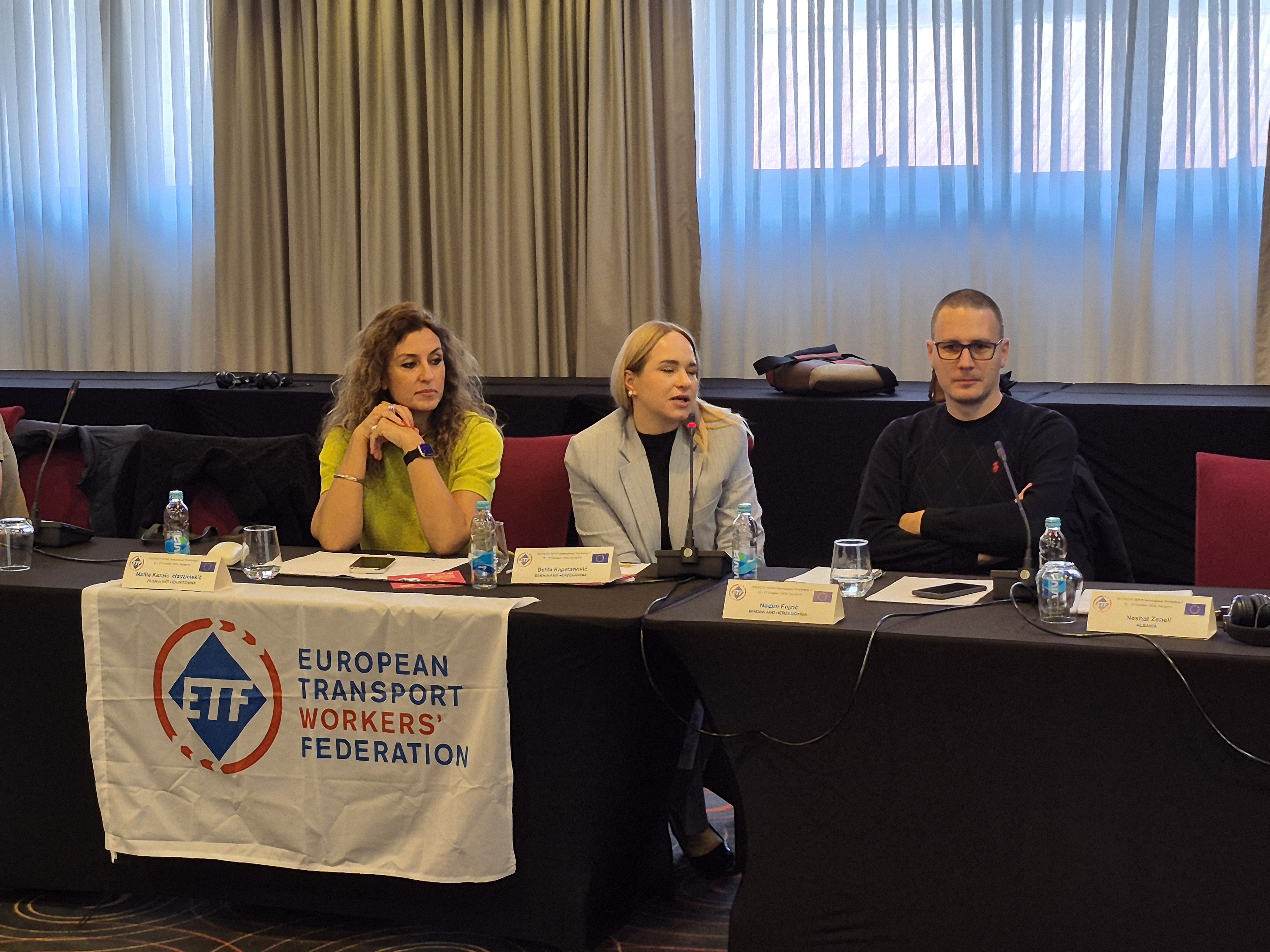
The final thematic session presented the ETF's work in European civil aviation, including its participation in EU sectoral social dialogue and cooperation with the European Union Aviation Safety Agency (EASA). The discussion linked European policy developments to issues raised by participants during the opening roundtable.
Among the main topics was the forthcoming revision of the EU Air Services Regulation (Regulation 1008/2008). The ETF is calling for fairer competition in European aviation, including stronger safeguards against social dumping and clearer rules on airline ownership and control, subcontracting and aircraft leasing.
The implementation of the new EASA Ground Handling Regulation was another important topic. The ETF stressed the need for workers and their representatives to be involved in safety management systems, occurrence reporting, training and risk assessments. Other priorities included labour shortages, occupational health and safety, the consequences of airport concessions and excessive competition between ground handling providers.
Follow-up at national and regional level
The workshop concluded with participants identifying practical steps to take within their own unions, particularly on member mobilisation and collective bargaining. The participation of Neven Melvan from the Seafarers’ Union of Croatia, who is also a member of the ETF Management Committee, will help ensure that the workshop’s conclusions are followed up at the ETF’s political level, in line with the Congress priority of strengthening trade unions in Central and Eastern Europe. Further UNIONDRIVE workshops and exchanges between transport unions are planned across the region, alongside the work of the project’s three Regional Liaison Officers in supporting trade union activities and cooperation.
The ETF would also like to thank Darko Šeparić and Nediljka Junaković, trainers from EDUCA, the training centre of the Union of Autonomous Trade Unions of Croatia (SSSH), as well as Vana Bosto from the Seafarers’ Union of Croatia (SPH), for their excellent delivery of the training, combining practical exercises, group discussions and concrete examples from trade union work.