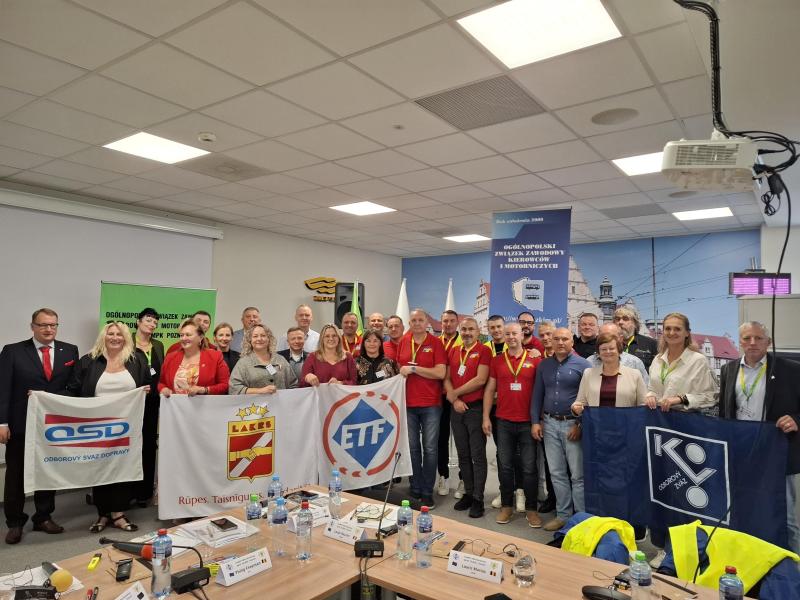
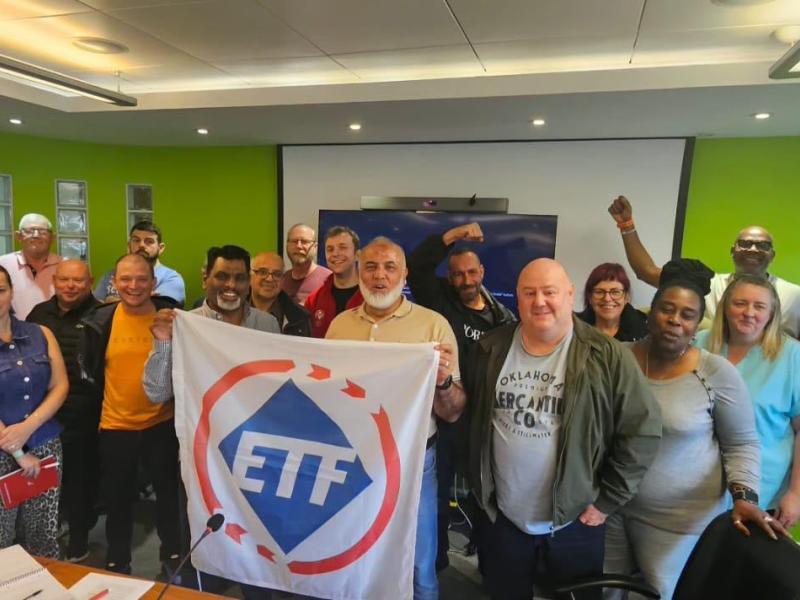
Workers in vehicle manufacturing and transport join forces in a newly launched project. ‘JT 4 Mobility’ explores the social consequences of decarbonising transport and pathways towards a Just Transition for workers across the mobility ecosystem.
The European Transport Workers Federation (ETF) and industriAll Europe have embarked on a joint project to examine the impact on workers of the profound changes that will result from the decarbonisation of transport and to find ways to achieve a just transition for workers. Both organisations represent the workers in the mobility ecosystem: workers in transport services and workers in vehicle manufacturing, all along the supply chain. A total of around 20 million workers.
The project, co-funded by the European Union, is the first major joint project between ETF and industriAll Europe. It was launched with a joint event held yesterday and today, 12 and 13 December 2022.
Transport is one of the priorities of the EU’s Green Deal, with the overall target to reduce greenhouse gas emissions from transport by 90% by 2050. Transport emissions account for 27% of total EU-27+UK greenhouse gas emissions. Road transport is responsible for more than 70% of transport emissions in the EU-27+UK. Such a drastic transformation of the European transport system in such a short period of time will have a massive impact on the European workforce. Jobs will be lost in some areas of the transport system while others will grow.
The project examines the social impact of the transformation in four modes of transport – rail, road, maritime and civil aviation – and in the respective transport equipment production. It is supported by Spin 360, a consultancy specialising in the development of sustainable business models.
The project launch gave participants – around 70 delegates from trade unions affiliated to the ETF and industriAll Europe – the opportunity to exchange views on the main challenges related to the decarbonisation of transport. These included: understanding the possible positive and negative employment effects of different modes of transport o and preparing affected workers; the availability of affordable green energy to replace the fossil fuels that currently power transport; the skills needs and strategies required for the transition; and the need for a fair price for labour. Currently, prices for transport users do not reflect environmental costs and a fair price of labour.
A supportive and coherent policy framework will be key to managing the socially just transformation of the transport ecosystem. Right now, there is a lack of coordination between the relevant directorates in the European Commission, despite their policies influencing each other. Similar tendencies can be observed at the national level. The joint project will identify policy divergences and show good examples of integrated policymaking. At the same time, it aims to intensify and improve dialogue between workers and their unions in the transport services and manufacturing sectors. Building a common understanding of the challenges ahead will form the basis for developing joint strategies for policy recommendations to employers and government actors.
The project will run for one year, starting with the launch event on 12 and 13 December. The launch will be followed by 4 modal roundtables (automotive/road transport, rail transport/equipment, maritime transport/equipment, aerospace/aviation transport), ending with a final conference.