ETF black logo ETF black logo ETF black logo ETF black logo

Google Translate

Does the recent river cruise accident in Budapest point to structural problems with safety?

News
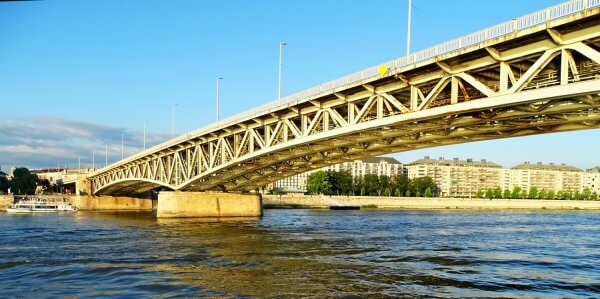
Budapest Margít Bridge

Photo Credit: Jose A (Flickr) under CC BY 2.0

At the ETF we were shocked and saddened to hear about the tragic accident on the Danube in Budapest last Wednesday 29 May 2019. At least 11 people have drowned and 17 are still missing after a Viking River Cruise vessel hit the Hableány sightseeing vessel with 35 people on board. We offer our sincere condolences to the families of the victims who drowned on the Danube.

The incident occurred in heavy rain on a busy stretch of the Danube at Margít Island, where the smaller boat capsized and sank immediately when hit by the Sigyn, a river-cruise vessel operated by the Swiss company Viking. The accident is still under investigation by the Hungarian authorities and a Budapest judge has put the Ukrainian captain of the Sigyn under arrest.

We have no further information about the investigation, but this is already the 4th accident of the year and the 2019 season is only just getting started. We see this as a clear indication that Europe’s river cruise sector is facing structural issues with safety.

Indeed, river cruises are a priority for the ETF’s Inland Waterways Section because the industry presents a business model where profits are maximised at the cost of decent working conditions for the crewmembers. Do we now see evidence that the drive for profits is also putting safety at risk? Our affiliate Nautilus certainly worries that manning requirements are sometimes broken because of staff shortages or to cut costs.

More generally, although we agree that captains carry responsibility for the safety of their passengers and others on the water, we question the tendency to criminalise maritime workers after accidents. We should rather looking into the structural factors that cause them and try to create a Just Culture that allows everyone to raise concerns.

ON THE GROUND

News

Keeping a warming Europe moving: how hot temperatures affect transport workers and what can be done about it

As part of the European continent undergoes its fourth heatwave of 2026, it has become abundantly clear that occupational heat exposure is no longer an exceptional or occasional summer hazard. It is an emergent occupational hazard only destined to escalate. Europe is the second fastest-warming region of the globe after the Arctic. According to EU-OSHA 2025 numbers, one in five workers in the EU signaled exposure to extreme heat at work in the previous 12 months, a figure rising to one in three in some countries.
News

Unruly passengers: more than just summer headlines

Summer may be synonymous with relaxation for holidaymakers and every summer seems to produce its share of eye-catching headlines. Just days ago, The Guardian reported on a drunk British holidaymaker who tried to kiss a flight attendant on a plane and was arrested on his way back through Palma airport. A week earlier, headlines were dominated by reports of a flight from Dublin to Ibiza descending into what was described as "sex and booze chaos," leaving fellow passengers shocked.
News

UK public transport unions sound the alarm over lack of toilet access for drivers

Public transport unions in the United Kingdom are raising urgent concerns about the lack of access to toilet facilities for bus and train drivers, a problem that has persisted for years but is now reaching a breaking point. Reports from across the UK show drivers being forced to work entire shifts without guaranteed access to a toilet, leaving them to rely on improvised or unsafe alternatives, including urinating in bottles in their driving cab. Some unions are now considering industrial action to force employers and authorities to act.