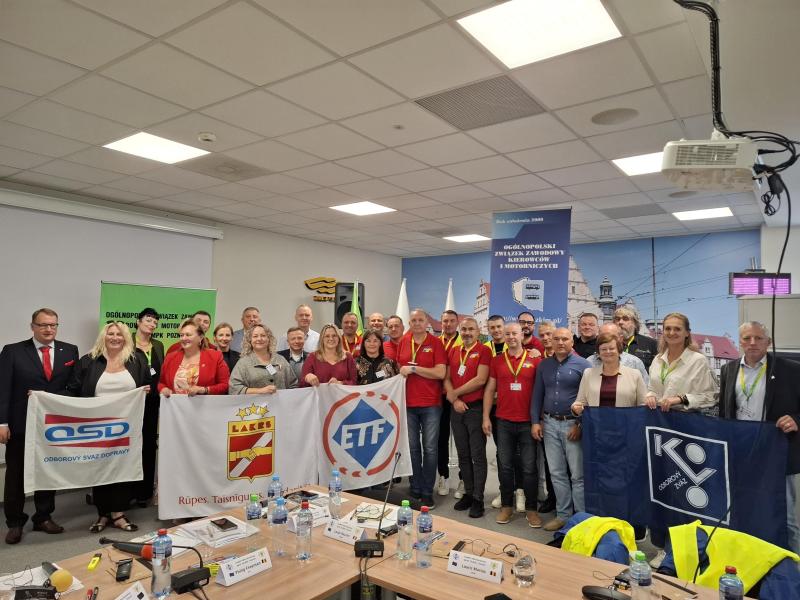
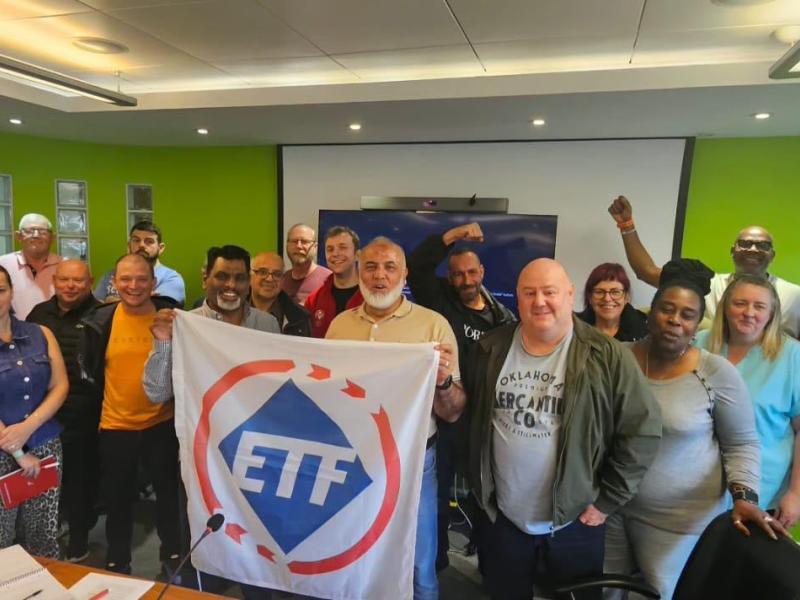
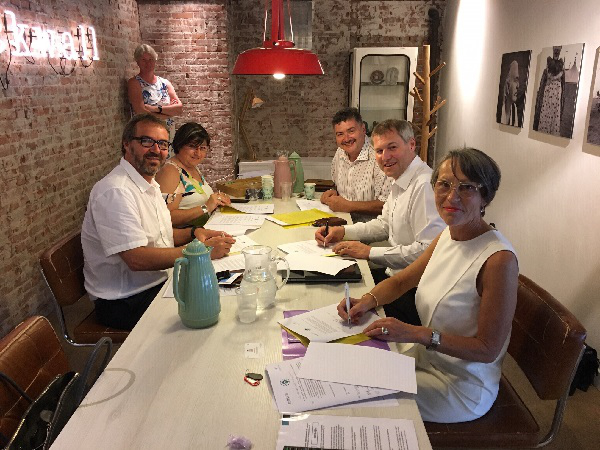
 On 25 July the European Barge Union (EBU), the European Transport Workers’ Federation (ETF) and IG Rivercruise signed an agreement, committing to work together on measures that support fair employment in the European river cruise sector.
In recent years, the river cruise sector in Europe has been growing rapidly. This success story has brought more complicated business models, which often mean that various parties cooperate to deliver one cruise: vessel owners, operators, catering companies, etc. Unfortunately there have been violations of the laws of various EU member states concerning the employment of workers in river cruise activities. This has specifically concerned the on-board personnel working in non-nautical functions, such as hospitality and catering. At the same time, the industry faces unclear or contradictory European and international rules applying to workers in river cruise activities, and confusion about the way these rules are enforced in EU member states and Switzerland. As a result, it is not always evident which party is responsible for each activity and the staff who carry it out.
It is the shared view of EBU, ETF and IG Rivercruise that the operator of the vessel must be held responsible for all activities, including all performed services, on board a river cruise vessel.
In order to improve working conditions on river cruise vessels, while ensuring a level playing field for the sector, EBU, ETF and IG Rivercruise have now agreed to work together. The first step is to understand the complex reality of river cruise activities in Europe. We will make an inventory of the current business models and procedures in river cruise activities, and produce an overview of the European and international rules applying to the sector. We will also map the enforcement of these rules in EU member states and Switzerland, with special attention to situations that could open the door to social dumping or poor working conditions.
Once we have a clear view of the context, EBU, ETF and IG Rivercruise will draw joint conclusions and propose adequate binding measures or agreements, to be implemented by autumn 2020. This will offer benefits to both employers and employees in the river cruise sector, setting out a clear path to socially sustainable river cruise industry with a level playing field for operators.
[ENDS]
For further information contact:
Myriam Chaffart
Political Secretary for Inland Waterways
+32 (0)2 285 46 64
m.chaffart@etf-europe.org