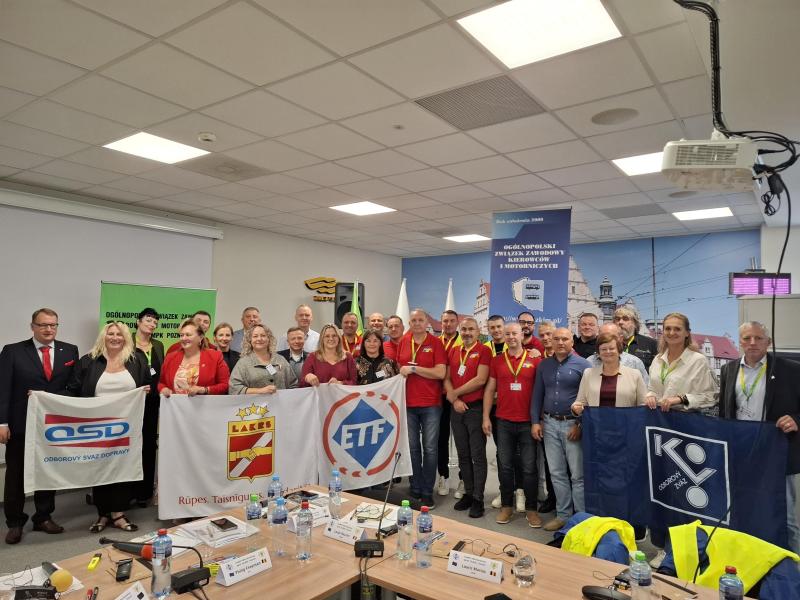
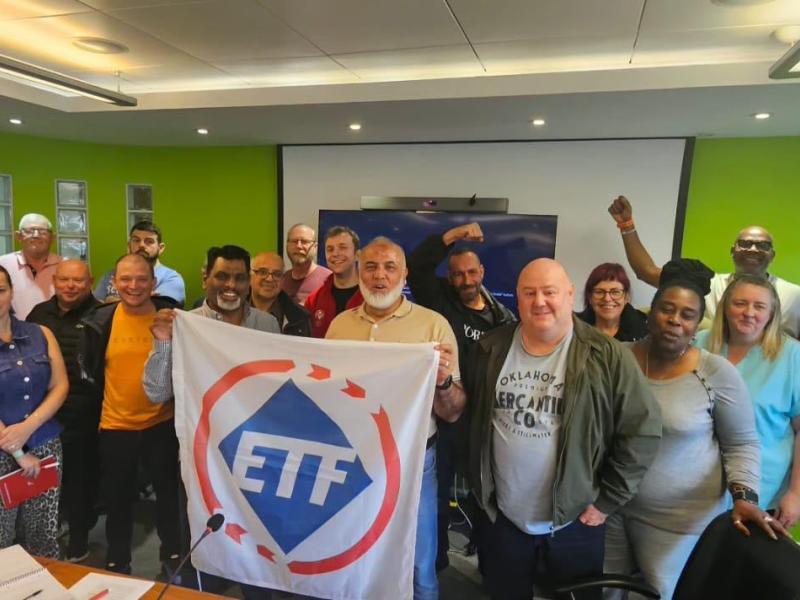
Today, union federations EFBWW, EFFAT, and ETF, along with workers and MEPs, gathered outside the European Parliament to show their support ahead of the EMPL Committee vote on the report addressing abusive subcontracting and unregulated labour intermediation. The mobilisation highlighted the urgency of EU action.
The Committee’s adoption of the initiative report sends a strong political message to the European Commission to propose an EU Directive on Subcontracting and Labour Intermediaries as part of the long-awaited EU Quality Job Roadmap.
Representing millions of workers in the construction, agriculture, food, tourism, and transport sectors, our federations welcome today’s vote in the EMPL Committee. It sends a strong and unmistakable message to the European Commission, which must now respond with an ambitious EU Directive on Subcontracting and Labour Intermediation to finally overcome the failures of fragmented national rules.
EFBWW, EFFAT, and ETF express serious concern that the proposal to introduce a maximum of two levels of subcontracting was not adopted. We also regret a lack of attention on our demand to prohibit subcontracting for core activities. Such measures are crucial to guaranteeing transparency, accountability, and the protection of workers’ rights across the entire subcontracting chain. We will keep pressing on these important dimensions.
Exploitation across subcontracting chains and labour intermediation continues to fuel unequal treatment and social dumping across Europe, harming both workers and responsible employers.
Sectors such as agriculture, construction, food processing, hospitality, and transport are particularly affected, facing an influx of companies operating under increasingly opaque and abusive business models.
The three federations stress their key priorities for an ambitious EU Directive:
- Limit subcontracting in scope and depth: maximum two tiers/levels below the main contractor
- Ensure equal treatment throughout subcontracting chains and ban contracting and subcontracting for core business activities
- Apply unconditional, full chain (joint and several) liability for both cross-border and domestic cases
- Define the conditions to act as labour intermediaries, tackle gangmaster practices and ensure full transparency
- Ban agencies and intermediaries in the context of posting
- Ensure effective enforcement through more inspections, dissuasive sanctions, and an expanded role and mandate for the European Labour Authority (ELA)
“We welcome this first step, but we are concerned that the amendments to limit subcontracting to two tiers were rejected. We will continue our actions to explain why this is urgent and possible, as shown by the example in Norway. Fair and sustainable competition in our internal market depends on stable, quality jobs, strong collective bargaining, and the highest health and safety standards. Direct employment must be the rule, not the exception. When workers are not directly employed, full equal treatment, including equal pay for equal work at the same workplace, is essential. This is the time to act, time to limit subcontracting”.
— EFBWW General Secretary, Tom Deleu
“Today’s vote is a milestone in our ongoing initiative to end exploitation in subcontracting and labour intermediation. Our call for a Directive on Subcontracting and Labour Intermediaries is about restoring fairness, equal treatment, and fair competition in the interest of millions of working people, responsible employers, and society as a whole. Abusive contracting and subcontracting, along with unregulated labour intermediation, are the main drivers of an exploitative business model that is expanding across the EU economy. It is time to end this abuse”.
— EFFAT Secretary General, Enrico Somaglia
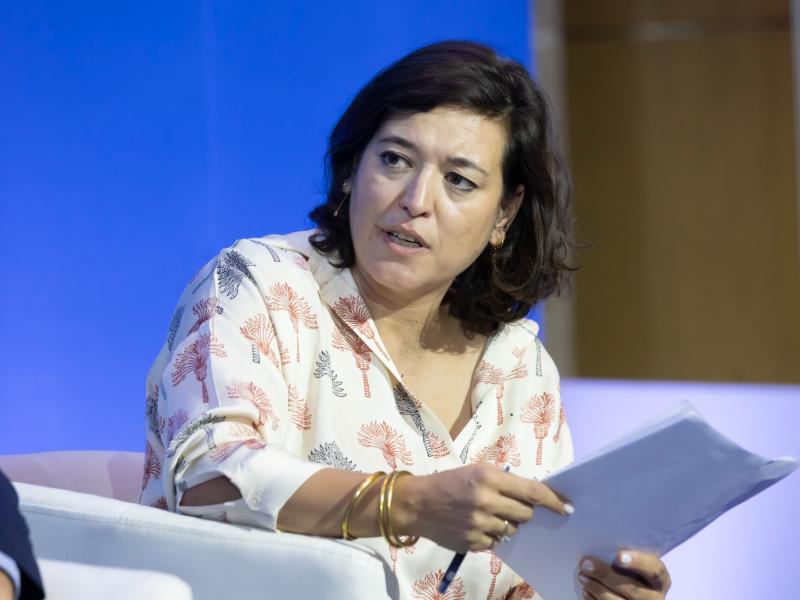
“This is an important step in the right direction. MEPs have understood that tackling abusive subcontracting is not a burden but a long-overdue measure to make the EU labour market fairer and more transparent. There is substantial evidence that the various forms of abusive subcontracting create unnecessary red tape for workers and hinder the effective enforcement of existing rules. We stand ready to engage in a constructive dialogue to address these challenges and find lasting solutions.”
— ETF General Secretary, Livia Spera
With this vote, the file now moves to the Plenary, where Members of the European Parliament will have the opportunity to strengthen the call for a robust EU response. Trade unions from the ETF, EFFAT, and EFBWW, together with their affiliates, supportive MEPs, and policy leaders, will gather once again in front of the European Parliament in Strasbourg on 20 January for a demonstration, determined to ensure that the proposal secures a positive outcome in the Plenary vote.