



On 1 December the ETF and S&D group held a joint seminar to discuss about social priorities in EU ports.
Opening the event, S&D coordinator within the TRAN Committee, Ismail Ertug identified the need “to strike a balance between the demand fluctuations for port work and the flexibility required by port operations on the one hand, and continuity and protection of employment for workers on the other“. He also emphasised the need to include social clauses in tender documents, concession contracts and investment plans, so as to clearly determine appropriate minimum requirements for service providers and subcontractors. Support to EU ports that compete with non-EU ones through fiscal measures and through a well-thought investment policy was also mentioned as a priority.
ETF member Niek Stam, from Dutch union FNV Havens presented the situation in North Range ports. He outlined how the combination of the economic crisis with the increasing size of vessels, the growing automation, the formation of shipping alliances, the expansion of terminal capacity result in overcapacity in ports and at sea and puts the cargo handling sector under heavy pressure. “Workers are at the bottom of the process and pay the highest price in terms of worsening working conditions. They are required to be more and more flexible and productive and are offered no job guarantee in the medium term. The solution to compensate these current developments is to have labour pools, which allow combining flexibility with fair and stable working conditions“.
Mladen Jovicic, Secretary General of the ETF affiliate SZPD, gave an overview of the situation in the port of Koper, where the union is trying to propose solutions to end social dumping and make sure that casual workers are entitled to the same terms and conditions as those employed directly by the port. He explained that “at present subcontractors act as labour agencies for the port. They provide no equipment or specific know-how and keep about half of the money the port pays for the worker. We are suggesting a step-by-step solution that would eventually lead to the creation of a labour pool. This would be a more efficient and fairer tool to manage human resources. We want equal pay for equal job!”
“The cases of the North Range and Slovenia are not isolated’ declared after the seminar ETF General Secretary Eduardo Chagas. ‘Workers in many European ports are going through hard times and the situation will worsen if policies fail to tackle real priorities for the sector, also through a dialogue with the unions. In the framework of our campaign on fair transport we put forward several port-related proposals and we are glad to see that these are supported by the S&D group”, he added.
In the concluding remarks that followed the round table discussion on how the Port Service Regulation (PSR) could help improving the social dimension of EU ports, hosting MEP Knut Fleckenstein declared “the PSR won’t change the situation, but is allowing us to state clearly that there are social problems in European ports and that these should be tackled. I see room for improved cooperation within the sector, which should be respected and accompanied by the institutions“.
ETF and S&D seminar sets social priorities in ports
Press release
ON THE GROUND
News
Final Regional Workshop of TU4BPT Project
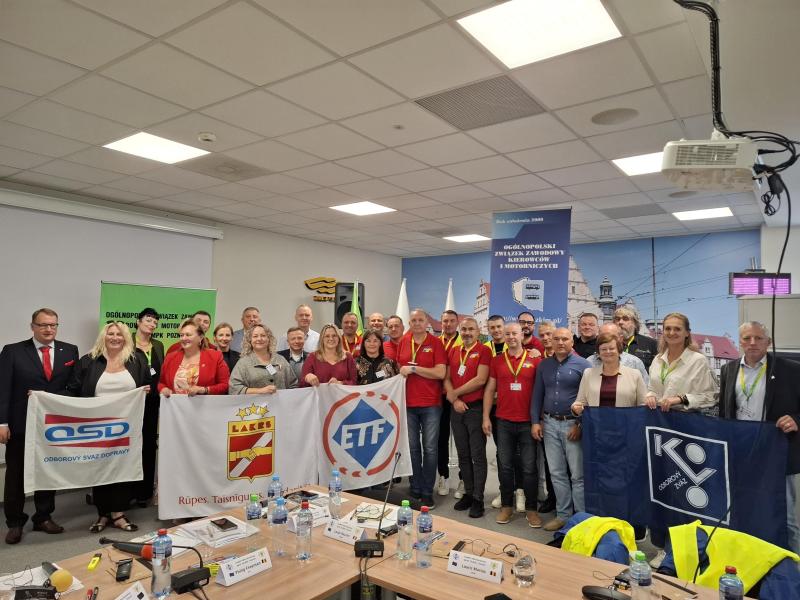
On October 6th and 7th public transport unions from across Central and Eastern Europe met in Poznan for the final regional workshop of the Trade Unions for Better Public Transport project (TU4BPT). Hosted by Polish affiliate OZZKiM, the workshop delivered the final round of training for trade union representatives regarding the Twin Transition in public transport.
News
20 years of the Maritime Labour Convention: progress for seafarers, but the job is far from done
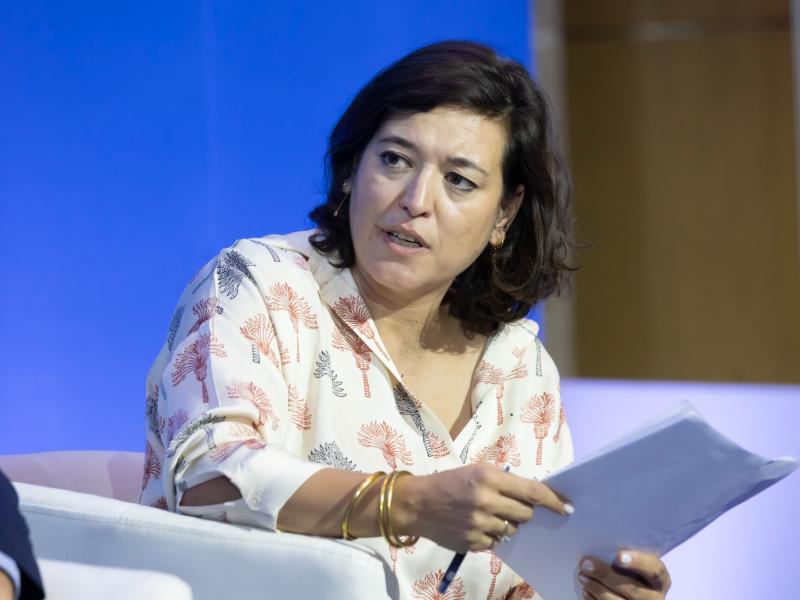
On 18 September, the Panhellenic Seamen’s Federation (PNO) and the Federation of Transport, Petroleum and Agriculture Workers (OMEPEGE/FTPAW-SEK) brought trade unions, governments, international institutions and shipowners together in Athens to take stock of two decades of the Maritime Labour Convention (MLC) – and, more importantly, to discuss what still needs to change.
News
Workshops on Autonomous Vehicles in Public Transport Continue
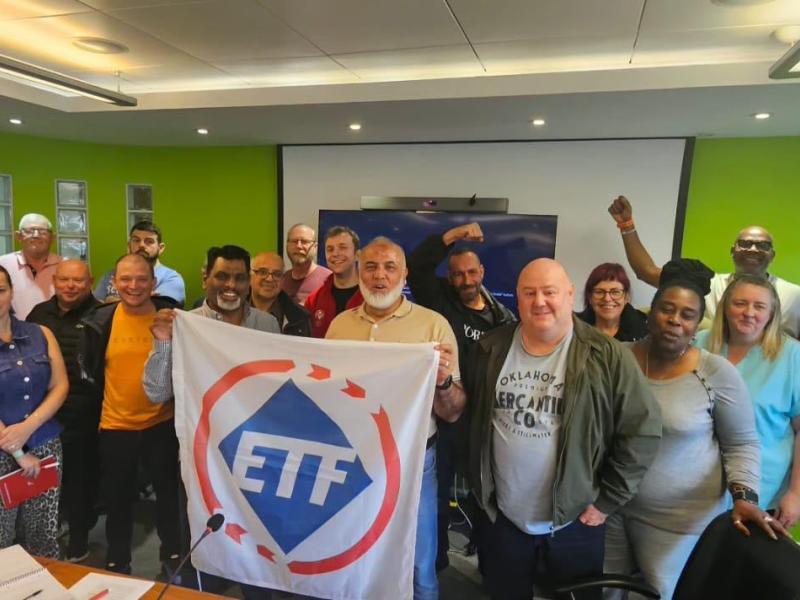
The Urban Public Transport Committee’s project on autonomous vehicles in public transport continued last week, with workshops taking place in Slovakia, hosted by OZ KOVO, and the UK, hosted by Unite the Union. Both workshops brought together union reps from across the respective countries to discuss and strategise on the topic of autonomous vehicles.