



Today, 16 March 2017, the Spanish Parliament rejected the controversial Real Decreto-Ley presented by the government to liberalise port labour. This decision follows the infringement procedure opened by the European Commission and the consequential European Court of Justice’s judgement which ruled that the system currently in place is in breach of article 49 of the TFEU (Treaty on the Functioning of the European Union) on freedom of establishment.
“From the beginning of the dispute the Spanish unions have pleaded a negotiated reform, but the government arrogantly decided not to go for dialogue” commented ETF Dockers’ Chair Terje Samuelsen. “We praise the remarkable political work done by the Spanish unions as well as the support expressed by the labour movement worldwide”.
“By marking the first defeat of this conservative government, dockers have confirmed their position at the forefront of the struggle for fair transport and for a more social Europe” ETF Secretary General Eduardo Chagas declared after the vote. “Their struggle is inspiring for all fellow transport workers in Europe. We are very proud of them! Hopefully this is the last attempt of the Spanish government to plan unilateral and dogmatic reforms of port labour”.
In their recently issued joint statement the Spanish social partners have requested the government to engage in tripartite negotiations. However, the government has not yet responded to this request which makes it unclear what strategy the government will pursue.
ETF applauds rejection of liberalisation plan for Spanish port labour
Press release
ON THE GROUND
News
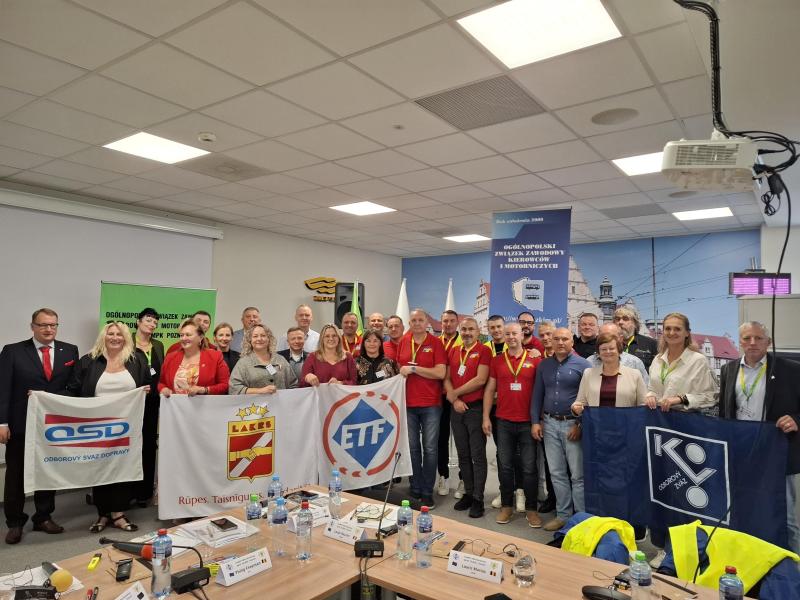
Final Regional Workshop of TU4BPT Project
On October 6th and 7th public transport unions from across Central and Eastern Europe met in Poznan for the final regional workshop of the Trade Unions for Better Public Transport project (TU4BPT). Hosted by Polish affiliate OZZKiM, the workshop delivered the final round of training for trade union representatives regarding the Twin Transition in public transport.

News
20 years of the Maritime Labour Convention: progress for seafarers, but the job is far from done
On 18 September, the Panhellenic Seamen’s Federation (PNO) and the Federation of Transport, Petroleum and Agriculture Workers (OMEPEGE/FTPAW-SEK) brought trade unions, governments, international institutions and shipowners together in Athens to take stock of two decades of the Maritime Labour Convention (MLC) – and, more importantly, to discuss what still needs to change.
News
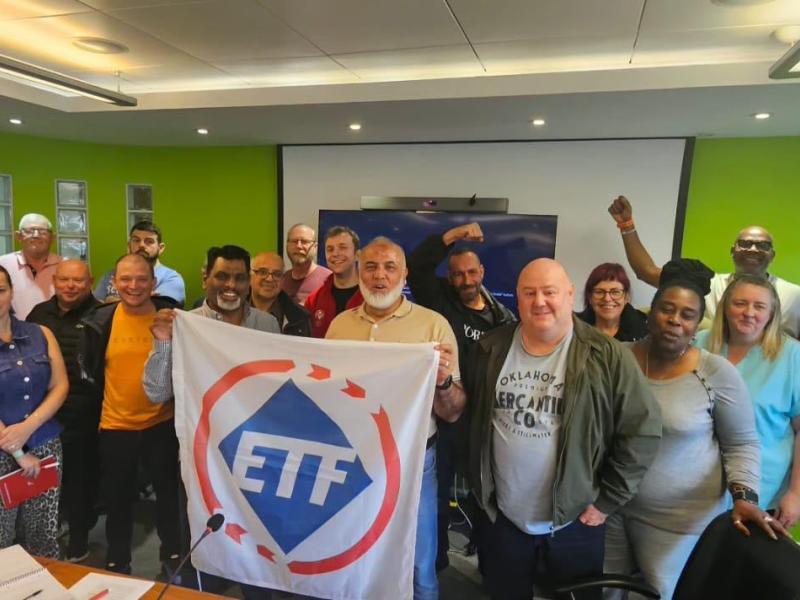
Workshops on Autonomous Vehicles in Public Transport Continue
The Urban Public Transport Committee’s project on autonomous vehicles in public transport continued last week, with workshops taking place in Slovakia, hosted by OZ KOVO, and the UK, hosted by Unite the Union. Both workshops brought together union reps from across the respective countries to discuss and strategise on the topic of autonomous vehicles.