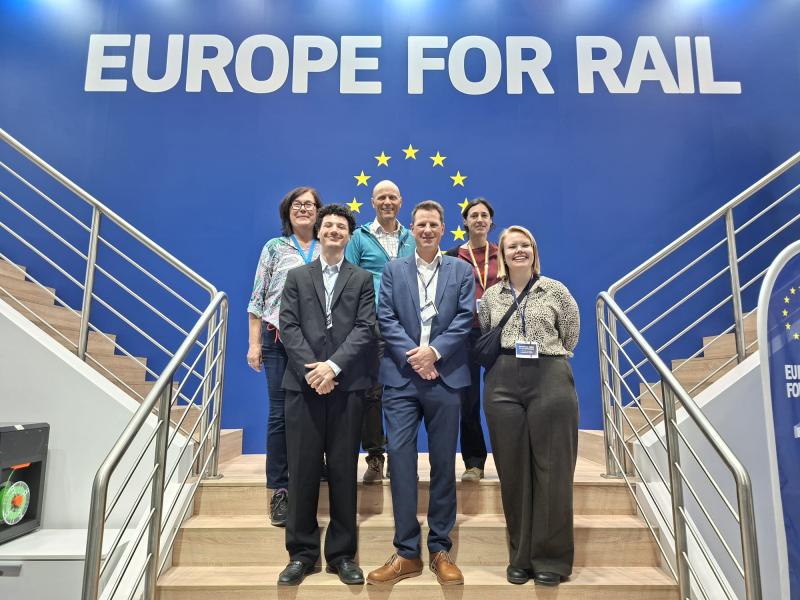
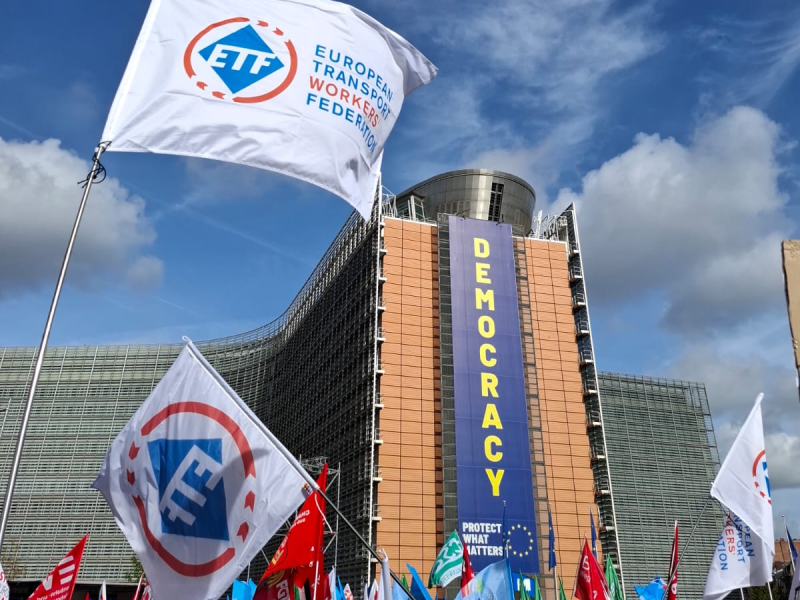
“A social deal for transport is needed to put workers at the centre of the recovery and the green and digital transition!” was ETF’s core message at the Informal European Transport Council meeting in Paris.
One of the key principles of Fair Transport is that policymakers must always listen to the voices of transport workers when discussing policies that affect them. A turning point in this regard was brought by the Informal European Transport Council meeting organised in Paris on 21-22 February 2022 under the French Presidency of the Council of the EU.
ETF General-Secretary, Livia Spera spoke on behalf of the European transport workers in front of the transport ministers of the EU member states.
Welcoming the declaration of the transport ministers of the European Union which calls for harmonised rules to eradicate social dumping and unfair competition, strengthen control mechanisms, and enhance training and qualification, Livia Spera touched upon core issues affecting transport workers and the solution.
From the supply chain crisis to exploitation – transport workers have borne the brunt of a profit-led industry for far too long. The COVID-19 pandemic has amplified long-stranding issues. If it has taught us anything, policymakers must look for worker-centred solutions if they want to heal the transport industry, which is also a key for further achieving the ambitious goal of sustainable transport.
For one, social and environmental sustainability must go hand in hand. It is unrealistic to expect to green the industry without considering the quality of jobs and how the transition will affect workers.
On the same note, our workers are the first ones facing the negative direct effects of transport being too cheap even to hope to achieve the modal shift Europe’s leaders aspire to. Prices must reflect the true cost of labour by improving working conditions, setting fair wages, and stopping exploitation and profits on the backs of workers. Additionally, the share of the price of transport going to transport workers within the supply chain is often too little to develop socially sustainable transport.
What’s clear is that none of this can be achieved without the involvement of trade unions – and the French Presidency of the Council of the EU took a step in the right direction by inviting ETF to the table.
But now, our words – the European transport workers’ concerns – must be taken into consideration and be properly addressed with concrete measures.
Subsequently, the ETF has issued a Pledge: Towards a Europe of Fair Transport to the Transport Ministers of EU Member States, proposing clear recommendations on how to achieve Fair Transport.