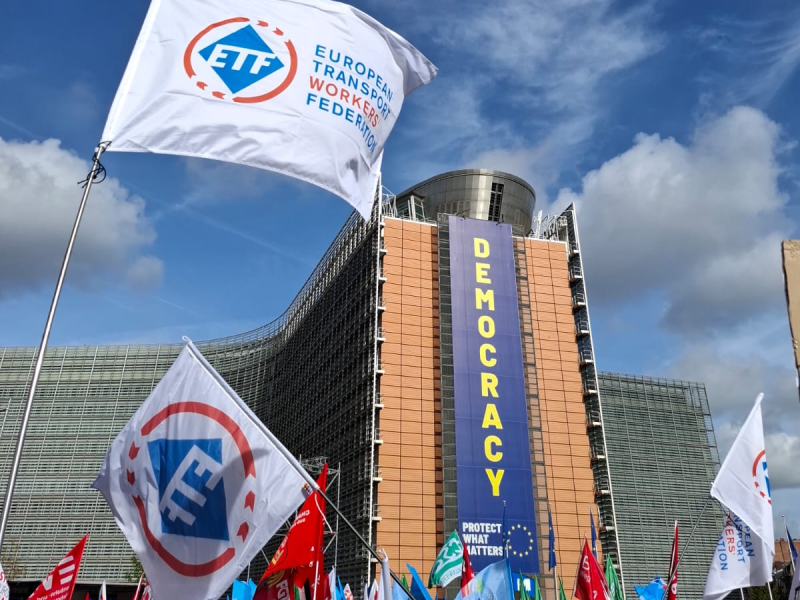


The European Transport Workers’ Federation (ETF) organized a rally in protest against new rules on driving and rest times of bus and coach drivers. In front of the EU Commission, in Brussels, various MEPs and ETF affiliates from 6 countries spoke about the dangers of rules that will push driver fatigue further.
In a move that has sparked considerable debate, the Commission has proposed new regulations that would allow for bus and coach drivers’ daily working hours to be increased to 16 or 17 hours, which, combined with 9 hours of rest, will lead to days of up to 26 hours. While officials argue that this change will not impinge on the mandatory minimum rest periods of nine hours, the ETF contends that such an extension is unprecedented in the professional world and risks compromising safety and exacerbating driver shortages.
The ETF asserts that this proposed change effectively creates a ’26 hour day’, altering the rhythm of drivers’ work and rest schedules in a manner that defies natural cycles. This policy would permit drivers who conclude a 12 consecutive days coach tour in the early hours to resume operating different transport services with little to no substantial rest.
With an already high incidence of fatigue-related concerns in the transport sector, where drivers often get just five to six hours of actual rest during consecutive 12-day driving stints, the ETF warns that the new rules may heighten the risk of accidents due to driver fatigue.
Moreover, the Federation stresses that the proposal could further intensify the current shortage of bus drivers in the EU – an issue also highlighted by the International Road Union’s alarming statistics on the growing scarcity of qualified personnel in the industry.
Critics of the initiative, including the ETF, suggest that instead of diluting working conditions, efforts should be intensified to make the profession more attractive and sustainable. As bus operators struggle to recruit drivers, there are calls for measures that would prioritize the improvement of working standards rather than their deterioration.
In response to the European Parliament’s backing of the Commission’s proposal, the ETF is preparing a widespread information campaign across various EU member states. This initiative aims to educate the public on the potential dangers of the proposed regulation changes and advocate for the interests and safety of both drivers and passengers.
The Federation’s forthcoming actions, aimed at drawing public and political attention to the issue, are set to unfold in the coming weeks.