ETF black logo ETF black logo ETF black logo ETF black logo

Google Translate

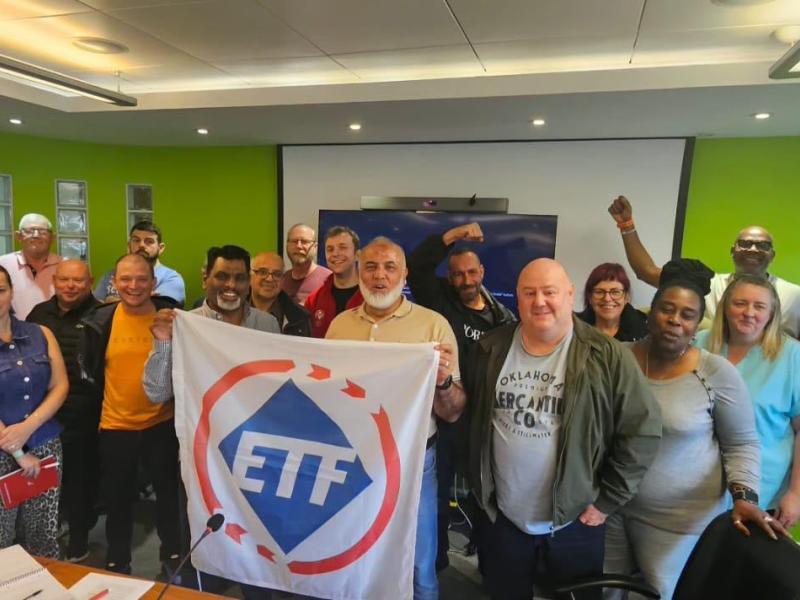
ETF fully supports Unite’s industrial action at the port of Felixstowe

Statement

All ETF Dockers’ unions express their full and committed support to the industrial action announced by ETF member Unite the Union at the port of Felixstowe, UK.

The strike has been called from 21 through 28 August after talks over pay broke down with the port owner, HPH Felixstowe.

During the COVID-19 pandemic, Unite had agreed to marginal increments in pay linked with the retail price index (RPI) for the 1900 manual workers. As the cost of living has dramatically increased, the union, in consultation with the port workers of Felixstowe, submitted a claim for a 10% increase. Following several rounds of negotiations and a mediation process this request was rejected by the port owners.

During and following the acute phase of the pandemic, HPH Felixstowe made record profits, paying out circa £140 million in dividends to its shareholders, while the port workers at UK’s busiest port are left with compensations of falling value in the face of rising inflation despite the increase in port traffic.

Marc Loridan, chair of the ETF Dockers’ Section, reacted to the strike announcement as follows:

“A strike is not something that unions call for lightly, it is always the last resort.

Dockers all over Europe have worked hard to keep our countries supplied throughout the pandemic and are contributing to fix the supply chain crisis that others have created.

With the cost of living going sky-high, the claim of the dockers in Felixstowe is absolutely legitimate. We see the same happening all over Europe, for instance in the German ports as well as in other transport sectors.

ETF Dockers’ unions, in the North Range and beyond, are ready to take any lawful action that may be necessary to support the workers in Felixstowe.”

ON THE GROUND

News

Keeping a warming Europe moving: how hot temperatures affect transport workers and what can be done about it

As part of the European continent undergoes its fourth heatwave of 2026, it has become abundantly clear that occupational heat exposure is no longer an exceptional or occasional summer hazard. It is an emergent occupational hazard only destined to escalate. Europe is the second fastest-warming region of the globe after the Arctic. According to EU-OSHA 2025 numbers, one in five workers in the EU signaled exposure to extreme heat at work in the previous 12 months, a figure rising to one in three in some countries.
News

Unruly passengers: more than just summer headlines

Summer may be synonymous with relaxation for holidaymakers and every summer seems to produce its share of eye-catching headlines. Just days ago, The Guardian reported on a drunk British holidaymaker who tried to kiss a flight attendant on a plane and was arrested on his way back through Palma airport. A week earlier, headlines were dominated by reports of a flight from Dublin to Ibiza descending into what was described as "sex and booze chaos," leaving fellow passengers shocked.
News

UK public transport unions sound the alarm over lack of toilet access for drivers

Public transport unions in the United Kingdom are raising urgent concerns about the lack of access to toilet facilities for bus and train drivers, a problem that has persisted for years but is now reaching a breaking point. Reports from across the UK show drivers being forced to work entire shifts without guaranteed access to a toilet, leaving them to rely on improvised or unsafe alternatives, including urinating in bottles in their driving cab. Some unions are now considering industrial action to force employers and authorities to act.