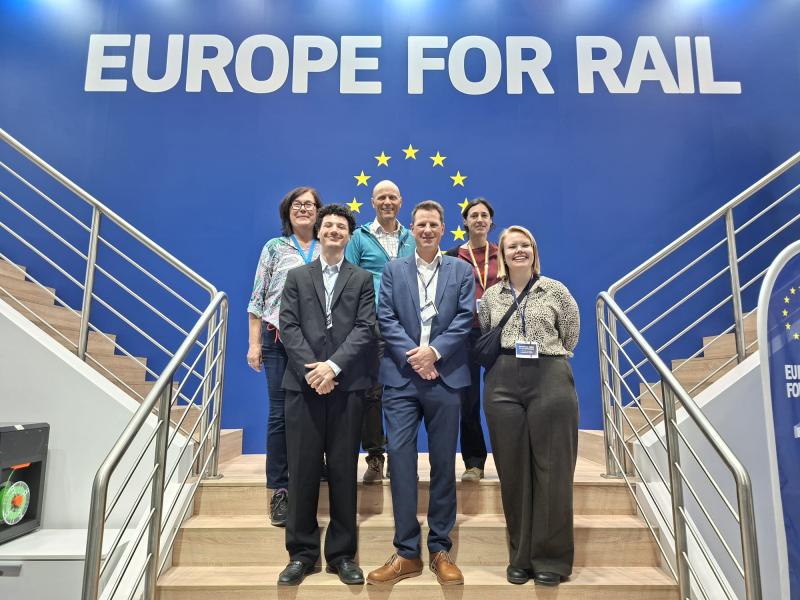
Today, the ETF met with Roxana Mînzatu, the EU’s Vice President for Social Rights and Skills, Quality Jobs and Preparedness. We highlighted the growing challenges facing transport workers across Europe, and the urgent need for decisive EU action.
Labour shortages continue to deepen – driven by a steady decline in job quality caused by liberalisation, lack of enforcement, and unchecked subcontracting practices. In sectors like road transport, enforcement remains alarmingly weak. The European Labour Authority (ELA) must be empowered and equipped to act to prevent cross-border exploitation and enforce fundamental labour rights.
Many transport workers still fall through the cracks when it comes to basic rights and protections. Workers in inland waterways, maritime, and road transport are too often excluded from proper social security coverage. Even more troubling, whole categories – including seafarers, fishers, and inland waterway crews – remain outside the EU’s social acquis entirely, denied basic rights that all workers should enjoy. This creates a fragmented system where exploitation thrives.
We also raised the growing misuse of subcontracting across the sector. From wet leasing in aviation to exploitation in logistics – subcontracting is being used to sidestep labour protections and drive down conditions. This is fuelling a new wave of social dumping, especially through the exploitation of third-country nationals working under far inferior terms.
At the same time, millions of people across Europe are facing transport poverty. The answer isn’t more deregulation – it’s investment in high-quality, accessible public transport, underpinned by good jobs and fair pay.
To build a resilient and future-proof transport sector, we need to ensure proper staffing, strong training systems, and fair wages across the board. Workers need to be supported and protected, especially as we face new economic and climate-related challenges.
We made two things clear in our meeting: First, we look forward to working with Executive Vice-President Minzatu to deliver an ambitious Fair Labour Mobility Package that truly tackles cross-border exploitation. Second, we strongly urged for decisive EU action to limit and regulate abusive subcontracting across all sectors.