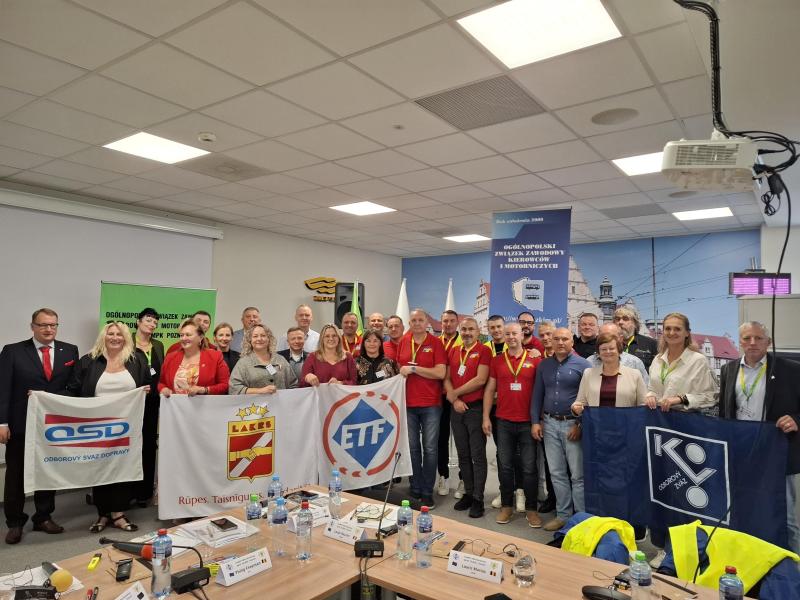
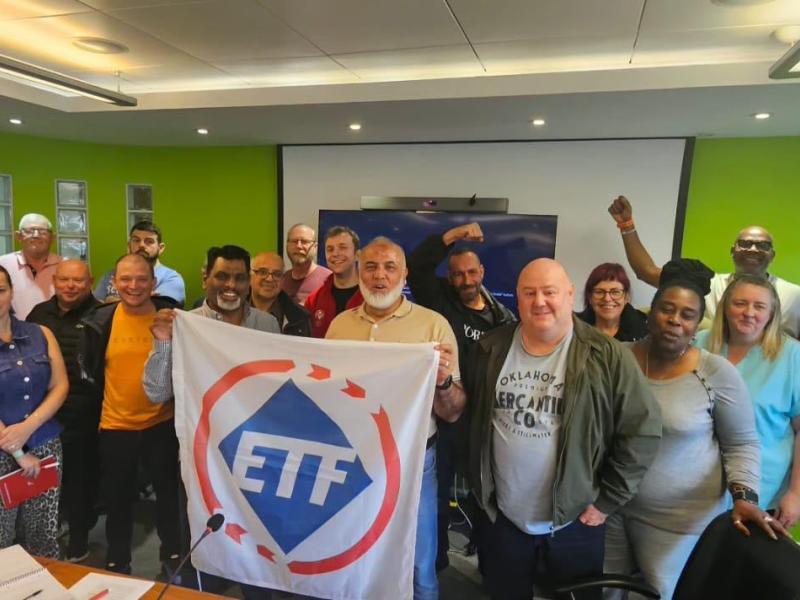
Tomorrow, 13 December, from 12h00 until 14h00, more than 500 European railway workers from across Europe will protest in front of the European Parliament (EP) in Strasbourg to urge Members of the European Parliament (MEPs) to reject the Public Service Obligations (PSO) Regulation on public passenger transport, which is part of the political pillar of the 4th Railway Package.
The 4th Railway Package, submitted to final vote on 14 December, aims to liberalise commercial rail passenger transport, high speed rail and rail public passenger transport. Despite EP’s vote in 1st reading, with a large majority in favour of a compulsory protection of public transport workers’ employment and working conditions in this competition, the text voted on now is paving the way for more competition without social improvements. As part of its campaign for fair transport in Europe ETF and its affiliates call MEPs to reject the so-called amended PSO Regulation 1370/2007. “The growing need for and importance of public transport in Europe requires high quality public services in railway transport. The amended regulation, however, encourages to choose for the cheapest public transport operator, often on the expense of employees and their social conditions, which is an open invitation to social dumping,” says ETF Railway Section President Guy Greivelding.
This gathering in Strasbourg follows the rally action of the European Transport Workers’ Federation (ETF) organised last week in Brussels prior to the TRAN Committee’s vote. Indeed, ETF deplores the final vote of the TRAN Committee which adopted the PSO Regulation. “The result in the TRAN Committee has shown that a majority in the European Parliament did not learn any lesson from the growing dissatisfaction of European workers and citizens. Dissatisfaction about a Europe that gives more importance to market opening and competition than to the social protection of workers against social dumping practices,” criticises ETF Deputy General Secretary Sabine Trier.
ETF will stay mobilised to ensure better protection for railway workers in the context of the growing competition and will continue to act in order to insist on respect for collective agreement and qualitative criteria in tendering.
The campaign can be followed on social media via @ETF_Railways and #FairTransport & #OurPublicTransport.
For further information, please contact Sabine Trier (Tel: +32 (0)2 285 46 67; M: +32 477 512 814, s.trier@etf-europe.org)