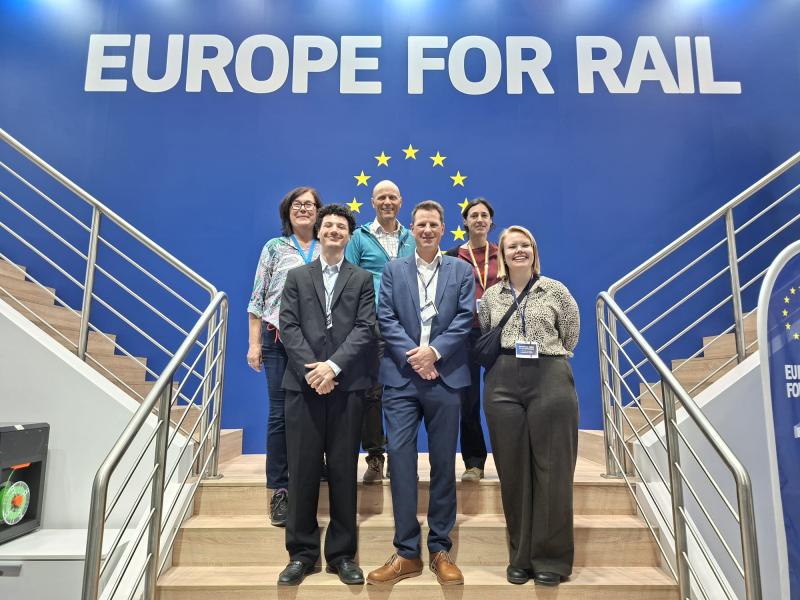
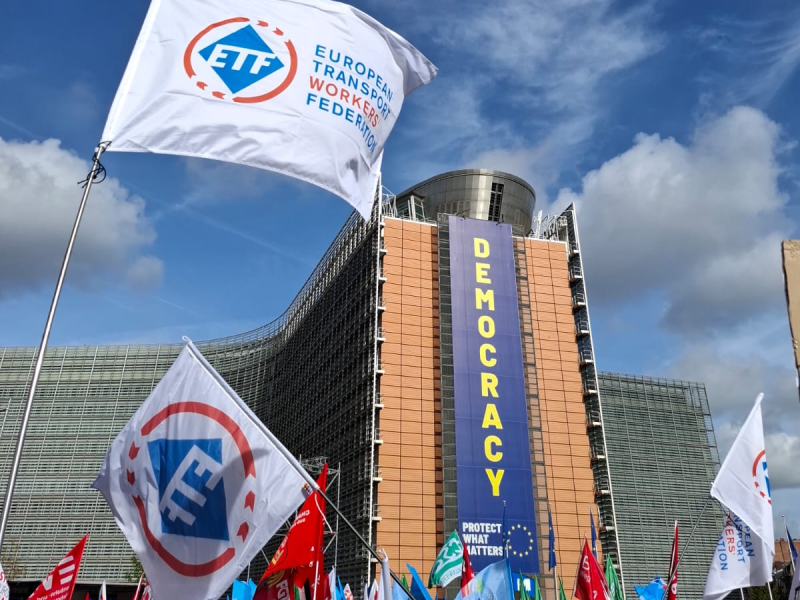
The European Transport Workers’ Federation took part in the European Commission’s Strategic Dialogue on the Future of the Automotive Industry, launched by President Ursula von der Leyen on January 30, 2025. Alongside IndustriAll Europe, ETF was one of only two trade union representatives invited to the dialogue, highlighting the importance of workers’ voices in shaping the future of the automotive sector and its broader impact on the mobility ecosystem. The two European Federations have been working to shape a joint approach to encompass the views of all workers in the mobility ecosystem.
The automotive industry is a key driver of Europe’s economy, supporting millions of jobs not only within the sector but also in related industries such as transport and logistics. ETF’s participation in the dialogue focused on representing the interests of all transport workers involved in the automotive value chain, but also those workers driving the vehicles produced by the sector, ensuring their perspectives are included in the EU’s Action Plan for the sector.
During the meeting, ETF emphasized the need for an EU Action Plan that protects jobs, fosters innovation, and attaches social conditions to any support provided to companies. Working closely with IndustriAll Europe, ETF’s General Secretary Livia Spera highlighted two main priorities:
1. Inclusive Mobility: Affordable, Sustainable, and Efficient
Mobility is a fundamental right, and yet many workers face significant barriers to accessing affordable and reliable transport. Public transport systems across Europe are suffering from underfunding and austerity measures, leading to reduced efficiency and reliability. At the same time, stagnant wages and rising living costs have made it increasingly difficult for workers to afford private vehicles. This is particularly challenging for transport workers, many of whom rely on cars to commute to shift work or workplaces located outside urban areas.
Europe needs an action plan to push for better integration of public transport with sustainable private mobility solutions. The production of new-generation buses, which are essential for modernizing public transport, often faces obstacles due to budget constraints. With limited funding, public transport operators often cannot afford to purchase these vehicles, leading to a decline in service quality and number of users. This creates a vicious cycle where both workers and passengers lose.
ETF also highlighted the need to address unsustainable business models in road transport and last-mile delivery, which often rely on precarious labour and low margins in the increasingly long supply chains. The widespread business models in the sector are based on lowering costs, and discourage investment in innovation and hinder the transition to more sustainable and socially responsible practices.
2. Sustainable Value Chains: Efficient and Ethical Transport
The automotive industry depends on efficient and sustainable transport networks, yet substandard working conditions remain prevalent in car logistics, which is a sector that employees tens of thousands of workers. ETF’s General Secretary stressed the importance of enforcing the Corporate Sustainability Due Diligence Directive (CSDDD) requirements to ensure fair treatment of workers throughout the supply chain, instead of watering it down.
Furthermore, boosting rail freight is essential for the automotive sector, particularly the single wagonload transport. This is where public rail freight companies play a critical role: yet, at present, they face challenges due to alleged incompatibility with EU state aid regimes. Workers already sent a warning to EU decisionmakers: dismantling public rail freight could have long-term consequences not only for the Green Deal goals, but for the automotive industry’s competitiveness and sustainability.
To enhance the competitiveness of rail freight, ETF advocated for measures such as lowering track access charges, reducing electricity taxes, and accelerating the electrification of rail networks. These steps would not only support the automotive industry but also contribute to the EU’s climate goals.
Looking Ahead
The Strategic Dialogue on the Future of the Automotive Industry marks an important step in shaping the future of mobility in Europe. ETF’s participation ensured that the voices of transport workers were heard in a sector that goes hand in hand with transport.
As the EU moves forward with its Action Plan, ETF will continue to advocate for policies that prioritize workers’ rights and sustainable development. This important step for a collaborative approach is crucial to address the challenges that the automotive industry and the broader mobility ecosystem are facing in the near future.
The next Automotive Dialogue will take place on 3 March, and the action plan is expected to be published on 5 March.