The European Transport Workers’ Federation (ETF) is urging the European Union to halt its investigations into state aid for DB Cargo in Germany and SNCF Fret in France. This call for action is part of a broader campaign to safeguard the future of rail freight in Europe, a sector critical to the continent’s environmental and economic health.
Rail Freight: A Pillar of the Green Deal
Rail freight transport is a cornerstone of sustainable logistics, emitting nine times less CO2 compared to road transport. With each freight train replacing over 50 trucks, it plays a pivotal role in reducing congestion and pollution. This significance is recognized in the EU’s Green Deal and the Sustainable and Smart Mobility Strategy, which aims to double the rail freight modal share by 2050.
Despite these ambitions, the rail freight sector faces challenges. Since the liberalisation in 2006, its share in European freight transport has dwindled to 11.5% in 2020. This decline underscores the need for supportive policies rather than punitive investigations.
The Role of DB Cargo and SNCF Fret
DB Cargo and SNCF Fret are not just major players in the European rail freight market; they are also vital employers and service providers. Furthermore, the replacement of such big players of the sector is an almost impossible mission for the private sector. The structure, market share and geographic coverage of these companies cannot be absorbed by the small players of the private rail freight sector. The potential dismantlement or restructuring of these entities, as currently being scrutinized by the EU, threatens significant job losses and a possible shift of freight transport from rail to road. Such a shift would counteract the EU’s environmental goals, adding an estimated 40,000 more trucks to the roads daily.
ETF demands that the European Commission not only stops its investigations into DB Cargo and SNCF Fret but also recognizes rail freight as a service of general interest. The future of rail freight should be shaped by proactive investment and policy support, not hindered by regulatory investigations that overlook the sector’s broader benefits.
ETF Actions and Demonstrations
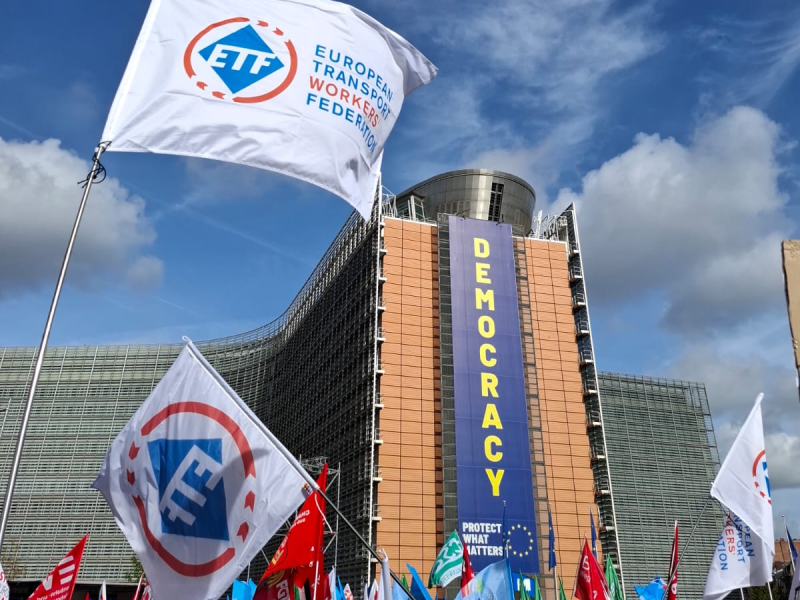
To highlight these concerns, ETF affiliates from the Railway section are actively participating in actions in France, Germany, and Brussels. ETF will also join the Anti-austerity protest organized by the European Trade Union Confederation (ETUC) on December 12th, amplifying the voice of rail workers and the importance of rail freight for the future of the industry and the planet.
Visuals and Further Information
To support this campaign, three posters are available for download. These resources can be used in demonstrations or to share your support on social media!