The European social partners of the urban public transport sector, the ETF and the UITP, concluded the project “Social Dialogue in the Urban Public Transport Sector in Specific Central and Eastern European Countries” with a final report, summarising all findings of the project implemented between 2017 and 2019. The report is available in 10 languages.
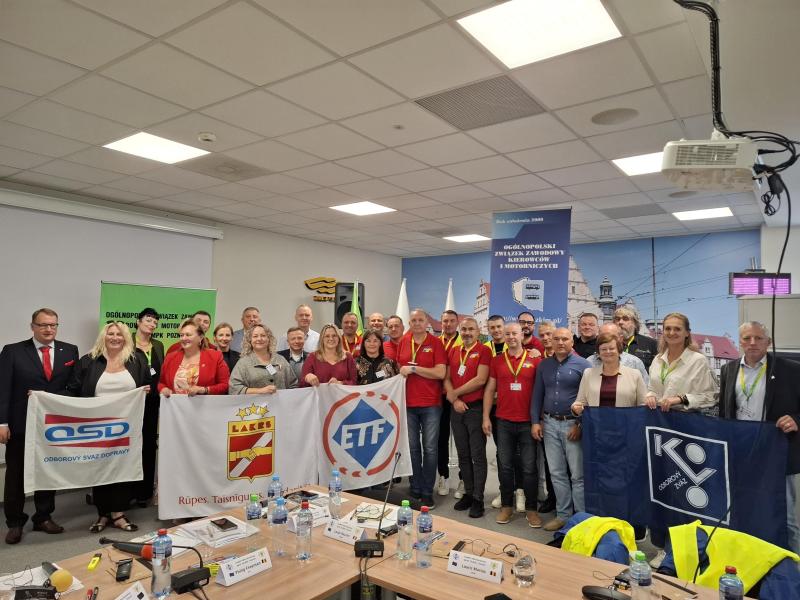
The involved countries were Lithuania, Latvia, Estonia, Poland, Czech Republic, Slovakia, Hungary, Romania, Bulgaria, Croatia, Slovenia and Serbia. Three country visits with a fact-finding mission took place to map the situation in the countries involved. As a follow up to that, three seminars on experience and information exchange on the national and European social dialogue in the urban public transport sector were organised. The workshops “Dialogue Can Shape the Future of Urban Public Transport” allowed to gather information and knowledge from experts, urban public transport companies, employers’ associations and trade unions organising urban public transport workers. The events served as a tool to exchange information on employment and industrial relations in the urban public transport sector in detail. They also alowed to present the activities of European social dialogue to all participants and to identify good practice examples in the urban public transport sector.
In addition to the workshops, research on country specific information was gathered from representatives of the national social partners. The findings of the project are summarised in the final report.
The social dialogue at European level plays an essential role in advancing the European social model, delivering benefits for employers, workers and for the economy and society as a whole. With this initiative, the European social partners in urban public transport aimed at promoting the European Social Dialogue and discussing the functioning and outcome with the social partners in selected countries of Central and Eastern Europe. At the same time, the project activities enabled the European social partners to enlarge knowledge about the functioning and the activities of the social dialogue in specific Central and Eastern European countries.