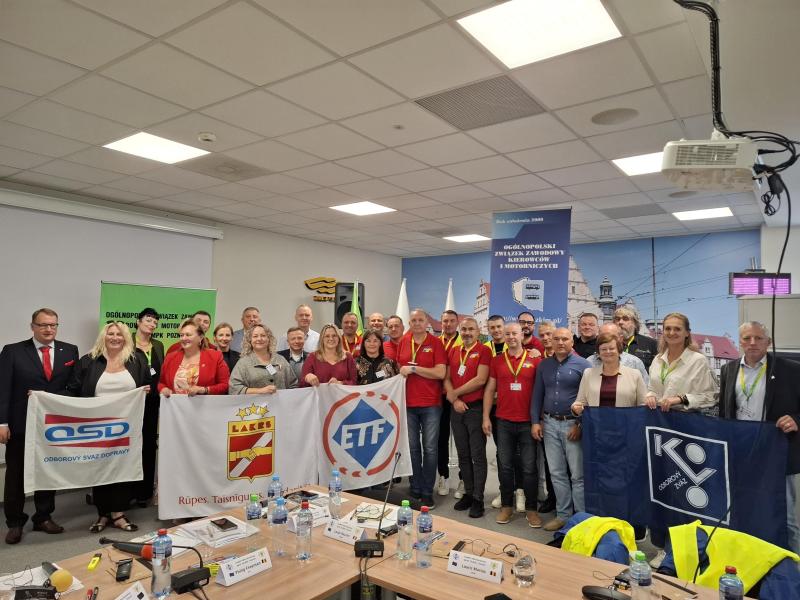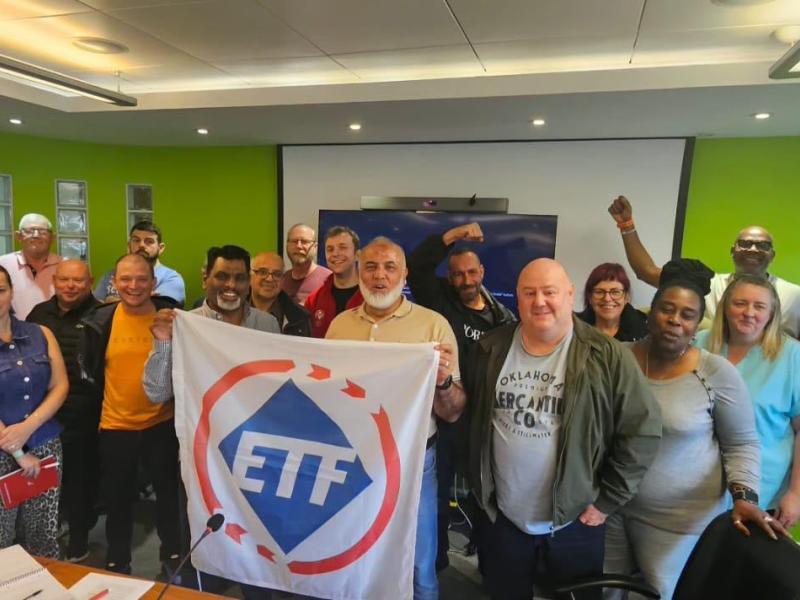


The International Transport Workers’ Federation (ITF) and European Transport Workers’ Federation (ETF) stand in support of three major pilot organisations who joined forces and issued a strong statement opposing reduced crew operations.
The International Federation of Air Line Pilots’ Associations (IFALPA), the European Cockpit Association (ECA) and the Air Line Pilots Association, International (US-ALPA), rightfully describe single pilot operations as a “threat to safety”.
As highlighted in the statement, the ITF and ETF also believe that the push to reduce the number of crew members in the cockpit is nothing but “a profit-driven scheme that poses a significant safety risk”.
Over the last six months, the aviation industry, as well as the wider public, has witnessed an aggressive corporate-led lobbying campaign targeting regulators around the world to reduce crewing levels under the pretext of technical progress.
The ITF, as a global union federation, and ETF, as its European arm that represents a significant number of pilots along with cabin crew, airport staff, air traffic services staff, maintenance, repair, and overhaul (MRO) services workers and aviation workers from other occupational groups, support the arguments of our three sister organisations and reiterate that “technology, no matter how sophisticated, is not a replacement for pilots on the flight deck”.
Moreover, plans to reduce the number of pilots in the cockpit also bring forward to the concept of extended minimum crew operations, which could also impact cabin crew operations. Improving safety and putting the health and life of the flying public, pilots and cabin crew above profit is a struggle that will galvanize all aviation workers.
Edgardo Llano, ITF Civil Aviation Section Chair and General Secretary of the Argentine union the Asociación del Personal Aeronáutico (APA), declared: “Pilot shortages and fatigue issues go hand in hand, and neither will be solved by recklessly gambling on safety by reducing crewing. Besides, staffing issues in the industry are not limited to pilots. The reality is that the roots of the problem run deep, and there are no shortcuts.”
“The ITF and our aviation affiliates are calling for a New Deal in Aviation that starts with a new relationship between employers, governments and workers that recognises aviation workers’ expertise as safety and security professionals. For far too long, safety and security have been seen in terms of technological fixes, where machinery is a substitute for workers’ skills rather than a tool to enhance human performance. Aviation companies need to see safety and security as an investment rather than a cost. The days in which aviation industry leaders argue for “the least cost-safe option” must be over.”
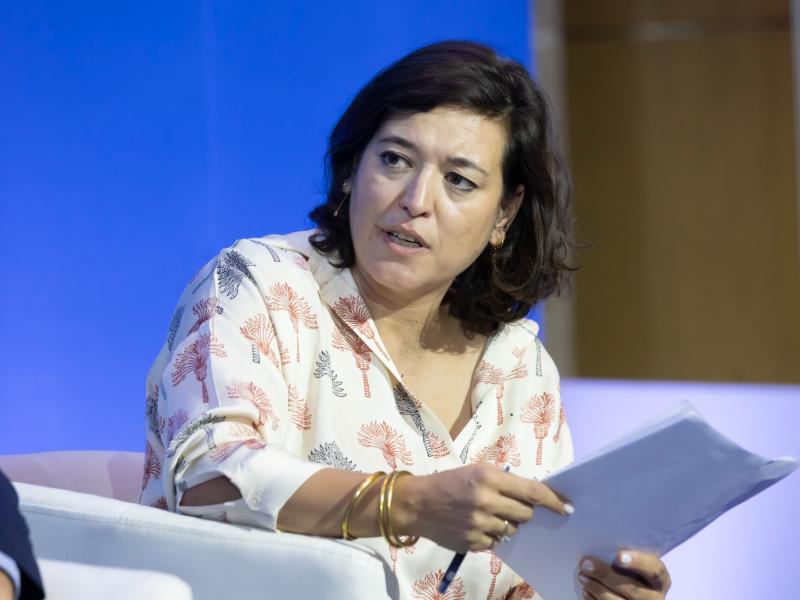
Sara Nelson, ITF Civil Aviation Section Vice Chair and President of the Association of Flight Attendants-CWA (USA) said: “As cabin crew, we are charged with the safety, health, and security of all souls on board, including the flight deck. We’ve had to revive pilots from heart attacks or other medical emergencies.”
“The public turns to us to check our reaction when there’s any strange sound or bump on the plane. We give instructions to stay safe and do our job as safety professionals. Let me be clear – one pilot in the flight deck is not safe, and we won’t fly under unsafe conditions to protect our lives and all of the people we are charged to keep safe. Stop this ridiculous greed grab. We won’t fly with it,” she said.
Oliver Richardson, ETF Civil Aviation Chair, Unite the Union (UK) Transport Coordinator and National Officer for Aviation, added: “Safety within aviation is not a given; it relies on people continuing to make the right decisions at the right time to ensure the integrity of every flight. It is obvious that having single pilot operations will increase the risk within the safety management system. There is a long list of cases where two pilots were needed to make that difference.”
“The deliberate crash of Germanwings flight 9525 reiterated the obvious need for two pilots, and rules were changed accordingly. Regulators already know the risks and should follow their own recommendations rather than blindly following airlines who simply wish to reduce costs.”