

Fatigue among cabin crew is no longer a hidden issue. It is a widespread, systemic problem that is undermining safety, damaging health, and eroding the sustainability of aviation jobs. A new global survey of 114 cabin crew union representatives from 45 airlines, conducted by the International Transport Workers’ Federation (ITF), makes it clear: fatigue is a daily reality for cabin crew, and airlines are not taking it seriously enough.
A safety issue that airlines are failing to address
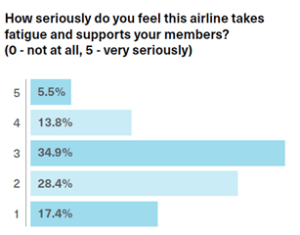
Only one in five union representatives believe their airline treats fatigue as a serious concern. Nearly half rate their airline’s approach as poor or very poor. This points to a profound gap between the rhetoric of “safety culture” and the lived experience of cabin crew on the aircraft floor.
Fatigue is not just about feeling tired. In safety-critical roles like cabin crew, it directly affects alertness, decision-making, reaction times, and the ability to respond effectively in emergencies. When fatigue is normalised, safety margins shrink – for workers and passengers alike.
Long shifts, too few breaks
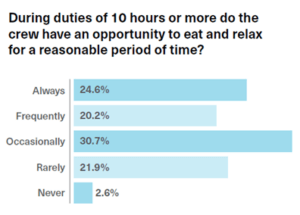
The survey reveals that extreme working patterns are routine. Ninety percent of respondents report that cabin crew regularly work duties of 10 hours or more. Yet more than half say that during these long shifts, crew only occasionally receive reasonable rest breaks, in which they have sufficient uninterrupted time to eat and recover.
Conditions are even worse at low-cost carriers, where three-quarters of representatives report that reasonable breaks are not provided frequently or at all. Cabin crew are among the few safety-critical professionals expected to remain vigilant, mobile, and passenger-facing for entire long-haul duties with little or no guaranteed recovery time.
Scientific research consistently shows that extended duties without adequate breaks lead to sharp declines in performance, increased error rates, and long-term health risks. For cabin crew, this is compounded by constant physical movement, emotional labour, and responsibility for passenger safety.
Fatigue doesn’t start at take-off
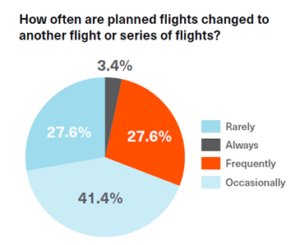
Fatigue is not only created in the air. Unpredictable scheduling practices add another layer of exhaustion before a duty even begins. One in three representatives say planned flights are frequently or always changed, while many report start times shifting by more than an hour at short notice. On top of this, 69% say cabin crew are expected to attend training or meetings on days off.
These disruptions make proper rest and recovery almost impossible. Even where collective bargaining agreements exist, their protections are often applied unevenly or ignored altogether, leaving cabin crew to absorb the consequences.
Unequal rules, unequal safety
The survey also exposes stark inconsistencies within the same airlines. Where multiple union representatives responded from one airline, their answers often differed dramatically, showing that fatigue policies are not applied evenly. This means that safety and wellbeing can depend on which base, fleet, or country a crew member works from. This is an unacceptable situation in a global industry.
The use of fragmented regulatory regimes and multi-country aircraft registration further weakens oversight and encourages a race to the bottom on working conditions, particularly in the low-cost sector.
Why collective action and policy change matter
Fatigue is not an individual failing. It is the predictable outcome of how work is organised. Airlines’ reliance on fatigue risk management systems means little if those systems are used to stretch human limits rather than protect them. A true safety culture requires trust, meaningful reporting mechanisms, and enforceable standards, not just paperwork.
This is why stronger fatigue protections must be secured through collective bargaining and backed by robust national and international regulation. Cabin crew need:
- Enforceable limits on duty length
- Guaranteed, adequate rest breaks during duty
- Predictable schedules and protected days off
- Fatigue reporting systems free from fear of reprisal
Without these protections, fatigue will continue to be hidden, underreported, and dangerously normalised.
A call to take fatigue seriously
The message from cabin crew around the world is clear: fatigue is widespread, harmful, and preventable. Addressing it is not optional – it is essential for safety, health, and the future of the aviation workforce.
Airlines, regulators, and governments must act. Through strong unions, collective bargaining, and effective public policy, cabin crew can win the protections they need to work safely and sustainably. It’s time to get serious about fatigue: flight safety depends on it.