


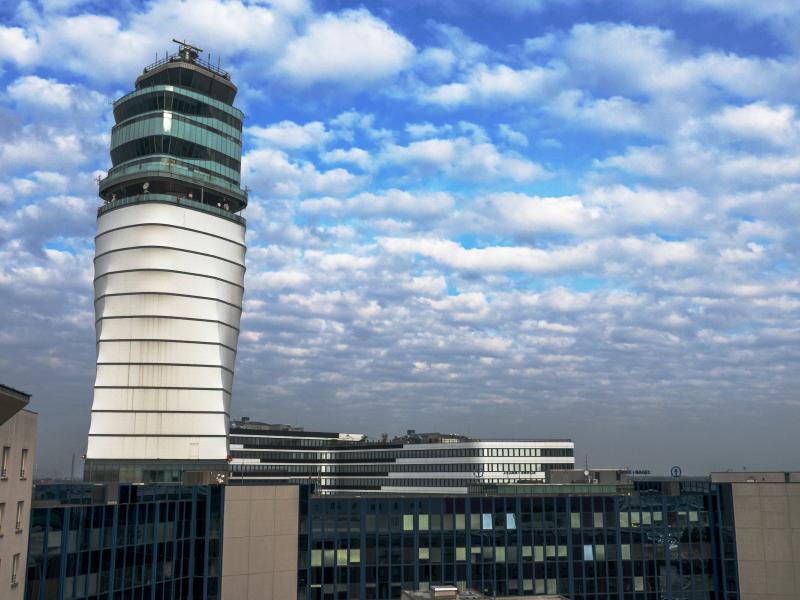
Vienna Airport has once again been named Europe’s Best Ground Handler at the 2026 Payload Asia Awards. This is the third time it has received the distinction, following previous awards in 2022 and 2025.
The award recognises operational performance, reliability and the ability to respond to changing industry demands. Vienna Airport attributes its success to efficient processes, specialised infrastructure and, above all, the dedication and expertise of its ground handling staff. Its repeated recognition offers an important reminder for European aviation: excellent ground handling depends on a healthy, protected, skilled and stable workforce.
Vienna also provides an important contrast with the model of growing liberalisation and fragmentation of ground handling services found at many European airports. The EU’s Ground Handling Directive (Council Directive 96/67/EC) establishes the wrong incentives for ground handling providers in many airports to compete between each other on aspects other than quality and safety of service. And ground handling workers know, for experience, that the first costs to be cut in order to compete are labour costs.
When too many companies compete for short-term contracts, the consequences are disastrous for service quality: understaffing, high employee turnover, weaker training, fragmented responsibilities and deteriorating working conditions. Ultimately, workers, passengers and the quality and resilience of airport operations all pay the price.
In many ways, Vienna’s model is different. A significant part of the airport’s ground handling operations remains integrated, while the number of providers for core activities is limited. This helps maintain coordination between services and preserve the airport-specific knowledge needed to operate safely and efficiently.
Vienna also operates within Austria’s strong system of trade-union representation and sectoral collective bargaining, helping to establish common employment standards and prevent competition from being driven primarily by wages and working conditions. The collective labour agreement for the airport sector sets minimum standards for all operators, in particular regarding wages and working time.
None of this means that Vienna is free from commercial pressure or changes between service providers. Recent developments around the transfer of a ground handling licence created uncertainty for affected workers. This demonstrates the importance of trade-union involvement and the continued need to improve the legal framework in order to guarantee legal certainty for affected workers and thus stable operations.
These examples are particularly relevant as Europe considers the future of its rules governing ground handling. For many years, ETF has warned against excessive liberalisation and competition in a labour-intensive, safety-critical industry. We have consistently called for limits on subcontracting and destructive cost competition, social conditions to be attached to operating licences, recognition of employers that respect trade unions and collective bargaining, and the full protection of workers’ rights whenever staff transfer between providers.
Many of these principles can be seen in Vienna: a limited provider structure, integrated operations and extensive collective-bargaining coverage. Vienna should not be presented as a perfect or universally transferable model, but its repeated operational recognition completely debunks the assumption that more providers and more intense price competition automatically produce better services.
This Payload Asia Award serves as reminder that people loading aircraft, handling baggage, assisting passengers and managing cargo are not simply a cost to be reduced. They are the heart of safety, reliability and service quality.
Lessons from Vienna Airport: the best ground handling starts with good working conditions
News
ON THE GROUND
News
ETF unions meet in Brussels for the aviation week
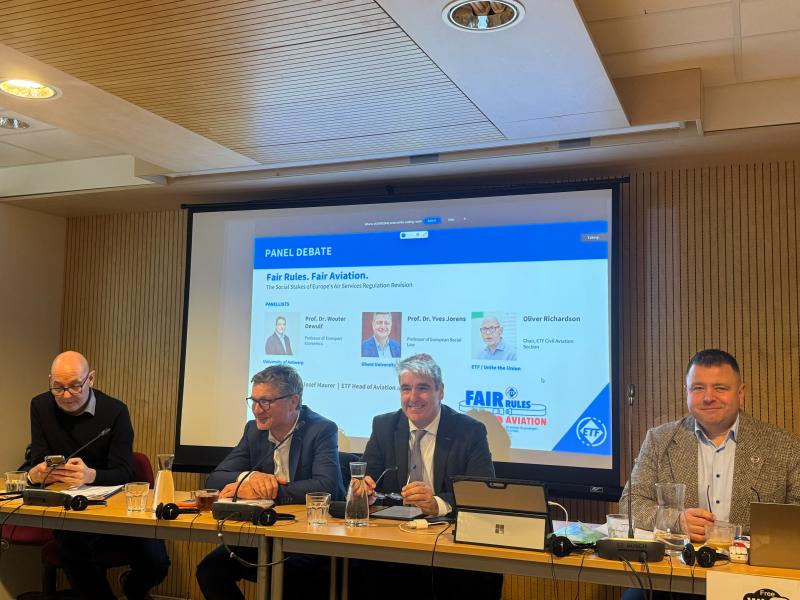
From 2 to 5 November 2026, aviation trade union representatives from across Europe gathered in Brussels for the governance meetings of the ETF Civil Aviation Section. We kicked off the week with the Steering Committee, followed by meetings of the Joint Aircrew (JAC), Air Traffic Management (ATMC) and Ground Staff (GSC) Committees. We continued with the Civil Aviation Section meeting on Wednesday, focusing on horizontal priorities affecting workers across the aviation sector, and concluded the week on Thursday with the annual plenary of the European Sectoral Social Dialogue Committee for Civil Aviation.
News
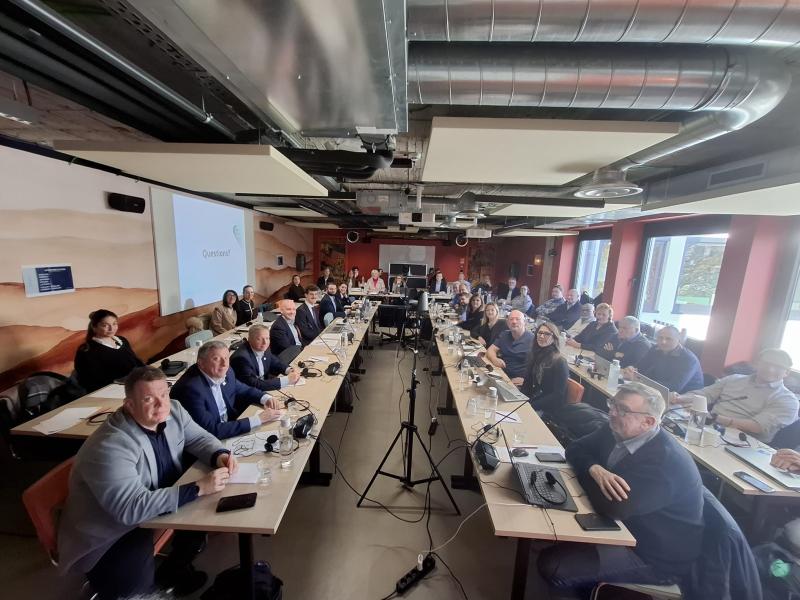
European Social Dialogue in Urban Public Transport Reaches New Milestone
Urban Public Transport (UPT) is a critical sector for Europe, employing more than 2 million people and providing a vital and fundamental public service. Without UPT, European cities would grind to a halt and hundreds of millions of Europeans would not be able to effectively reach work, education and leisure. However, for historical reasons this essential sector has not enjoyed the full rights within the structures of European Social Dialogue, being merely a working group under the Road Sectoral Social Dialogue Committee. This is despite the fact that UPT faces massive challenges and changes, from the labour shortage to underfunding to the need to decarbonise vehicle fleets, alongside many others.
News
Lessons from Vienna Airport: the best ground handling starts with good working conditions
Vienna Airport has once again been named Europe’s Best Ground Handler at the 2026 Payload Asia Awards. This is the third time it has received the distinction, following previous awards in 2022 and 2025.