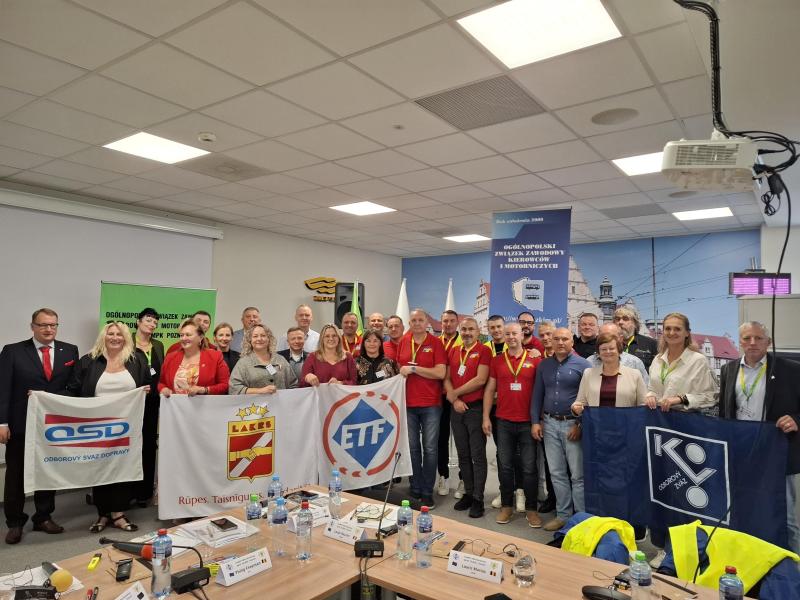
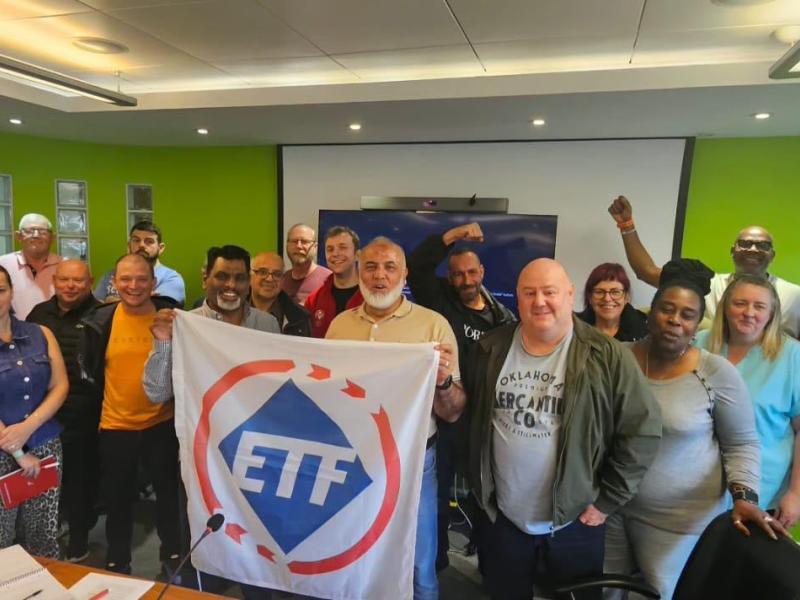
During the plenary session of the European social dialogue committee for sea fisheries held last week, ETF and Europêche adopted a joint resolution establishing benchmark principles aimed at better regulating the proliferation of sustainability labels certifying social conditions on board fishing vessels. The intention is to avoid social-washing labels while stressing the importance of the ILO “Work in Fishing” Convention C188 as guardian of human and labour rights of fishers at sea, which cannot be replaced or substituted by private schemes.
Voluntary social standards and certifications were recognised as drivers of sustainable economic development and vital instruments to support learning, dialogue and trust-building between companies and stakeholders. However, Social Partners agreed on the fundamental principle that private labels can never go below the internationally recognised social standards set in ILO Convention C188.
“ILO C188 contains the minimum compulsory requirements to be respected and should be included in full, avoiding any cherry-picking in any voluntary certification scheme. The private labels which do not cover those minimum standards, should not be recognised as socially sustainable. So, any social-washing labels from 3rd countries shall be left out of the single market”, said Juan Manuel Trujillo, ETF Fisheries Section Chair.
Europêche’s spokesperson in the European social dialogue, Ment van der Zwan, added:
“In a highly competitive market for sustainable seafood products, admitting sub-standard certification schemes as socially sustainable would expose EU fishermen and companies to unfair competition. EU consumers would as well be highly misguided by the information provided by the label. Customers may chose a product labelled as socially sustainable, that in reality is not, over an European product with no such label but that by definition has to comply with higher social standards. It would be illogical and a commercial ruse.”