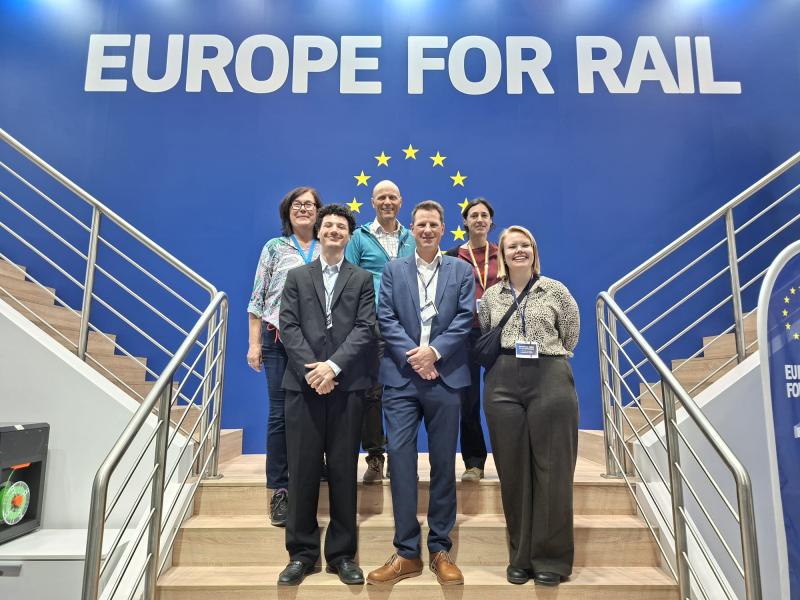
On April 25th-26th, representatives from various civil aviation unions came together in Helsinki for an intensive training session led by Kris Major, Chair of the Joint Aircrew Committee and representative of the UK’s union Unite. The training was aimed at “bringing the crisis guide to life”, infusing it with the collective experience and insight of the attendees. This guide will eventually serve as a comprehensive collection of guidelines to equip union representatives with the essential skills and support to navigate crises adequately.
This workshop, aimed at the Nordic and Baltic areas, marked the kickoff for a total of four trainings across Europe, held in Helsinki, Amsterdam, Belgrade, and Istanbul. It was organized and funded by the ETF and supported by the European Commission. Major encouraged rich discussions, fostering an environment of vibrant and insightful exchange and discussion among the members of the Nordic and Baltic unions. By thoroughly examining and discussing the content of the guide and tools, attendees not only analyzed theoretical frameworks but also actively added input surrounding current real-world crises confronting the aviation industry. The topics ranged from ownership and control issues to the struggles tied to wet leasing, the complexities of the Ukraine overfly situation and a just transition to sustainable aviation.
Participants notably delved into developments occurring before, during and after the COVID-19 pandemic, using it as a recent case study for crisis management while identifying areas for improvement. The industry currently suffers from expertise shortages and the threat of companies attempting to continue business as usual after over two years of uncertainty, revealing the fragility of the civil aviation sector. In response, participants engaged in discussions centred around their members’ experiences, using them to enhance the crisis guide.
The Helsinki meeting stands as an important proactive approach in confronting not only topical challenges but also future crisis head-on, armed with a tool full of knowledge, collaboration and a shared commitment to resilience. As the civil aviation sector continues its course forward, the crisis guide with its toolboxes will serve as a safety kit aimed at enhancing preparedness and guiding representatives through turbulent times with confidence.
A special thanks goes to Finnish unions AKT and IAU, for hosting and organizing this first meeting!
This meeting was organised and funded under the EU-funded project “No Going Back: Protecting rights and promoting social dialogue in aviation through times of crisis (NGB)” (Project No.101048649)