

To support our affiliates in adapting to the new post-COVID aviation industry, build resilience, and adapt to change, ETF has launched a new EU co-funded project: ‘No going back: Protecting rights and promoting social dialogue in aviation through times of crisis.’
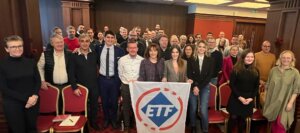
Officially launched this week in Sofia, Bulgaria, this project aims to encourage and support our affiliates to go through a transformational process to be better prepared to react to future challenges.
The starting point of this project is to learn from past experiences coming from the COVID-19 pandemic and the many other crises aviation has faced. Preparing our affiliates for change processes is at the core of this project, particularly the changes expected throughout future crises, industry changes and economic downturns. The project will have three major outputs:
- A practical guide will be developed to help our affiliates with crucial information and best practices for dealing with transitions, changes, or managing crises.
- Workshops will be organized to implement the practical guide and adapt it to the local contexts.
- Engagement with other stakeholders, such as NGOs, employers, and national and local authorities, on how to tackle future crises in the sector.
The ‘No going back’ project focuses on four key priorities:
- Modernization of the labour market and digitalization – gathering the best practice of past changes to fast adapt to the various future challenges while also considering their different contexts.
- Transition – identifying best practices and methods used to establish just transition practices;
- Quality of work, preparation and management of change and restructuring – supporting our members to adapt their social dialogue responses and labour practices to ensure long-term work sustainability in aviation.
- Tackling the employment, social and economic consequences of the COVID-19 crisis – Empowering our affiliates to maintain decent work in the aviation industry throughout the entire implementation process of a just green and digital transition
The project benefits from the European Union’s financial support under the European Social Fund.