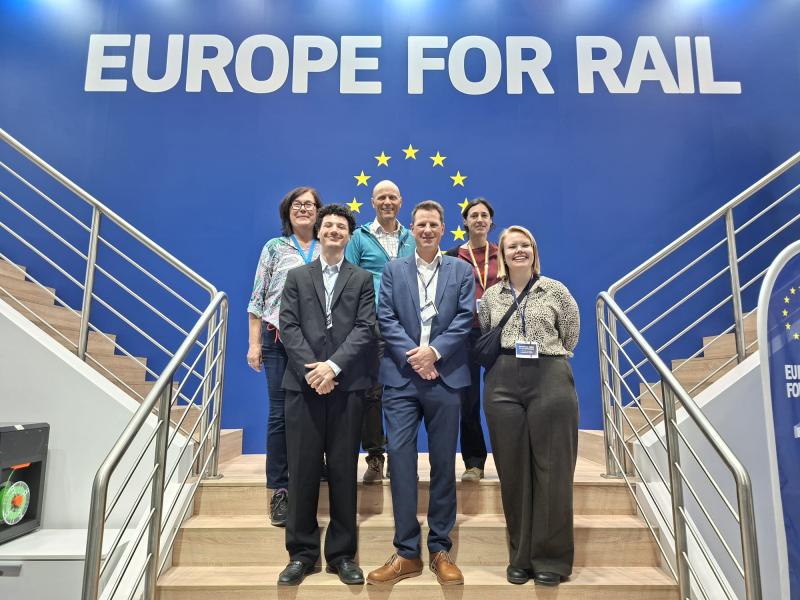
On 30 September 2025, ETF joined the 11th Meeting of the European Commission’s Expert Group on Social Issues in Inland Navigation. Inland navigation may be smaller in size compared to other transport modes, but it carries great potential for the modal shift and for building a climate-friendly transport system. None of this, however, will be possible without the people who keep the sector running.
As ETF, we have always seen Crewing & E-Tools as an opportunity to move the sector forward through uniform enforcement of working time rules and manning requirements.
However, this week’s meeting left workers and unions with little hope for change. While inland navigation holds great promise for Europe’s green transition, the European Commission’s latest announcements fell short, leaving the concerns of workers largely unaddressed. While we can partially understand the pragmatic approach to move the file forward, we cannot give up on the social protection for our members and inland waterway workers at large.
Crewing & E-Tools: an opportunity not to be missed
For years, ETF has seen the Commission’s “Crewing & E-Tools” package as a chance to make a real difference – by setting fair, uniform rules for manning inland vessels and ensuring proper oversight of working time.
But the Commission’s announcements were a cold shower:
- Crewing rules will only come as non-binding recommendations
- E-tools will be rolled out through minimal tweaks to existing legislation
This stripped-down approach ignores whole categories of workers, such as hospitality and catering staff, who are often the most vulnerable. Even worse, it’s not even clear if the new e-tools will properly track working time – one of the biggest issues workers face.
Instead of a comprehensive solution that could improve lives across the sector, workers are left with what feels like a “quick and dirty” shortcut designed for efficiency, not fairness.
Big potential, but workers are being left behind
Right now, workers in inland waterways are struggling. Worsening working conditions, weak enforcement of rules, and gaps in regulation are creating fertile ground for exploitation. Instead of decent jobs and safe workplaces, too many workers face long hours, uncertainty, and unfair treatment.
They need stronger protections. That means real rules , not vague promises, on issues such as access to social security, fair treatment for posted workers, and crucially, equal rights for all crewmembers, no matter the flag or border. Without action, social dumping will continue to drain the sector of skilled people and put safety at risk.
Certificates and legal grey zones
We also raised the problem of third-country certificates. Our affiliates have reported that crewmembers with perfectly valid qualifications are being fined by local police because of unclear or inconsistent rules. Authorities at the meeting promised to look into the issue, and ETF will hold them to that promise.
Turning Research into Real Protections
Later this year, the European Labour Authority (ELA) will publish its Analytical Study on Inland Waterways. We welcome this work, because it shines a light on concerns that we share with them:
- Confusing and complex legal setups
- Fragmented regulatory framework
- Difficulty in knowing which social security rules apply
- Weak enforcement and oversight
ETF added another urgent point: the need for clear rules on work visas. Too many workers are stuck in grey zones, with no legal certainty.
Fair jobs as the foundation of inland navigation
We urge policymakers to prioritise the social dimension in the upcoming proposal. All workers, whether at the helm of a vessel or serving on board, play an essential role in ensuring a safe, reliable, and green transport system. But they need decent working conditions, fair rules, and strong enforcement to do their jobs safely.