Railway Workers Demand Stronger Commitment to Public Rail and Fair Working Conditions
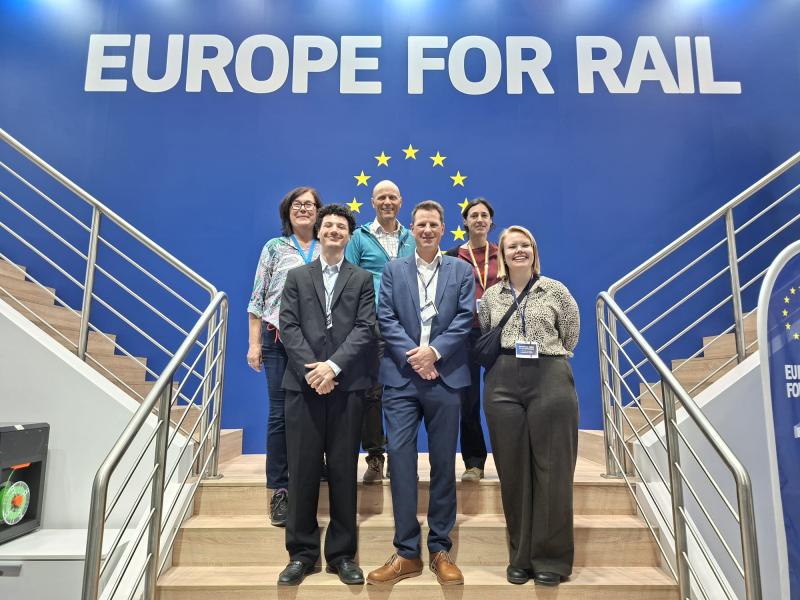
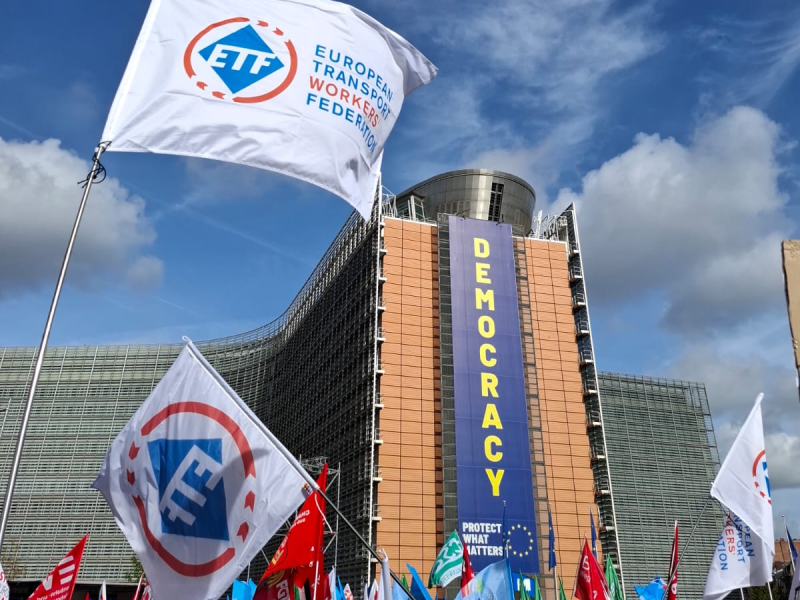
Brussels, 26 March 2025 – Railway workers and policymakers gathered in Brussels for From the Tracks to Brussels, a high-level dialogue hosted by ETF. The event brought together rail workers, trade union leaders, and EU decision-makers to discuss the future of Europe’s rail sector and the need for sustainable, socially responsible policies.
Rail as a Public Service: The Need for Investment and Regulation
Giorgio Tuti, Chair of the ETF Railways Section, opened the event by stressing rail’s essential role in achieving sustainability goals and ensuring social and regional cohesion. However, he warned that current investment levels remain inadequate to support a meaningful modal shift towards rail.
Kristian Schmidt, Director of Land Transport at DG MOVE, acknowledged that investment in rail had increased by 29% but noted that challenges remained. He pointed to ongoing discussions on integrating dual-use rail infrastructure for military mobility and emphasised that stable, long-term financing was essential. He also warned that working conditions and wages must not be sacrificed if the industry hopes to attract young talent.
Rail as a Public Service: Safeguarding Workers and Affordability
The first panel examined how rail can continue to serve the public while maintaining fair working conditions. Speakers raised concerns about liberalisation, warning that competition policies risk undermining job security. The General Secretary of FILT-CGIL (Italy) and representatives from France and Spain argued that relying on private investors without regulatory oversight could erode rail’s social function. Uli Schmit, from DB Cargo’s Works Council, criticised EU economic policies for threatening the stability of public rail freight companies such as DB Cargo in Germany.
Tim Engartner, a researcher from the University of Cologne, presented evidence debunking the notion that competition leads to more affordable rail transport, reinforcing the argument that liberalisation is harming both workers and passengers. Participants also highlighted the risks posed by EU state aid rules, which they said could jeopardise the future of vital freight operators like DB Cargo and weaken Europe’s logistics network.
Building a Resilient Future for European Rail
The second panel addressed the urgent need to attract and retain skilled rail workers. MEP Arash Saeidi (The Left) and Michele Barneschi (S&D political advisor) stressed that improving job quality was crucial for rail’s long-term sustainability. Saeidi called for greater investment in local and national rail networks, arguing that prioritising high-speed rail at the expense of commuter and regional lines was a mistake.
Pierre Lejeune from CGSP Cheminots criticised Belgian government measures that have limited union negotiation rights and ended statutory recruitment, under the pretext of “modernising” social dialogue.
A representative from VIDA (Austria) called for fair competition in the rail sector and urged the EU to mandate digital recording of working time to ensure safety.
Solidarnosc (Poland) raised alarms over the future of PKP Cargo, Europe’s second-largest rail freight operator. The company has already dismissed 4,000 workers as part of an ongoing restructuring process.
Eva Schultz, representing the Cabinet of Commissioner Mînzatu, reaffirmed the Commission’s commitment to social dialogue and to prioritising quality jobs and safety standards over purely economic considerations.
ETF Calls for Worker-Centred Rail Policies
ETF General Secretary Livia Spera closed the conference with a powerful call for unions to play a central role in shaping railway policy. She warned that despite widespread recognition of rail’s importance, policy discussions often fail to address the real obstacles to increasing rail use and sustainability.
“The number and intensity of social conflicts in railways across Europe are growing. Clearly, there is social uneasiness. Today, we are launching a dialogue that we want to be meaningful. If we won’t meet interest from policymakers, national conflicts risk becoming European ones,” Spera stated.
She also criticised policies that threaten regional rail connections, particularly in Belgium, where proposed cuts could close smaller stations and push passengers away from rail rather than encouraging its use.
Finally, Spera took aim at EU state aid guidelines that prioritise competition over transport needs, warning that unless these policies change, rail freight will continue to struggle.
ETF will continue to fight for policies that prioritise workers’ rights, fair competition, and long-term investment in quality jobs, ensuring that rail remains a pillar of sustainable transport in Europe.