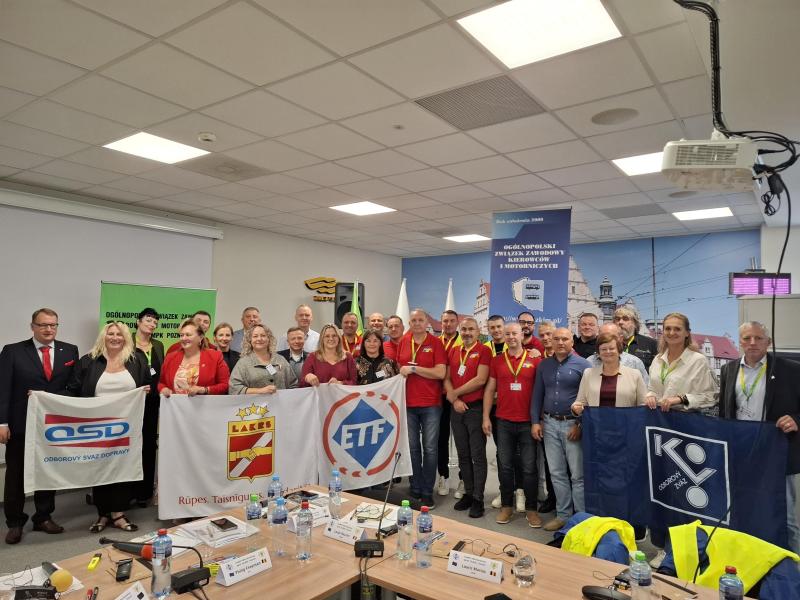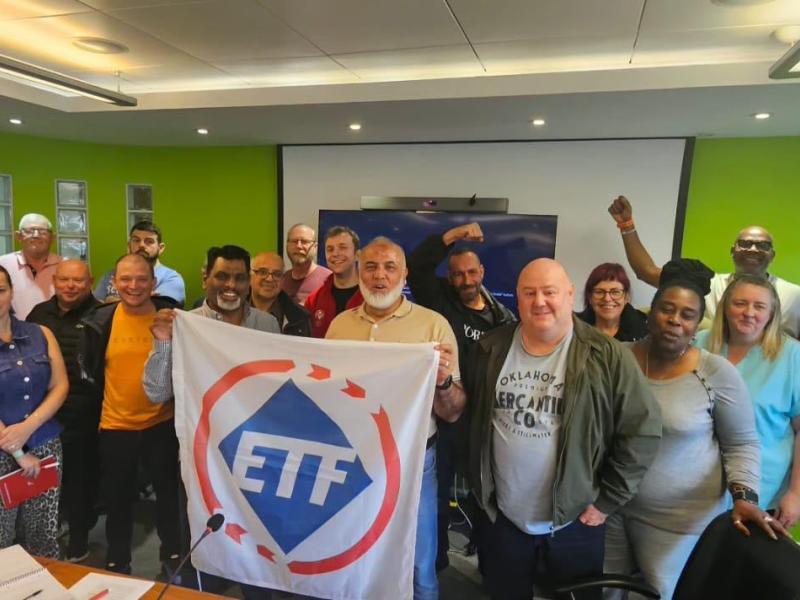


With the slogan “Transport for EU Recovery”, ETF, together with 31 organisations has issued a Statement on the Recovery and Resilience Facility to jointly call on Member States and the European Commission to ensure that the transport sector receives adequate consideration in the National Recovery and Resilience Plans:

On 9 February, the European Parliament endorsed the agreement on the Proposal for a Regulation establishing a Recovery and Resilience Facility (RRF). With a budget of EUR 672.5 billion, the RRF is the EU’s main instrument to recover from the crisis caused by COVID-19.
While being hit hard by the pandemic and the various restrictive measures, the transport sector has demonstrated its crucial role in the supply of goods and movement of people and has thus proven its indispensability for a functioning European Union.
The undersigned European associations representing transport, infrastructure managers, operators, workers in all transport modes and logistics, contractors, local and regional authorities, logistics service providers, shippers, users, shipyards and equipment suppliers in the maritime sector, ports, inland waterways, railways, road, cycling, aviation, airports and intermodal sectors, as well as supporting industries and companies, jointly call on Member States and the European Commission to ensure that the transport sector receives adequate consideration in the National Recovery and Resilience Plans:
- Emphasize that the transport and logistics sectors are critical for providing EU citizens with the goods and the mobility that are essential for their health and well-being and will be major enablers to a sustainable and resilient recovery of Europe’s economy;
- Reiterate that the European Green Deal calls for a 90% reduction in greenhouse gas emissions from transport, which requires substantial investments in transport infrastructures and fleets;
- Stress that the objectives of the Green Deal for Europe to become a climate-neutral economy by 2050, can only be obtained by increasing the sustainability of the transport sector; note that the budget of the Connecting Europe Facility II is not sufficient to enable the necessary transformation;
- Call on the Member States to put forward in their recovery and resilience plans measures facilitating economically and socially sustainable transport and digitalisation in the transport and logistics sectors, measures promoting cohesion and connectivity, promoting livable cities and regions, supporting just transition, support strategies for more diversified sustainable supply chains in view of strengthening Europe’s resilience as well as measures preparing the transport workforce for the digital transformation based on an inclusive social dialogue;
- Call on the European Commission to evaluate the prominence of economically and socially sustainable transport measures in their assessment of the National Recovery and Resilience Plans.
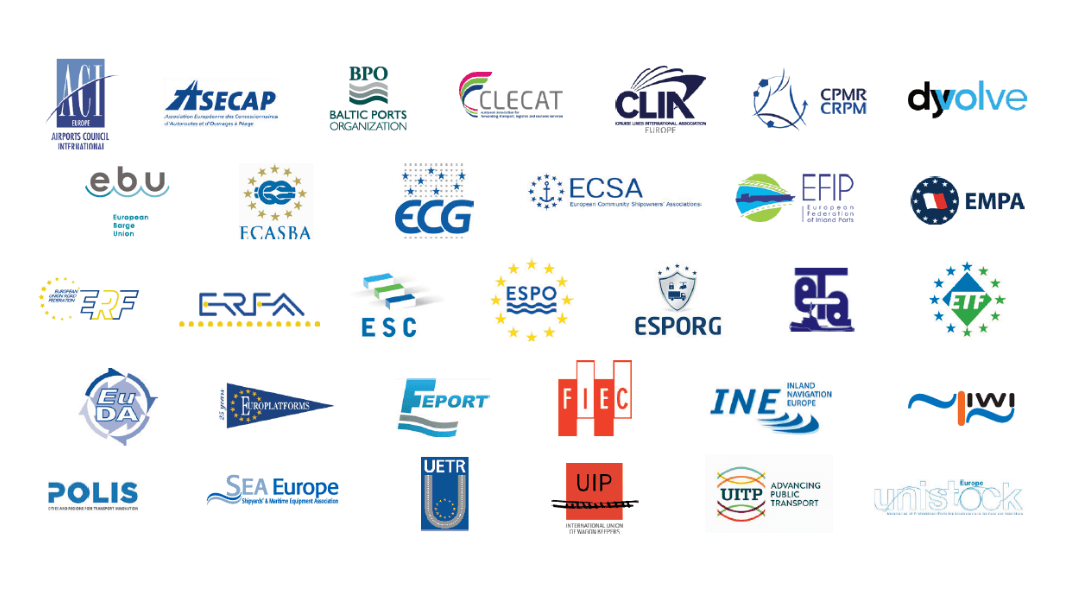
ACI EUROPE – Airports Council International Europe; ASECAP – European Association of Operators of Toll Road Infrastructures; BPO – Baltic Ports Organisation; CLECAT – European Association for Forwarding, Transport, Logistics and Customs Services; CLIA EUROPE – Cruise Lines International Association; CPMR – Conference of Peripheral Maritime Regions ; DYVOLVE – Consulting in Sustainable Urban Mobility; EBU – European Barge Union; ECASBA – European Community Association of Shipbrokers and Agents; ECG – Association of European Vehicle Logistics; ECSA – European Community Shipowners’ Associations; EFIP – European Federation of Inland Ports; EMPA – European Maritime Pilots’ Association; ERF –European Union Road Federation; ERFA – European Rail Freight Association; ESC – European Shippers’ Council; ESPO – European Sea Ports Organisation; ESPORG – European Secure Parking Organisation; ETA – European Tugowners Association; ETF – European Transport Workers’ Federation; EuDA – European Dredging Association; EUROPLATFORMS – European Association of Logistics Platforms; FEPORT – Federation of Private Port Operators and Terminals; FIEC – European Construction Industry Federation; INE – Inland Navigation Europe; IWI – Inland Waterways International; POLIS – European Cities and Regions Networking for Innovative Transport Solutions; SEA EUROPE – the voice of civil and naval (maritime technology) industries in Europe; UETR – European Road Haulers Association; UIP – International Union of Wagon Keepers; UITP – International Association of Public Transport; UNISTOCK – European association of professional portside storekeepers for agribulk commodities.