

Over the coming years, digitalisation and automation will transform the rail sector, affecting its workforce. The only way for such a transition to be successful is by involving workers and their unions from the beginning, every step of the way.
The ETF and CER EU social partner report: Employability in the Rail Sector in Light of Digitalisation and Automation explores how to maintain employability in the face of these changes, with the human factor taking centre stage.
After 4 workshops and a Final Conference with European Officials, the ETF and CER EU social partner project, Employability in the Rail Sector in Light of Digitalisation and Automation (EDA rail), draws to a close with its final report.
With rail as the backbone of the smart and sustainable mobility of the future, the Commission is focussing on digitalisation and automation as a means of fostering innovation, efficiency, and productivity to achieve climate goals.
However, there is a striking gap in activities to promote digitalisation and automation: the human factor.
So far, the needs and challenges facing railway workers have been largely neglected.
In view of this, the European Community of Railway and Infrastructure Companies (CER) and the European Transport Workers’ Federation (ETF) launched an initiative two years ago to address the issue of employability in the rail sector in light of digitalisation and automation.
The final report of this EU-funded project develops:
- A classification of a modernised conception of employability
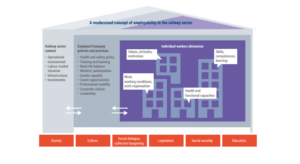
- Several key principles, based on good, existing practices, necessary to the planning and development of digital transformation projects:
(1) People are key in delivering the potential benefits of digitalisation and automation
(2) Digitalisation and automation should contribute to better working conditions and employability (3) Transparency and openness as regards opportunities, risks, and social impacts are necessary
(4) Nobody should be left behind
(5) Addressing and shaping digitalisation and automation in the rail sector should be the social partners’ shared responsibility
(6) Social dialogue should be an integral part of the process at all stages and levels
- A non-exhaustive list of policies at company and sector level that should be implemented to strengthen employability
Going forward, the ETF and CER expect the European Commission, politicians, and technical experts to take up these results and recommendations and adequately account for them when managing future developments.
The final report can be found here and downloaded at your right.