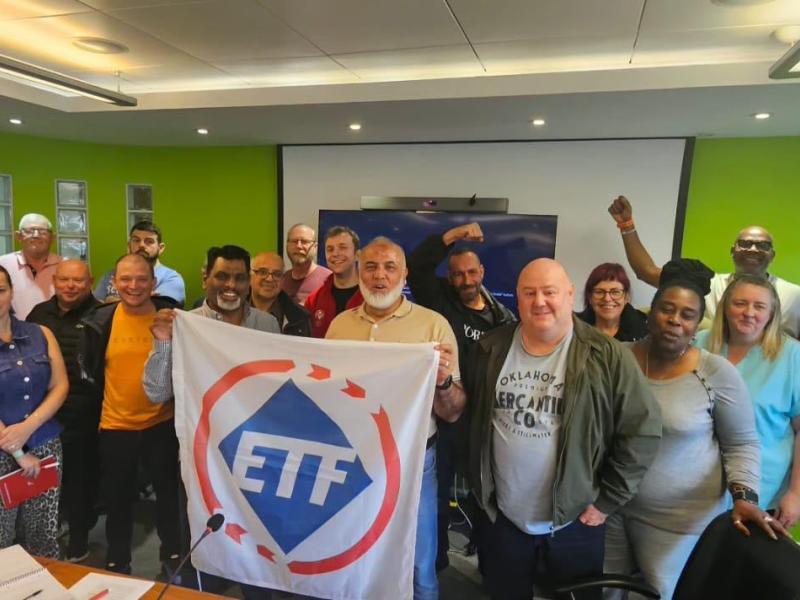
Finding new ways and solutions to address the climate crisis while making sure we fairly represent the aviation workers’ interests was the main focus of the discussions we had with members of the ETF Aviation Section these last few days in Dublin.
In Liberty Hall, our members from 14 countries took the opportunity offered by our hosts – the Irish colleagues from SIPTU – to debate in depth the foreseen but also unexpected challenges we are facing on our way to achieving a socially and environmentally sustainable aviation.
Thanks to their vast operational expertise, the aviation workers’ and their representatives gave a unique perspective of the needs of aviation workers and some practical ways workers can contribute to the development of a sustainable aviation sector. With the support of Gate 17 and as part of the EU funded project on climate change in transport, we also discussed the development of resources for ETF members to help them engage with their membership and engage them on this issue both nationally and at the European level.
The importance of sustainable transport in the city of Dublin and ensuring a sustainable aviation industry were key topics discussed during an event hosted by the Lord Mayor of Dublin, Alison Gilliland. She stated:
“As a country dependent on air travel for its survival, it is essential that Ireland supports aviation workers in finding new ways and solutions to the climate crisis we are facing. But the backbone of this work and all work on finding a sustainable solution to transport emissions is social dialogue. (…) together with the full engagement of the trade union movement and national, European and international levels, we can achieve great things and a greener and more prosperous society for the workers of the world, and indeed millions of aviation and transport workers across Europe.”
At the end of the fruitful discussions from Dublin, the ETF Deputy General-Secretary, Sabine Trier, also declared:
“It was a pleasure to meet with our aviation affiliates to discuss the issue of climate change and indeed to be welcomed by the Lord Mayor of Dublin in the context of sustainable transport. We had intense but productive conversations over the last two days, and I believe that, altogether, our aviation affiliates will provide a unique perspective on the challenges this industry faces.”
Certainly, all these valuable outcomes of the Dublin discussions will be instrumental and help us shape the ETF’s future position on sustainable aviation.