

ETF black logo ETF black logo ETF black logo ETF black logo

Google Translate

Thailand and Qatar downgraded for workers’ rights abuses

News

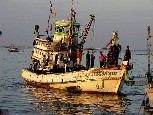
270614_Thai fishing vessel

The ITF applauded the action taken over modern-day slavery in Thailand and Qatar as the US downgraded both countries on its human trafficking watchlist. The US State Department has relegated Thailand to the lowest possible rung, while Qatar hovers just one level above.

The ITF has campaigned recently on worker rights in both of these countries. Back in May 2013, the ITF was one of the complainants in a submission to the International Labour Organization (ILO) on the Thai government’s dismissal of railway workers striking over safety concerns. The ILO responded on June 13 2014, highlighting the gap between Thai national law and international minimum standard. It recommended that all railway workers be reinstated and compensated for lost wages and benefits.

The ITF is also working with sister global union federation the IUF (International Union of Food, Agricultural and Hospitality Workers) to improve workers’ rights along the fish supply chain with the From catcher to counter project. Thailand has come under fire recently for using slave labour in its prawn industry.

The ITF’s work to highlight conditions for workers at Qatar Airways has also been high profile – last September, it revealed a culture of surveillance and control over staff at the airline.

ITF acting general secretary Steve Cotton said: “We hope that both the Thai and Qatari governments will take note of this damning indictment by the US State Department. Our work to date has highlighted the drastic need for labour reform in both of these countries, and we’re pleased to see that the US government agrees with this assessment. Our main concern is workers’ rights, and we’ll continue the fight to make sure that conditions get better for workers everywhere.”


ON THE GROUND

News

Keeping a warming Europe moving: how hot temperatures affect transport workers and what can be done about it

As part of the European continent undergoes its fourth heatwave of 2026, it has become abundantly clear that occupational heat exposure is no longer an exceptional or occasional summer hazard. It is an emergent occupational hazard only destined to escalate. Europe is the second fastest-warming region of the globe after the Arctic. According to EU-OSHA 2025 numbers, one in five workers in the EU signaled exposure to extreme heat at work in the previous 12 months, a figure rising to one in three in some countries.
News

Unruly passengers: more than just summer headlines

Summer may be synonymous with relaxation for holidaymakers and every summer seems to produce its share of eye-catching headlines. Just days ago, The Guardian reported on a drunk British holidaymaker who tried to kiss a flight attendant on a plane and was arrested on his way back through Palma airport. A week earlier, headlines were dominated by reports of a flight from Dublin to Ibiza descending into what was described as "sex and booze chaos," leaving fellow passengers shocked.
News

UK public transport unions sound the alarm over lack of toilet access for drivers

Public transport unions in the United Kingdom are raising urgent concerns about the lack of access to toilet facilities for bus and train drivers, a problem that has persisted for years but is now reaching a breaking point. Reports from across the UK show drivers being forced to work entire shifts without guaranteed access to a toilet, leaving them to rely on improvised or unsafe alternatives, including urinating in bottles in their driving cab. Some unions are now considering industrial action to force employers and authorities to act.