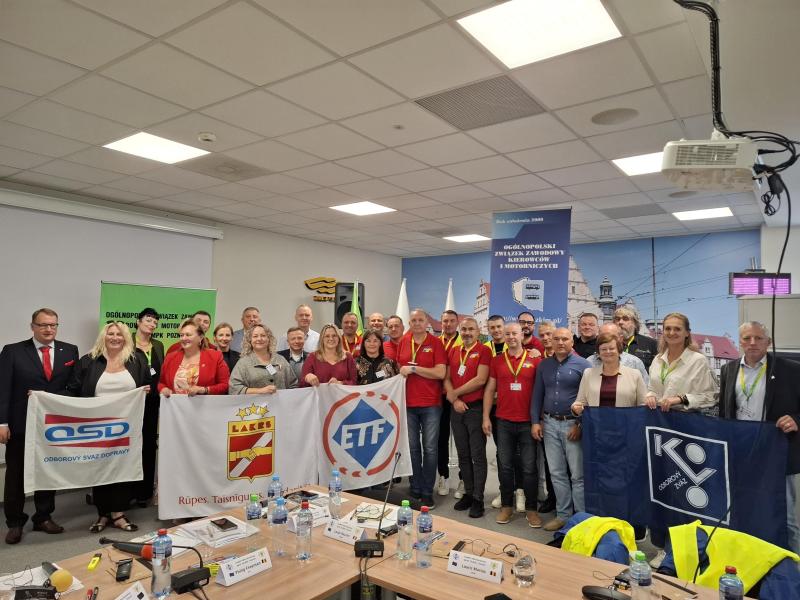
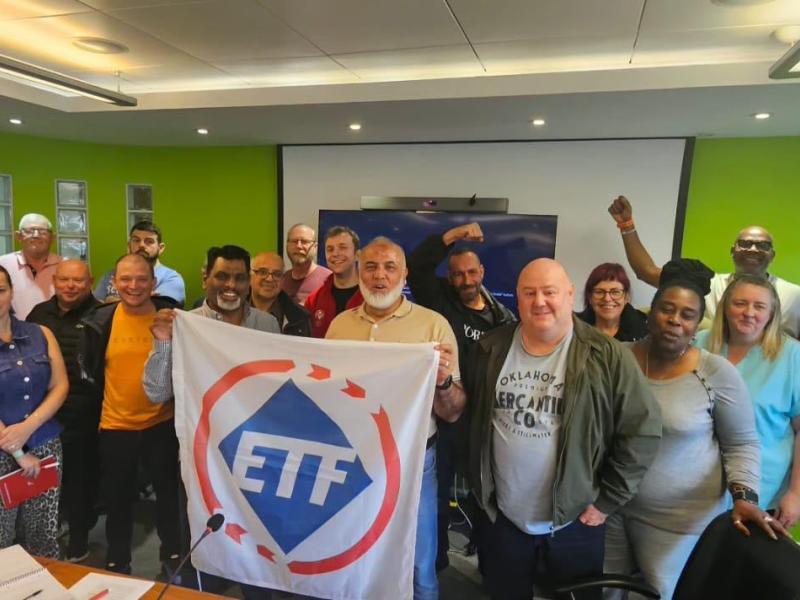
ITF unions stood up for workers’ rights during the ITF road and rail action week, which ran from 7-13 October.
This year’s campaign theme, Transport workers fighting back: organising globally, provided an international spotlight for unions worldwide to highlight issues of local and national concern. Road and rail unions in 32 countries used the week to drive home their concerns on issues such as privatisation, liberalisation, driver fatigue, corruption and health and safety.
The action week was also linked to three international daylong events, including the seventh annual World day for decent work, organised by the International Trade Union Confederation. ITF affiliates from all over the world took part – you can find out more at http://2013.wddw.org.
The second action day during the week was the European Transport Workers’ Federation’s (ETF) International protest against the European Commission’s proposed Fourth Railway Package. This event provided an opportunity for unions to say no to the privatisation of Europe’s rail networks. Unions demonstrated how the package would impose privatisation on Europe’s rail networks, with the potential to seriously undermine passenger and worker health and safety. Unions from countries all across Europe participated in the day, with the united message that the European Commission must respect workers’ rights and preserve quality railway services and quality jobs. Find out more at www.itfglobal.org/etf-3777.cfm.
The third major event held under the umbrella of the action week saw dockers’ unions take action on Dubai Ports World (DPW) in order to press the global network terminal company to listen to its workers and engage with unions. Find out more, and check out photos from global actions here.
ITF acting general secretary, Steve Cotton, said: “Last week, ITF affiliates from every corner of the globe sent a strong message to companies and governments worldwide; that transport workers are united, transport workers are fighting back against the global crisis, and will play their part in securing global justice.”
Mac Urata, the ITF inland transport sections secretary, also applauded the global participation by unions in the combined action week, which he described as having blossomed from its roots in the annual road transport action week and rail action day into this new worldwide event.