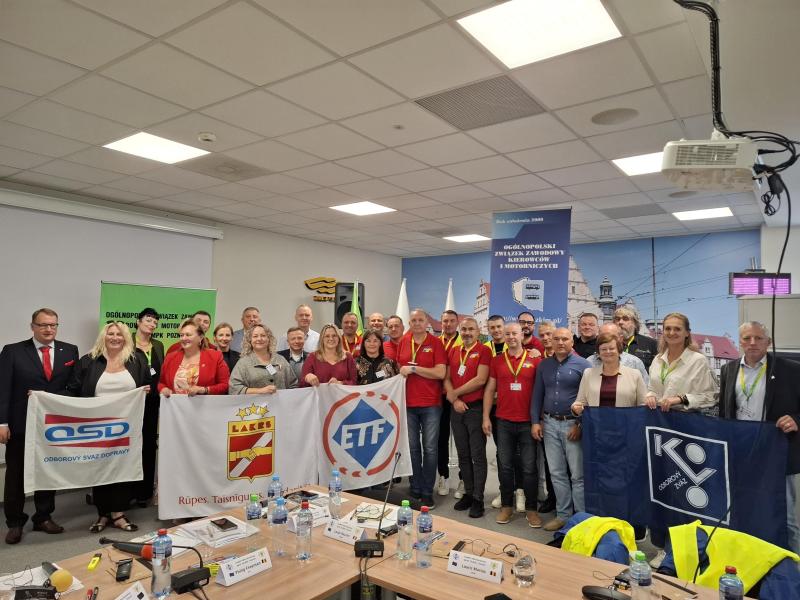
On this International Workers’ Day, the ETF draws attention to the severe worker shortage in the transport sector and the urgent need to listen to transport workers’ voices. As the backbone of the economy, transport workers’ insights and experiences must be taken seriously. Their expertise and dedication are critical in keeping our society and supply chains running.
Yet, despite their crucial role, transport workers continue to face significant challenges. From bogus self-employment to precarious working conditions and low pay, transport workers have had enough. The ETF has been collecting video statements from transport workers, and their message is clear: it is time for action.
Recent events in Europe make it clear that urgent action is needed. In Germany, truck drivers from Uzbekistan and Georgia went on strike for weeks over unpaid wages. This is not an isolated incident, and the ETF has been warning for years that companies must take responsibility for what happens in their supply chains and to their workers. In parallel, there must be enforcement and regular checks to ensure the rules are followed. The transport industry is plagued by exploitative practices, job insecurity, precarious contracts, low pay, and third-party violence.
The ETF demands that EU institutions and employers prioritise the well-being of transport workers and take concrete measures to address the issues they face. This includes ensuring fair wages and equal treatment for all transport workers, regardless of their employment status. The ETF also calls for the gender imbalance in the transport sector to be addressed and for measures to be taken to tackle violence and unequal treatment towards women.
The ETF is calling for action to address the issues faced by transport workers. This includes regulating the logistics sector to prevent abusive subcontracting and ensuring companies are held accountable for their workers’ well-being across the supply chain. It also involves supporting collective bargaining and engaging with unions to negotiate fair working conditions and salaries. Additionally, investing in the workforce by providing better pay, infrastructure, and training opportunities for transport workers will improve their career prospects.
It is time to put workers first. The ETF is ready to work closely with all partners to find solutions and fix the industry.
Watch our video, where transport workers across Europe share their experiences and call for change.