

ETF black logo ETF black logo ETF black logo ETF black logo

Google Translate

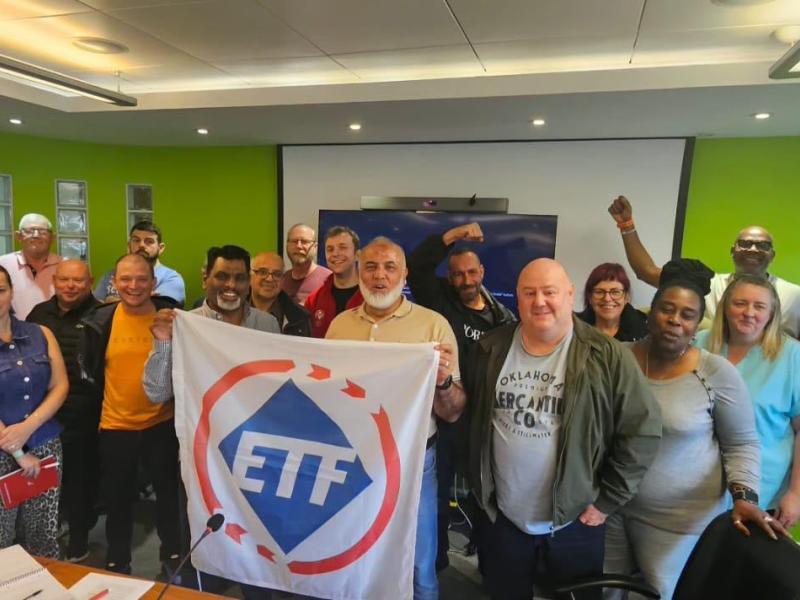
UK dockers get ready for the future at ETF Automation and Lashing Seminar

News

On 17-18 December, ETF Dockers held an Automation and Lashing Seminar in London. We made plans for reclaiming lashing in UK ports, learned more about port automation and how to build the balance of power to negotiate fair automation agreements. With the contribution of ETF President, Frank Moreels, we also talked about our Fair Transport campaign and the consequences of Brexit.

Lashing and automation are vital issues for dockers. Lashing – the fastening of cargo to a ship – is a key part of dockers’ work. Only dockers have the skills to do this dangerous task safely, but many shipowners push seafarers to lash cargo in order to save time and money. This puts seafarers at risk of accidents and eats into their shore leave, while taking away work from qualified dockers already under pressure from port automation.

As agreed in a global agreement between maritime employers and unions, lashing work should only be done by dockers unless otherwise agreed. With our dockers informed and ready to mobilise, we can advance the implementation of this dockers’ clause.

In addition, our automation roadshow team explained the basics of port automation with examples from different European ports. Our aim is to build the capacity of our members to deal with the implications of automation processes on port labour, solidarity and union organising.

Chair of the ETF Dockers Section, Terje Samuelsen summed up the spirit of the seminar: “sustained campaigning combined with effective collective bargaining strengthens our fight to defend jobs and put workers at the heart of automation and digitalisation processes”.

ON THE GROUND

News

Keeping a warming Europe moving: how hot temperatures affect transport workers and what can be done about it

As part of the European continent undergoes its fourth heatwave of 2026, it has become abundantly clear that occupational heat exposure is no longer an exceptional or occasional summer hazard. It is an emergent occupational hazard only destined to escalate. Europe is the second fastest-warming region of the globe after the Arctic. According to EU-OSHA 2025 numbers, one in five workers in the EU signaled exposure to extreme heat at work in the previous 12 months, a figure rising to one in three in some countries.
News

Unruly passengers: more than just summer headlines

Summer may be synonymous with relaxation for holidaymakers and every summer seems to produce its share of eye-catching headlines. Just days ago, The Guardian reported on a drunk British holidaymaker who tried to kiss a flight attendant on a plane and was arrested on his way back through Palma airport. A week earlier, headlines were dominated by reports of a flight from Dublin to Ibiza descending into what was described as "sex and booze chaos," leaving fellow passengers shocked.
News

UK public transport unions sound the alarm over lack of toilet access for drivers

Public transport unions in the United Kingdom are raising urgent concerns about the lack of access to toilet facilities for bus and train drivers, a problem that has persisted for years but is now reaching a breaking point. Reports from across the UK show drivers being forced to work entire shifts without guaranteed access to a toilet, leaving them to rely on improvised or unsafe alternatives, including urinating in bottles in their driving cab. Some unions are now considering industrial action to force employers and authorities to act.