Call it a Collective Bargaining Agreement (CBA) or a Collective Labour Agreement (CLA). Still, throughout Europe, its fundamental goal is always the same: setting the legal framework for workers and employers to co-exist and function in harmony.
It may even be the most complex and intense dialogue social partners may have throughout time. Yet, just like any other contract, a CBA is the place where employees and employers can find common ground for ensuring their interests – which are most often different – are accepted by the other side and implicitly respected.
Without any doubt, for people working within the aviation industry, such a labour agreement is crucial. Whether flight attendants, pilots, ATM workers, or ground staff, our aviation workers believe a CBA is the only guarantee for being treated fairly by their employers regarding working conditions, wages, job security, health, and safety.
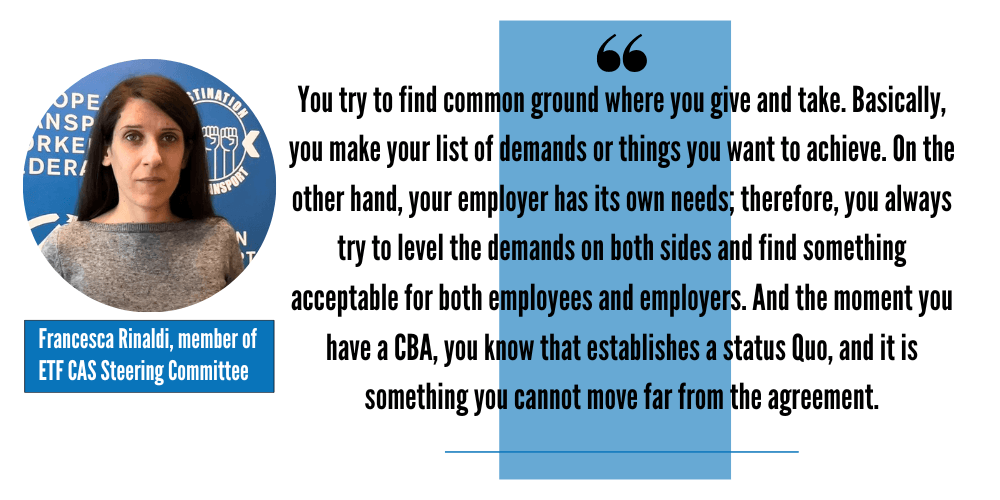
For many years, Francesca Rinaldi, a member of the ETF CAS Steering Committee, fought hard for her working rights to be respected. Now, she represents her Ver.di colleagues in what she describes as a so-called ‘adult dance‘: CBA negotiations. And at the end of this dance, says Francesca, each partner has established a status quo:
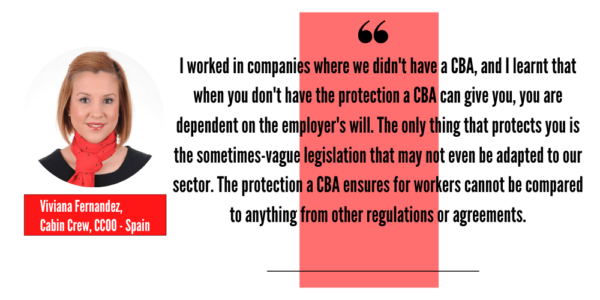
Viviana Fernandez has recently started to work as a cabin crew in Spain. Only by becoming a member of our Spanish affiliate, CCOO, she discovered the real power of CBAs, especially for cabin crew members. As she puts it, a CBA is paramount for ensuring the right balance between work and family life.
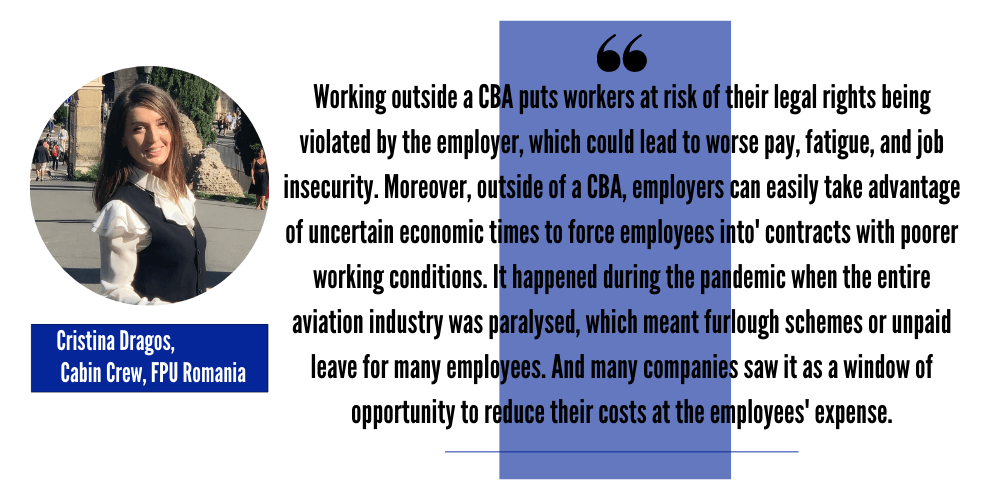
A CBA empowers workers and enables them to have a say in shaping their work environment. They have a platform to voice their concerns, negotiate their rights, and influence decisions impacting their daily work. Yet, reaching that point is a challenging journey. In Romania, for example, as well as in some other Central and Eastern European countries, aviation workers are still fighting for it. But standing alone to fight for your rights is not the way, says Cristina Dragos, a Romanian cabin crew. Now, as part of FPU Romania, she is actively involved in starting the dialogue with the company she works for on their first CBA.
A CBA is a barometer for worker-employer relationships in countries where social dialogue is well respected and employers recognise the importance of labour peace. From an aviation worker’s perspective, having a job outside a CBA is not an option.
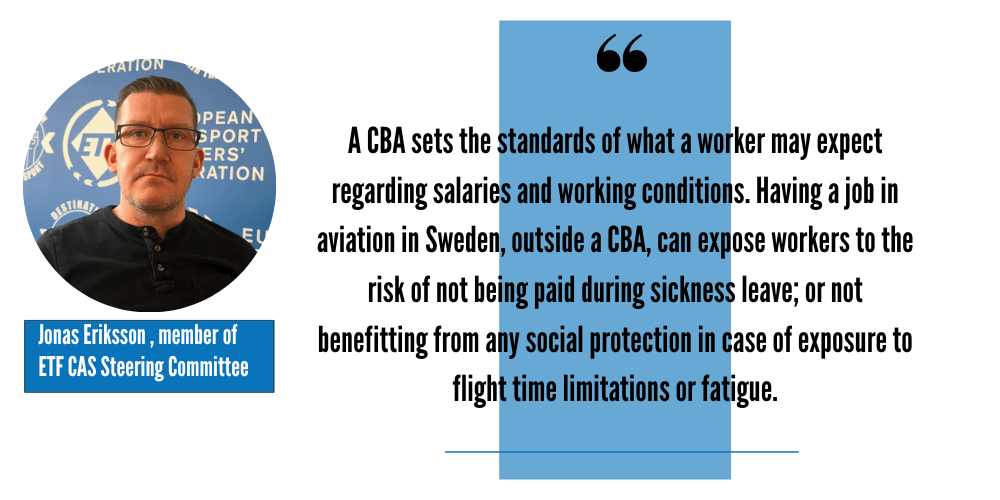
In Sweden, Jonas Eriksson, an ETF Civil Aviation Steering Committee member, says only unions can legally sign labour agreements with employers.
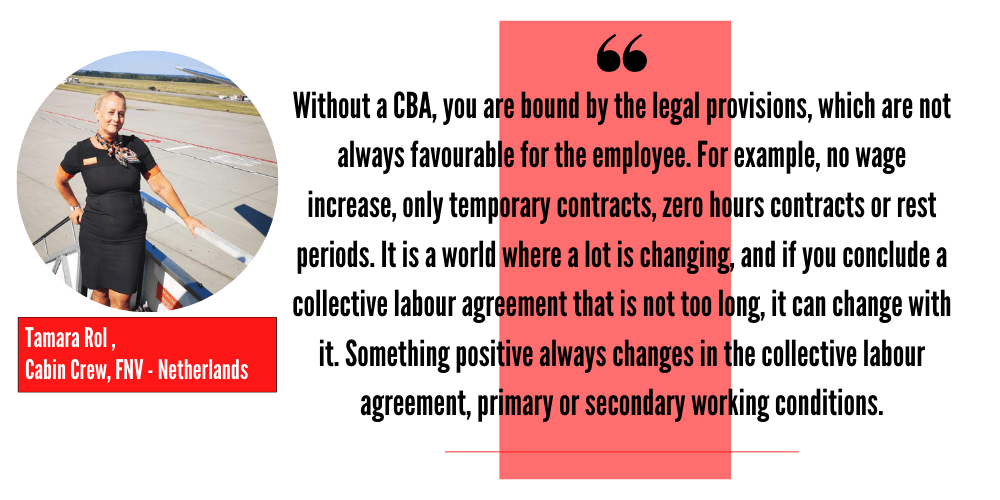
In the Netherlands, cabin crew Tamara Rol was amongst the first aviation workers paving the way to negotiate labour agreements with employers after fighting for FNV to be recognised as a representative union. She explains:
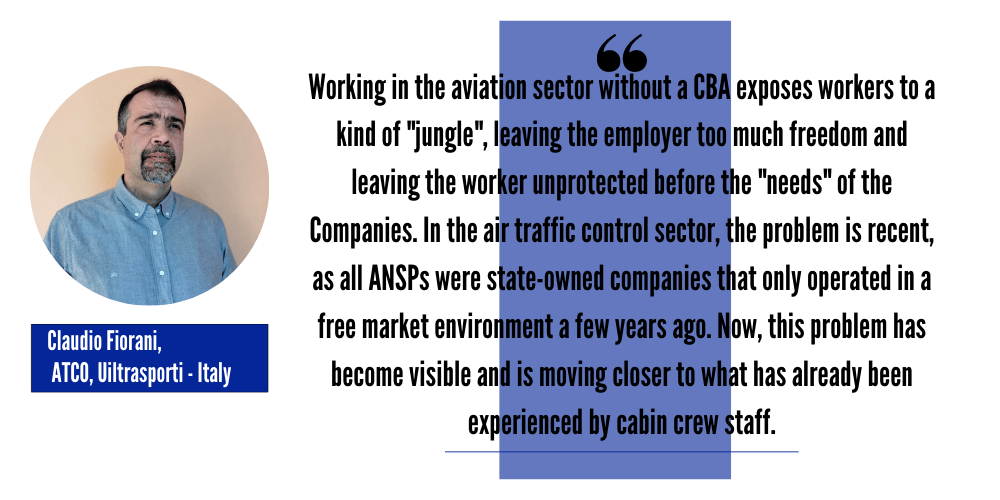
Things have changed lately, even for the ATM sector – a relatively stable part of the aviation industry until recently. Claudio Fiorani, an experienced Italian air traffic controller at Padova ACC and member of Uiltrasporti, anticipates air traffic workers will be facing some difficult times:
From an aviation worker’s perspective, a collective bargaining agreement – CBA – is the only way to fair wages, improved working conditions, job security, safer and healthier work environment.
As reality shows, the solution is simple when social dialogue happens and social partners are open to discussions, where mutual respect is a pre-condition for agreeing on how work relations can function for the benefit of both parties: workers and employers.
On the aviation workers’ side, ETF will always find the best ways to protect their rights. If so, we will support our members and give them wings to fly. Because having collective bargaining agreements as the main rule governing workers – employers’ relationships across Europe is just a part of our goal of creating Fair Transport for our workers.