ETF black logo ETF black logo ETF black logo ETF black logo

Google Translate

Women transport workers keep gender equality on top of union agenda

News

090315_women

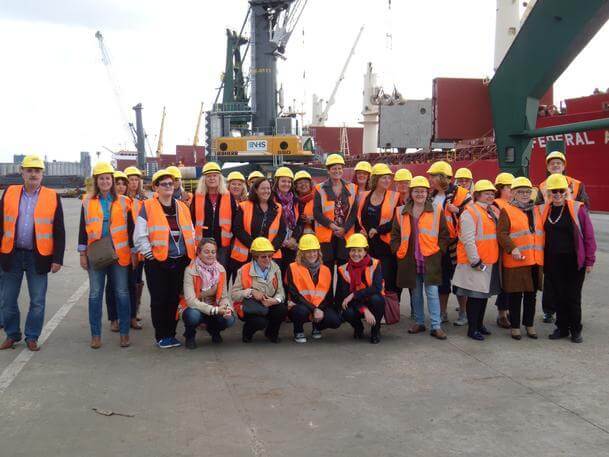
The ETF Women’s Committee gathered in Brussels on the 4th and 5th of March to take stock of the ongoing gender activities at the ETF level and to plan the future work. Ahead of the International Women’s Day on 8 March, the Committee welcomed the determination showed by women transport workers across Europe in getting gender on top of their trade unions’ agenda.

Transport is still one of the most segregated industries, with women concentrated in less visible, administrative jobs while men make up the overwhelming majority of mobile personnel. The economic crisis is one of the main factors encouraging this tendency.

The ETF member organisations need to do more to get the industry meet women’s needs. There is a huge need of training among rank and file women unionists, but also among union leaders. They’ll need to give a better visibility to issues that impact working lives of women transport workers in an industry where workplace culture is still very much male-centred”, Collette Parsons, Chair of the Women’s Committee said.

With regard to training, the Committee plans to finalise a third module of the ETF training package, focused this time on health and safety. This will be a valuable addition to the existing modules on empowerment and on the gender dimension in collective bargaining. The Committee also decided to go ahead with a ‘zero’ workplace violence campaign which will be soon part of the ETF web-site. At the core of the ETF gender work remain topics such as equal pay and equal access to jobs in transport.

The ETF Women’s Committee looks forward to its mid-term conference to be organised in spring 2016, an opportunity to bring together female union activists and leaders to further plan actions meant to make transport a better workplace for all its employees, irrespective of their gender.

ON THE GROUND

News

Keeping a warming Europe moving: how hot temperatures affect transport workers and what can be done about it

As part of the European continent undergoes its fourth heatwave of 2026, it has become abundantly clear that occupational heat exposure is no longer an exceptional or occasional summer hazard. It is an emergent occupational hazard only destined to escalate. Europe is the second fastest-warming region of the globe after the Arctic. According to EU-OSHA 2025 numbers, one in five workers in the EU signaled exposure to extreme heat at work in the previous 12 months, a figure rising to one in three in some countries.
News

Unruly passengers: more than just summer headlines

Summer may be synonymous with relaxation for holidaymakers and every summer seems to produce its share of eye-catching headlines. Just days ago, The Guardian reported on a drunk British holidaymaker who tried to kiss a flight attendant on a plane and was arrested on his way back through Palma airport. A week earlier, headlines were dominated by reports of a flight from Dublin to Ibiza descending into what was described as "sex and booze chaos," leaving fellow passengers shocked.
News

UK public transport unions sound the alarm over lack of toilet access for drivers

Public transport unions in the United Kingdom are raising urgent concerns about the lack of access to toilet facilities for bus and train drivers, a problem that has persisted for years but is now reaching a breaking point. Reports from across the UK show drivers being forced to work entire shifts without guaranteed access to a toilet, leaving them to rely on improvised or unsafe alternatives, including urinating in bottles in their driving cab. Some unions are now considering industrial action to force employers and authorities to act.