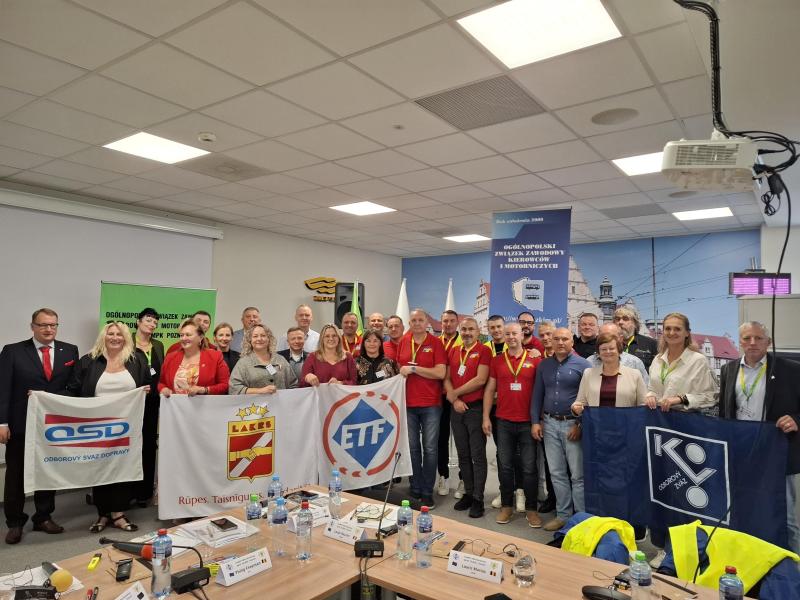


Today marks World Toilet Day, a United Nations Observance that celebrates toilets and raises awareness of the 4.2 billion people living without access to safely managed sanitation.
In the transport sector, many workers find themselves in difficult situations when they have to ‘go’ due to a lack of safe, dignified, and accessible toilets. This especially rings true for women transport workers. Part of providing a safe and adequate work environment for them is having and providing access to decent sanitary facilities. However, when we interviewed around 3,000 women in transport, it emerged that access to toilets is a serious issue affecting their health and safety at work.
One-fourth of the respondents identified sanitary issues, including the availability of accessible and clean toilets, as one of the major problems in the workplace.
One-third of the respondents indicated that they were not satisfied with the sanitary conditions at their workplaces.
We reached out to women workers for testimonials and they told us like it is.
Monica Bergamini, FILT CGIL delegate, who works for Amazon as a driver in the North of Italy, spoke out about the lockdown, her full testimonial can be viewed below.
“As a woman I’m very worried about the new lockdown law, with the closure of restaurants and bars, if I need the toilet, it is a big problem: I cannot find one!!
I have to face these new bad working conditions every day during lockdown. We are considered (in empty words) essential workers but we are not treated as essential workers by our companies.
I would like that our important role is taken into consideration.”
A German train conductor and member of EVG, working for DB Fernwerkehr AG (long-distance transport), who preferred to stay anonymous, has a message for everyone on World Toilet Day:
“Please leave the sanitary facilities as you found them! Then there will be no more locked toilets on the trains!”
Toilets are squeaky clean, but it doesn’t last for long as explained by a rail conductor.
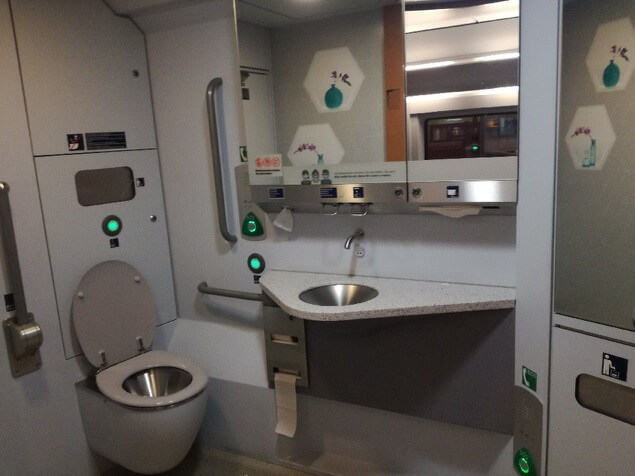
She recounts that as she works as a conductor on long-distance trains, she’s always on the tracks and is forced to use the same toilets as passengers. There have been growing efforts over the past years in the industry to keep trains clean by increasing cleaning intervals, and improvements for users to feel comfortable, safe, and encouraged to leave them clean after use (see photo below). Despite the tireless efforts of cleaning staff, sanitary facilities on the trains get so dirty through our passengers that other passengers and us, the employees, can no longer be expected to use them. In such cases, we, the train conductors are requested to carry out special cleaning and flushing in order to remove more severe contamination or slight blockages. But unfortunately, there are also impurities that cannot be removed in this way. Then we have no choice but to lock the doors and block the access.
“If all passengers would take their responsibility for the cleanness of the toilet rooms and leave the “quiet place” as they found it, we would not have to lock any more toilets and all sanitary facilities would be available to our passengers during the whole journey.”
The ETF finds such situations intolerable. Every transport worker has the right to access a toilet. The above testimonials, in addition to replies to our large-scale ETF survey on how to make transport fit for women to work in reveal that this is an issue that is widely and deeply felt by women transport workers and goes as far as to harm their participation in the industry.
Our key demands to make transport fit for women to work in can be found here.