

BRUSSELS, 29 SEPTEMBER 2026
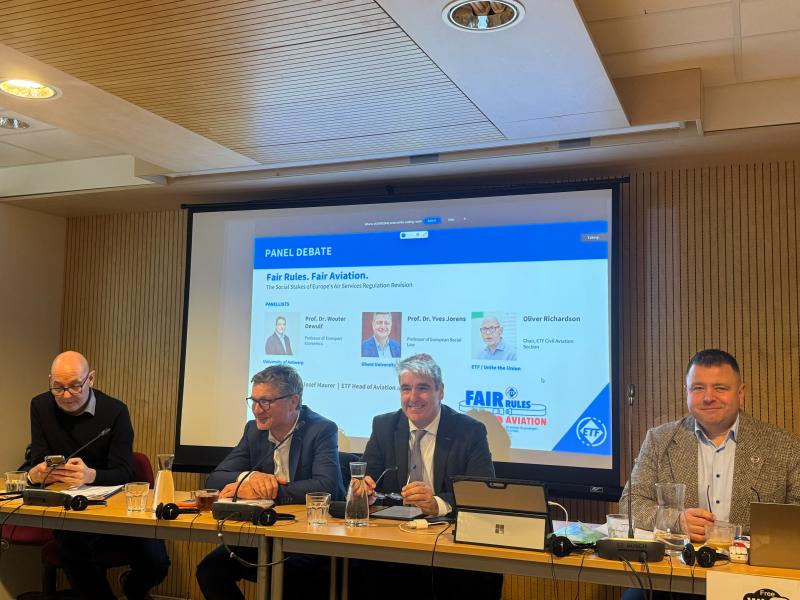
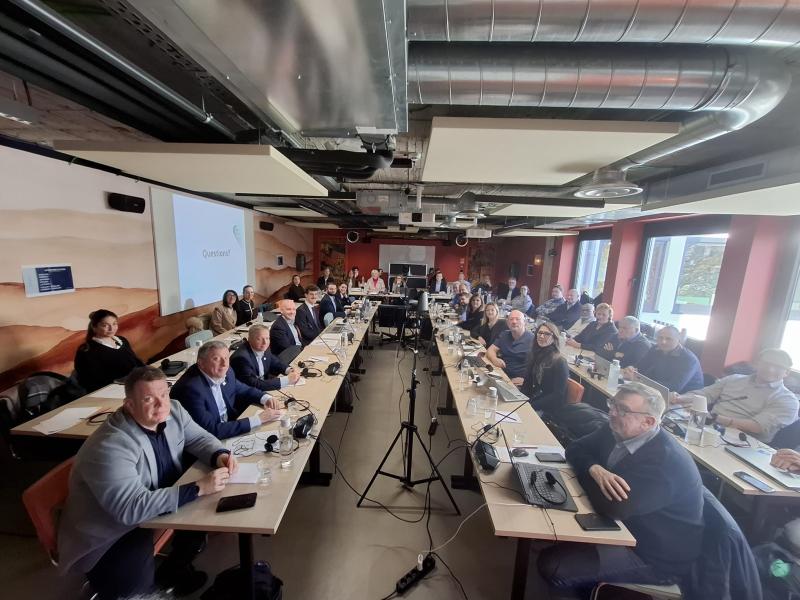
Today, ETF and UETR are organising an event, hosted by Swedish S&D MEP Johan Danielsson, to discuss joint solutions to fix subcontracting in the road transport sector. The event, taking place at the European Parliament in Brussels, will bring together trade unions, employers, enforcement authorities and policymakers, including Executive Vice-President and European Commissioner for Social Rights and Skills, Quality Jobs and Preparedness Roxana Mînzatu.
The event comes at a crucial moment, following the European Parliament’s adoption in February of Johan Danielsson’s report on subcontracting, the European Commission’s recent publication of the “Fair Labour Mobility Package” and ahead of the “Quality Jobs Act” proposal (end of the year / beginning of next year). The participation of the Executive Vice-President Mînzatu is particularly important. As the Commissioner responsible for quality jobs, skills and fair labour mobility, she will play a central role in shaping the upcoming Quality Jobs Act, with major implications for a socially and economically sustainable road transport sector.
Following their joint letter to Members of the European Parliament sent earlier this year, the ETF General Secretary Livia Spera and UETR President Alexis Gibergues will highlight the common ground of workers and companies for a road transport market based on fairness, transparency and compliance with the rules. The discussion will also feature contributions from Ambassador Cosmin Boiangiu, Executive Director of the European Labour Authority (ELA).
ETF and UETR have jointly called for an EU framework to tackle abuses in subcontracting and labour intermediation, including the introduction of limitations on contracting and subcontracting (as several Member States already apply), greater transparency, joint and several liability throughout the chain and stronger enforcement by national authorities and ELA.
For ETF and UETR, the objective is clear: a road transport sector based on, decent working conditions, quality jobs and fair competition. Today's discussion offers an opportunity to exchange views on how European policies can better support workers and responsible operators alike while ensuring a level playing field across the sector.
Event details
- Subcontracting in the road transport sector, 29 September 2026 | 18:00-20:00, European Parliament (Multifunctional Area 00G), Brussels.
- Please note: Registration for the event is now closed. However, individuals holding a valid European Parliament access badge may still attend.
- For more information: ETF - Tove Dahlberg, t.dahlberg@etf-europe.org or UETR - Marco Digioia, mdigioia@uetr.eu.