


ETF’s survey of around 3,000 women transport workers, conducted back in autumn 2019, has revealed an urgent need for substantial changes to make the transport sector genuinely fit for women to work in. Eliminating the entrenched male culture, improving working conditions, establishing equal treatment and good work-life balance, providing access to proper sanitary facilities, and ensuring safe workplaces are the major factors in attracting and retaining women in the transport industry.
Against this background, the ETF is launching its campaign ‘Yes! More Women in Transport – Making Transport Fit for Women to Work in’, targeting policymakers and social partners at both national and European level. COVID-19 threatens to deepen the unveiled alarming gender divide that keeps women from staying in and joining the industry if concerned parties fail to take immediate action.
Background
The transport sector in Europe is changing fast, and the role played by women transport workers in the industry is evolving. However, there is little awareness of how the changes will affect them. Women’s share in the entire transport industry workforce – only 22% – is insufficient. While there are considerable differences among the various transport sectors (land transport: 14%; waterborne transport: 20%; and air transport: 40%), overall, transport remains a male-dominated sector. Women predominantly work in customer-facing or administrative jobs, often under more flexible work arrangements and in part-time jobs. Women also often work in mobile or isolated workplaces, for example, onboard trains or ships. Furthermore, there has been little change in the working and living conditions for women transport workers, which are often poor. The effects of the COVID-19 pandemic have the potential to aggravate the inequalities that already exist in the sector.
ETF’s Survey of around 3,000 women transport workers
“A clean driving cab, time between trains to go to the loo (not on the train); flexible working hours; more than 6 weeks’ maternity pay (if you’re sick, you get 16 weeks); a privacy policy where your personal file isn’t openly discussed with your colleagues; a zero-tolerance policy towards bullying and sexual harassment; and a less toxic work culture would be appreciated.”
(Railway worker)
To uncover the real reasons for the low female employment rate in transport and to find out what is needed to make the transport sector fair and fit for women to work in, ETF launched a large-scale survey in October 2019. Around 3000 women transport workers from across Europe responded and made their voices heard. Respondents came from all transport sectors and represented the whole range of transport professions.
The ETF survey reveals that women transport workers encounter the following barriers:
- A dominant culture of masculinity and gender stereotypes
- Discrimination and unequal treatment at work
- Lack of work-life balance, and ‘the care trap’
- Deficiencies in provision for women’s health and safety at work, including access to decent sanitary facilities
- High levels of violence and harassment against women at the workplace
These barriers create a working environment that fails to attract women to the transport professions, fails to support women in doing their jobs well and fails to retain them in the sector.
COVID-19
Owing to the highly gendered nature of the sector, the pandemic has had specific, additional adverse effects on women transport workers and is threatening to reverse gender equality gains and thus to add to existing inequalities.
ETF’s key demands
ETF is committed to shattering the glass ceiling and fighting for fairness and better terms and conditions for women in transport. To end the gender-based occupational segregation in the transport sector and to make the industry more accommodating to women transport workers, the barriers that make the transport industry unattractive for women need to be eliminated.
- Mainstream a gender-responsive approach into EU transport policy
- Strengthen social dialogue to eliminate discrimination and unequal treatment
- Improve work-life balance
- Improve women’s health and safety at work
- End violence and harassment against women at work
ETF’s key campaign action dates:
- November 4 / EU Equal Pay Day – ETF call for a pay transparency directive and an end to the gender pay gap
- November 19 / Word toilet day – ETF call for decent sanitary facilities
- November 25 / Intl. day for the elimination of violence against women – ETF will launch a workplace policy guidance on how to address the issue of violence against women in the workplace and call on governments to ratify the ILO Convention 190 on violence and harassment
- November 25 – December 10/16 Days of Activism against Gender-Based Violence – Interview with Dr. Jane Pillinger, author of the workplace policy guidance on how to address the issue of violence against women in the workplace
The author of the survey report is Dr Barbara Helfferich. Dr Paula Franklin contributed to the online survey and the data analysis. Both are renowned experts on the topic of gender equality and EU social policy.
Resources (can be downloaded here and at your right):
Launch of the ETF survey on what the transport sector needs to be more attractive for women
International Women’s Day 2020: Making the transport sector fit for women workers
“Make Transport Fit for Women to Work in!” – ETF sounds alarm over industry’s growing gender divide
Get ME home safely: Unions demand safe commuting for women transport workers
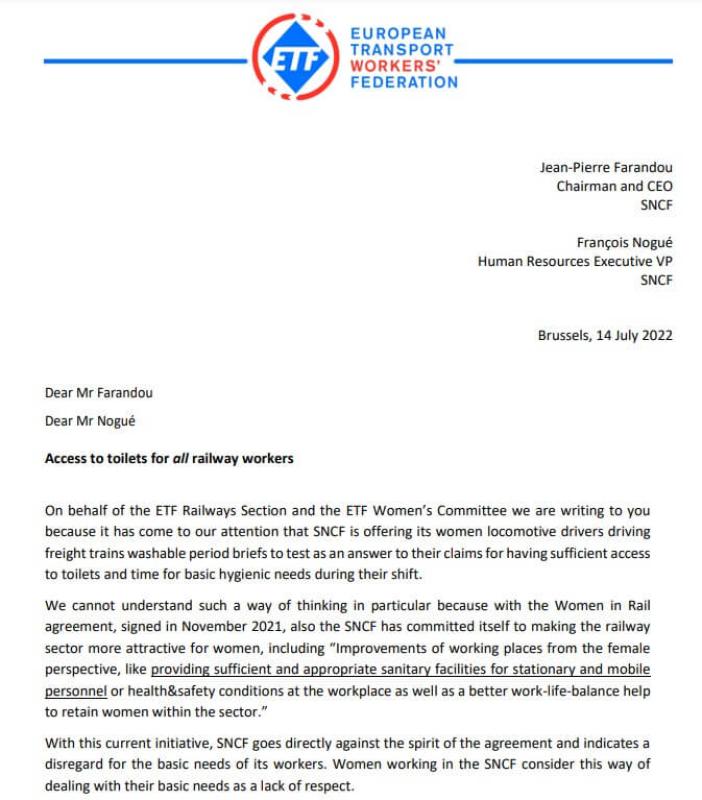

French rail company mocks female freight drivers’ need for access to toilets; offers period briefs instead
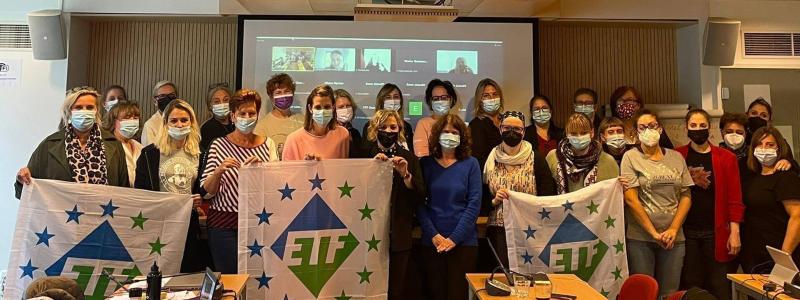
Milestone ILO Convention 190 comes into force

Women in Rail – EU-level negotiations between social partners resume
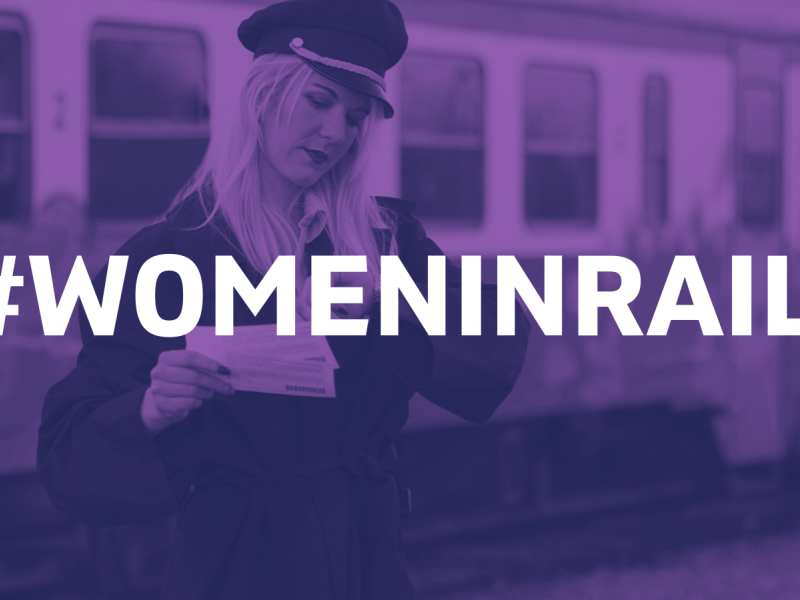
Women in Rail – Provisional EU Social Partner Agreement reached
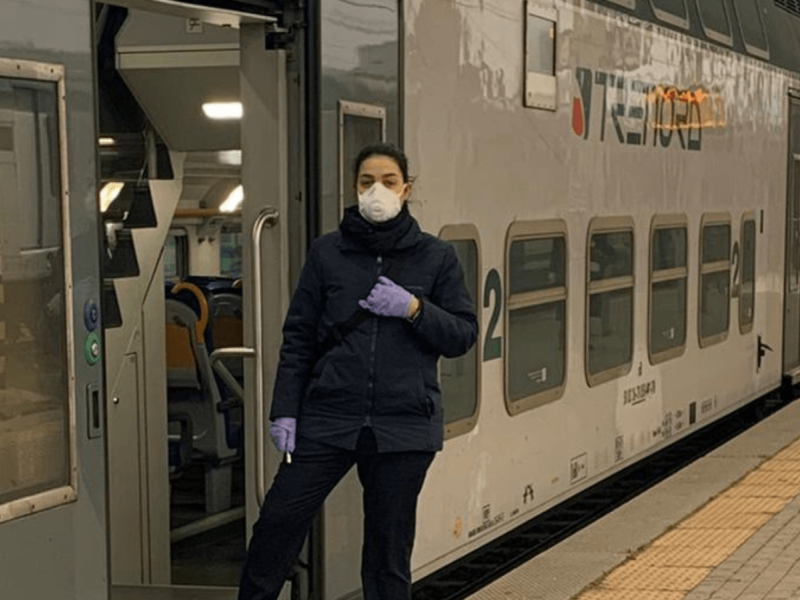
ETF’s reply to International Transport Forum Consultation stresses urgent need to make transport fit for women to work in
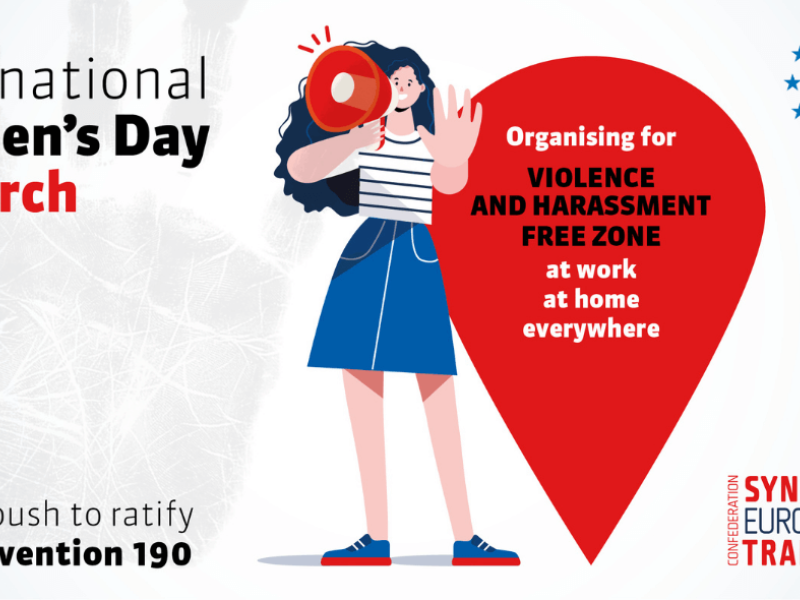
IWD 2021: Employers and governments must do more to protect women at work!

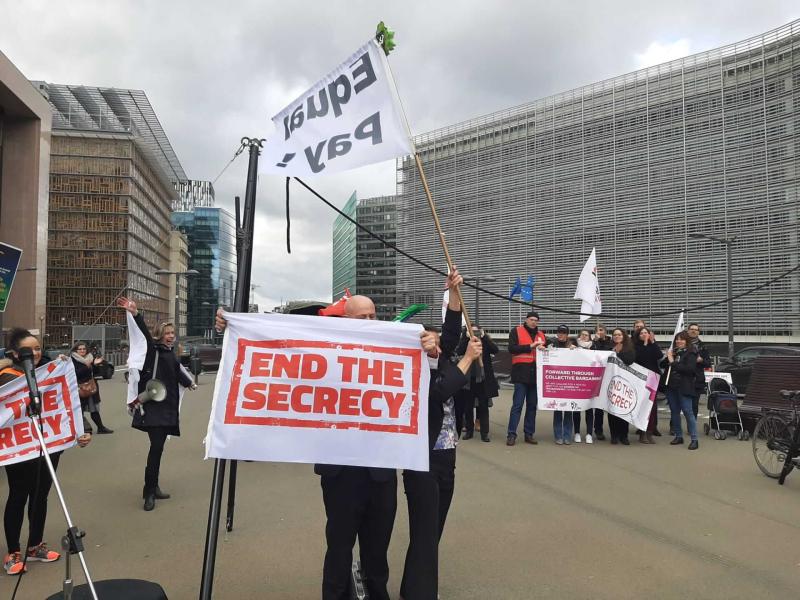
ETF voices concerns over missing Pay Transparency Directive
End VAW: ETF leads the way with Workplace Guidance to address violence and harassment against women at work
ETF Statement | World Toilet Day
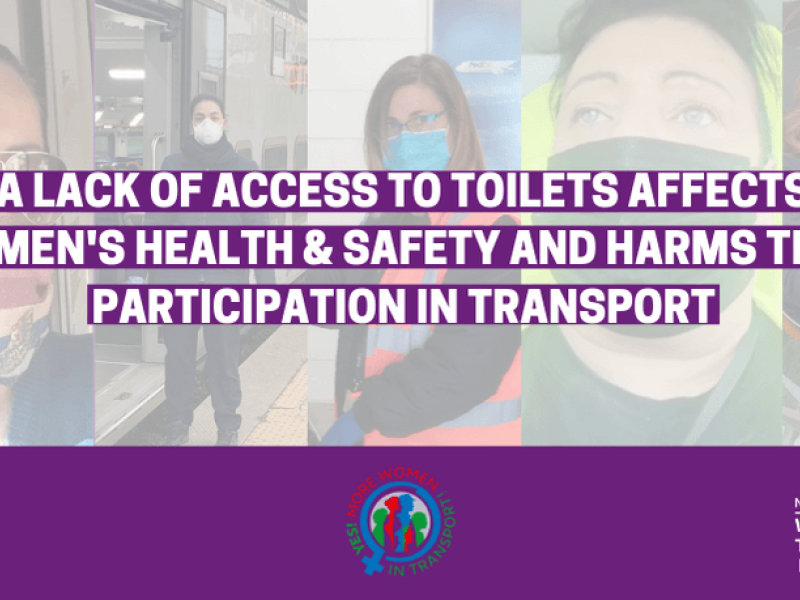
World Toilet Day: Women Transport Workers tell it like it is
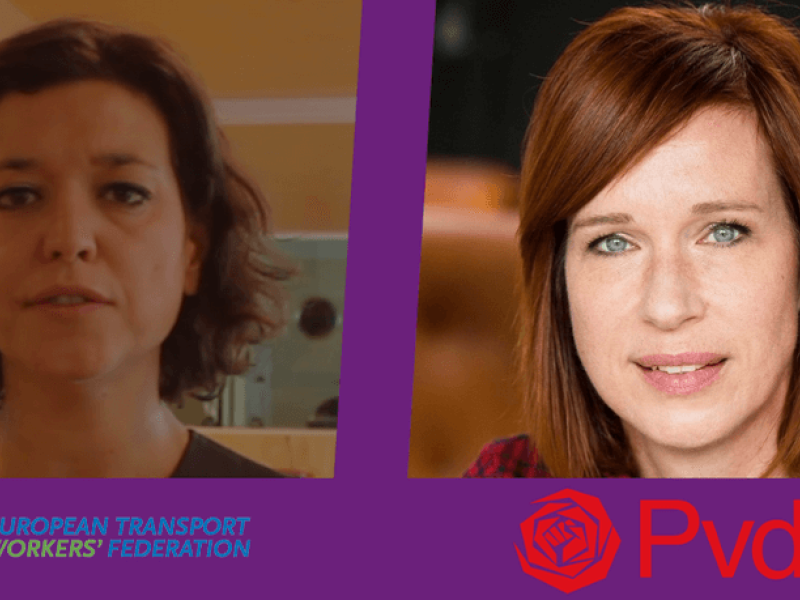
ETF & Vera Tax call on European Commission to mainstream a gender-responsive approach into EU transport policies
“Make Transport Fit for Women to Work in!” – ETF sounds alarm over industry’s growing gender divide
International Women’s Day 2020: Making the transport sector fit for women workers