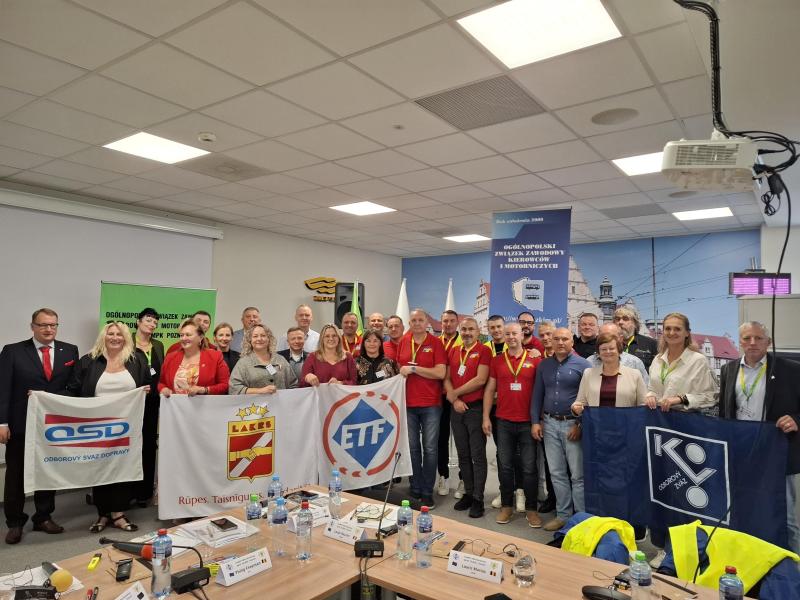
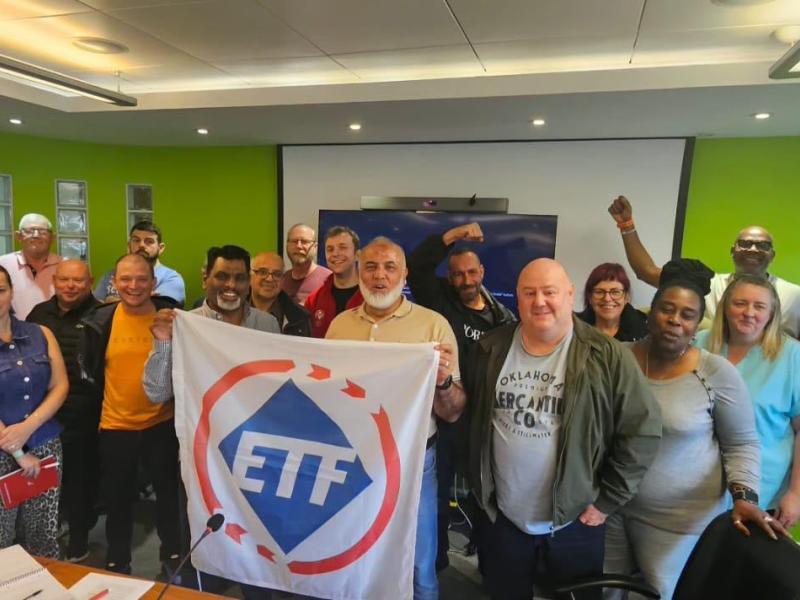
Danish trade union 3F and the employers’ organisation Dansk Erhverv reached a national sectoral agreement for delivery riders valid from 2021 to 2023. The agreement will cover Just Eat’s riders, but 3F doesn’t plan to stop at this victory and is currently working on bringing other platforms on board.
For several years, working conditions of platform workers, for example, on-demand drivers and delivery riders have been a pressing issue.
The demands for improvement are clear: fair pay, better health and safety, social security and transparent algorithms.
Platform companies claim to be willing to improve working conditions – but on their terms; leaving workers’ fate to the good or ill will of their de facto employers. In order to truly guarantee better conditions, workers need to be empowered and not treated as disposable commodities. After all, without them, platform companies would be unable to deliver a single meal or passengers.
This is where collective bargaining comes in. It allows workers’ representatives to negotiate various aspects of working conditions, from pay to a fair termination procedure directly with management.
In line with the new Danish agreement, riders will receive a base hourly wage of DKK 124.20 (c. 16.6 EUR) from 1 March 2021, and it will rise to DKK 127.35 (c. 17.10 EUR) from 1 March 2022. Additional benefits are also included. Normal weekly working time was set to a minimum of 8 hours and up to 37 hours, with overtime allowed up to 44 hours in total. Among other provisions, a platform company will be also obliged to provide their employees with a vehicle (or an allowance if the employee has its own), work clothes and safety equipment.
However, there is one hitch –in a majority of countries in Europe, labour laws only grant negotiation rights to employees, while platform companies claim to work only with ‘independent contractors’. This claim is being challenged in multiple court and administrative proceedings, and the pressure on platform companies to recognise their workers as employees is rising.
For example, in the Netherlands the ETF affiliate FNV has filed a lawsuit against Deliveroo and their bogus self-employment model, with the High Court decision expected in mid-February. In a similar case in Spain, the Supreme Court ruled in September 2020 that riders working for delivery platform Glovo are indeed employees.
The example of the Danish agreement, as well as an earlier one between Norwegian Fellesforbundet and Foodora, shows that it is possible for platform companies to recognise the employment relationship and engage in a dialogue with the workers.
‘The agreement is an important step towards a fairer delivery sector, and it allows the Danes to choose responsible companies‘, commented Jan Villadsen, the ETF vice-president and the chairman of 3F Transport, and added ‘3F and the European trade union movement will not stop fighting for platform workers’ rights!’