EFBWW, EFFAT, and ETF have joined forces to confront the common challenges of abusive subcontracting, unregulated labour intermediaries, and insufficient enforcement of existing workers’ rights within their sectors. These issues underpin high levels of social dumping and labour crime, unequal treatment in the workplace, low wages, unrecorded working hours, disrespect for health and safety rules, and labour exploitation, especially towards migrant and mobile workers.
With a collective commitment to resolve their workers’ daily hardships, the European Trade Union Federations (ETUFs) have produced a joint paper [Link] outlining the stark realities faced by workers in agriculture, food processing, hospitality, transport and construction.
In the lead-up to the EU Elections, the joint paper includes a clear demand and tangible solution to end labour abuses: A new Directive that limits subcontracting, regulates labour intermediation, ensures equal treatment across subcontracting chains and bolsters the effectiveness and the frequency of labour inspections. Furthermore, agencies must be banned in the context of posting.
As a demonstration of their commitment to bring change, EFBWW, EFFAT and ETF are planning a series of coordinated actions at the EU level, before and after the upcoming EU elections. The highlight of these efforts will be a gathering in front of the European Parliament in Strasbourg on 17 September 2024. This event aims to raise awareness and mobilise the newly elected MEPs in support of this important call.
Tom Deleu, EFBWW General Secretary: In construction, we witness high levels of exploitation, fraud, and other labour abuses, especially in a cross-border context. Subcontracting is always a major risk factor. This needs to stop. We need to break the chain of exploitation. The new European Commission and the new European Parliament must act urgently.
Kristjan Bragason, EFFAT General Secretary: The endemic presence of unregulated labor intermediaries and abusive subcontracting within agriculture, food processing, and hospitality industries is normalizing exploitation. These practices are a stain on our social model and the European labour market. As trade unions, we call on the EU to eradicate them.
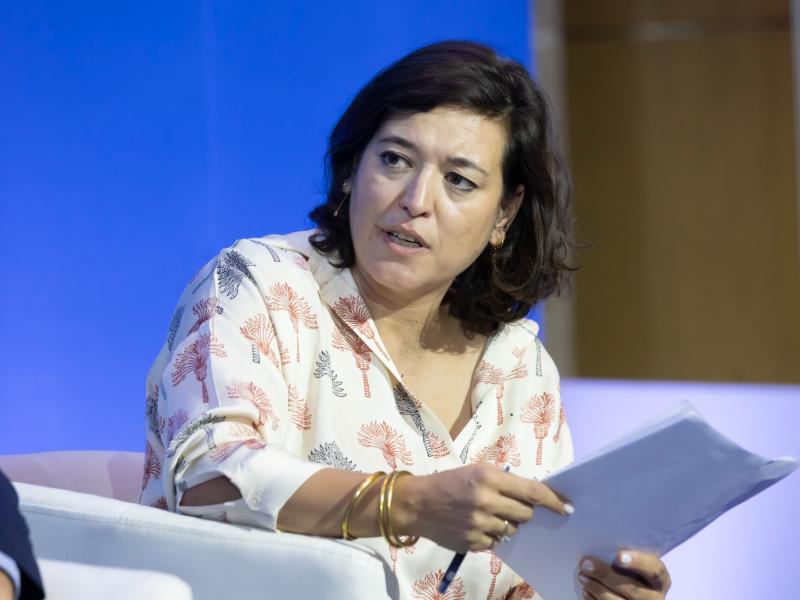
Livia Spera, ETF General Secretary: In transport, subcontracting takes several forms, and the underlying problem is the lack of appropriate rules and controls. Too often, subcontracting chains benefit from dubious business models and lead to exploiting workers, notably third-country nationals. Subcontracting is yet another stratagem that makes employment schemes more complex, and law breaches less traceable.
The Federations emphasize the importance of bringing these pressing issues to the forefront of the political agenda, especially in the lead-up to the EU elections. By uniting voices and advocating for change, we want to ensure that the demands of working people in our sectors are heard and acted upon by the EU Institutions and national governments.
About the European Trade Unions Federations:
EFBWW | The European Federation of Building and Woodworkers (EFBWW) is the European Workers’ Industry Federation for the building sector, woodworking, forestry and allied industries and trades. The EFBWW has 77 affiliated unions in 36 countries and represents a total of 1.5 million members. The EFBWW is a member organisation of the European Trade Union Confederation (ETUC).
EFFAT | EFFAT is the European Federation of Food, Agriculture, and Tourism Trade Unions, also representing domestic workers. As a European Trade Union Federation representing 116 national trade unions from 37 European countries, EFFAT defends the interests of more than 25 million workers towards the European Institutions, European employers’ associations, and transnational companies. EFFAT is a member of the ETUC and the European regional organisation of the IUF.
ETF | The European Transport Workers’ Federation (ETF) is a pan-European trade union organisation which embraces transport trade unions from the European Union, the European Economic Area and Central and Eastern European countries. The ETF was created in 1999, but we have our roots in pan-European transport trade union organisations that stretch back over 60 years. Today, the ETF represents more than 5 million transport workers from more than 200 transport unions and 38 European countries. These workers are found in all parts of the transport industry, on land, sea, and in the air. ETF is a recognised EU-level social partner in 7 sectoral social dialogue committees, including inland waterways. We are also a proud member of the ETUC and the ITF family.