

Urban Public Transport (UPT) is a critical sector for Europe, employing more than 2 million people and providing a vital and fundamental public service. Without UPT, European cities would grind to a halt and hundreds of millions of Europeans would not be able to effectively reach work, education and leisure. However, for historical reasons this essential sector has not enjoyed the full rights within the structures of European Social Dialogue, being merely a working group under the Road Sectoral Social Dialogue Committee. This is despite the fact that UPT faces massive challenges and changes, from the labour shortage to underfunding to the need to decarbonise vehicle fleets, alongside many others. ETF has consistently called for the sector to gain the recognition it deserves through a dedicated European social dialogue committee, ensuring that the social partners have the resources and support to addresses these challenges through discussion and joint action.
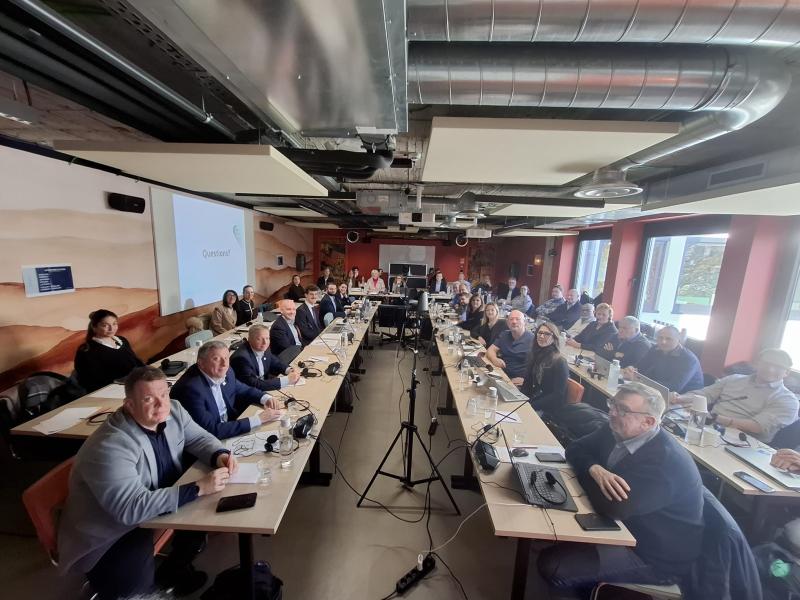
Yesterday, the European social partners in UPT finally met for the first plenary meeting of social dialogue in the sector. After a joint appeal by ETF and UITP, the European Commission agreed to increase the number of meetings for UPT social dialogue from 2 to 3 per year and provide more resources for interpretation and participation.
Yesterday’s social dialogue allowed the social partners to discuss critical areas for joint action, including the introduction of Autonomous Vehicles into the sector, the promotion of women employment, changes to the EU’s Public Procurement framework, the effect of extreme heat on UPT workers, and the need to ensure proper funding for public transport in the next long-term budget of the EU.
However, the Commission has not fully taken on board ETF and UITP’s call for a separate Social Dialogue Committee for UPT. The sector still remains under the Road Transport committee. While the social partners appreciate the Commission’s provision of extra meetings, they made clear that a separate social dialogue committee is more than just a question of resources. Rather, it would be a clear political signal from the Commission of the importance and value of the urban public transport sector, its workforce and its companies. ETF and UITP jointly agreed to continue their pressure on the Commission to recognise the vital contribution that UPT has on the entire European economy.