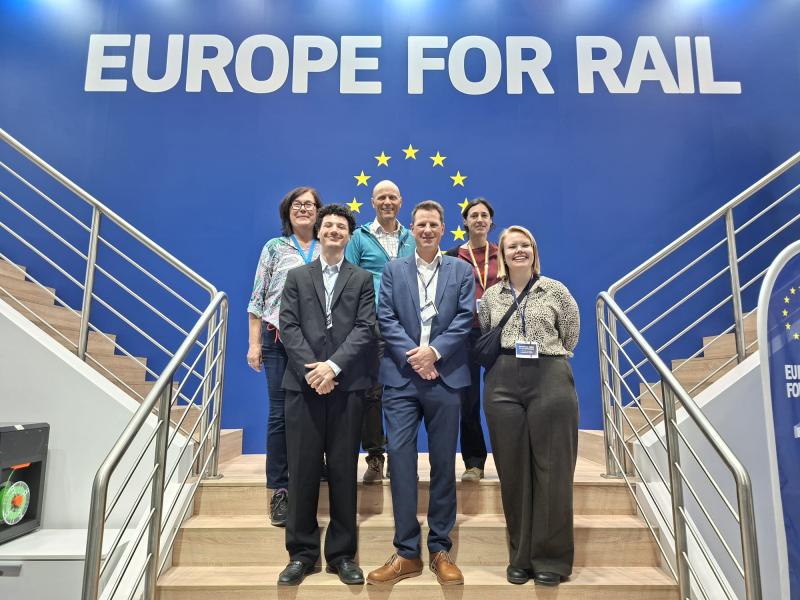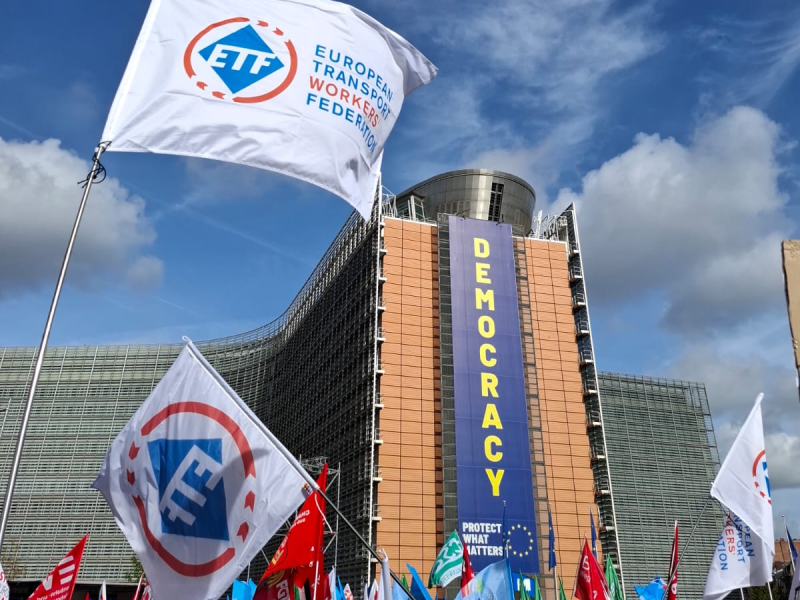


The European Transport Workers’ Federation (ETF) convened a major two-day networking event in Brussels (9-10 December) that successfully brought together a wide array of stakeholders in the public transport sector. This event allowed us to map convergences and common goals, opening the way for future alliances to improve public transport in Europe.
Participants included representatives from public transport unions, green campaigners, passenger groups, disabled rights activists, employers, and policymakers, including MEP Lena Schilling, coming from all over Europe, including Poland, France, Bulgaria, Germany, Slovakia, Finland, and Belgium.
The participants identified a robust alignment on the core priorities for the public transport sector, which centre on defending a vision that puts workers, passengers, and the environment at its heart.
This strong convergence will serve as the foundation for developing common strategies and actions to campaign for:
- A massive expansion of public transport required under the European Green Deal.
- A just transition for public transport workers during the move to zero-emission buses.
- Stronger capacity within unions to engage with local authorities and civil society on sustainable urban transport.
The conference provided a vital platform to map shared priorities. It featured successful examples of coalition-building, such as the #WirFahrenZusammen (We Are Driving Together) alliance between Fridays for Future and Ver.di in Germany, confirming the potential for unified action across Europe.
The event, held on 9 and 10 December, was titled the ‘ITUC-ETF Just Transition Alliance-Building Networking Event on Public Transport’ and was organised by the ETF, funded by the International Trade Union Confederation (ITUC) and the European Climate Foundation, as part of the joint project, ‘To empower unions and workers in Europe to secure a just transformation under the Clean Industrial Deal’.
Dirk Schloemer, Chair of the ETF Urban Public Transport Committee, said: “Public transport workers and users share the same interests – well-funded transport systems that provide high-quality jobs and high-quality services. Unions and civil society organisations must come together at local, national and European levels to force politicians to give public transport the priority it deserves.”