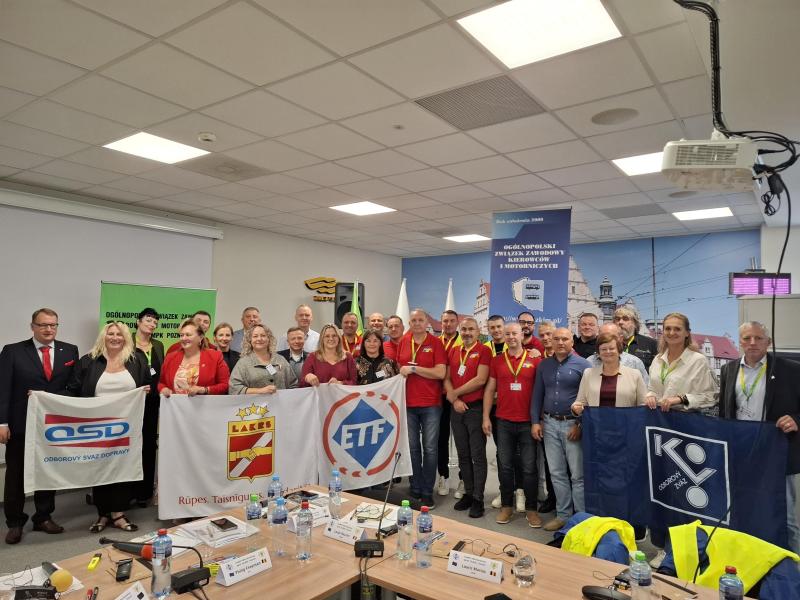
The reality for many drivers in Europe remains starkly divided. During an ELA roadshow in Jabbeke, ETF and its affiliates met drivers on the ground and discussed their working and living conditions, revealing a sharp contrast between employers that respect the rules and those that continue to undermine workers' rights.
In mid-September, ETF took part in an ELA parking area visit in Jabbeke (Belgium), together with our Belgian affiliates BTB-ABVV and ACV Transcom. A Belgian employer representative and ESPORG also took part in the roadshow. Most of the drivers encountered at the locations visited were employed by Polish and Lithuanian companies, reflecting the strong presence of operators from these countries in international road transport. The roadshow also provided an opportunity to talk with light goods vehicle (LGV) drivers about the new tachograph requirements.
Secured versus non-secured parking area
The visit included both a gold-certified Safe and Secure Parking Area (SSPA) and a non-secure parking area. The difference between the two locations was striking but not shocking.
At the secure parking area, most drivers were Polish and had Polish employers and told us that their employers pay for secure parking and hotel accommodation during their weekly rest periods. Several also reported being able to return home regularly.
At the non-secure parking area, the picture looks very different. We met mainly third-country drivers who said their employers (mainly Lithuanian or Polish employers) would not pay for secure parking or accommodation and often spend months living and resting in their trucks before seeing their families again. Drivers also spoke about the continued use of daily allowances instead of proper wages, a practice that remains widespread despite EU rules. One driver told us he had been robbed while parked and was left to cover the losses himself.
New tachograph requirements for light good vehicles
The roadshow also provided an opportunity to speak with LGV drivers about the extension of EU rules to international transport operations with vehicles above 2.5 tonnes since 1 July 2026. We checked whether drivers regularly operate across borders, whether the required tachographs had been installed, and whether employers are complying with their obligations. The conversations highlighted the importance of proper enforcement to ensure respect for driving and rest time rules and to promote fair competition in the sector.
Better enforcement, more safe and secure parking areas
The discussions once again highlighted the need for better enforcement of existing EU rules, more safe and secure parking areas, as well as better facilities and sanitation for drivers across Europe. For ETF, visits like this are an important reminder that the realities faced by drivers can vary greatly. While some employers respect workers' rights and provide decent conditions, too many drivers still face insecurity, poor treatment and long periods away from home. Listening directly to workers remains essential in the fight for better conditions across the road transport sector.
ETF thanks ELA for the invitation and the opportunity to engage directly with drivers and discuss the challenges they face on Europe's roads.